


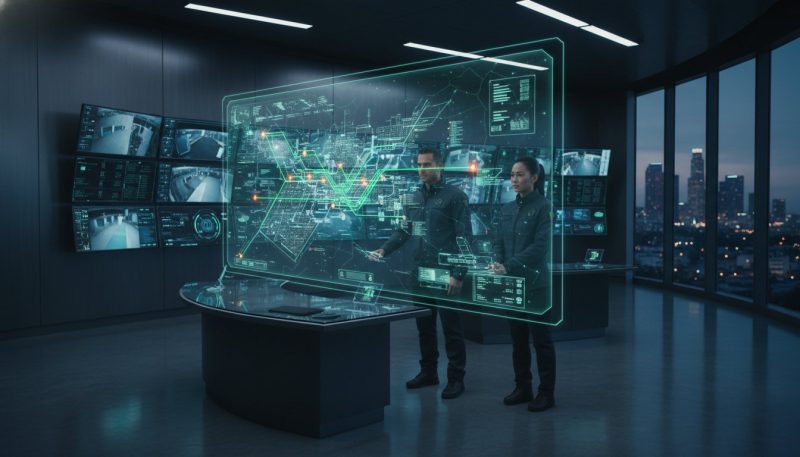
Access Control for Multiple Locations: A 2026 Strategic Resource Guide
Nearly 49% of security breaches involve stolen or compromised credentials, yet many organizations still struggle with fragmented systems that require...
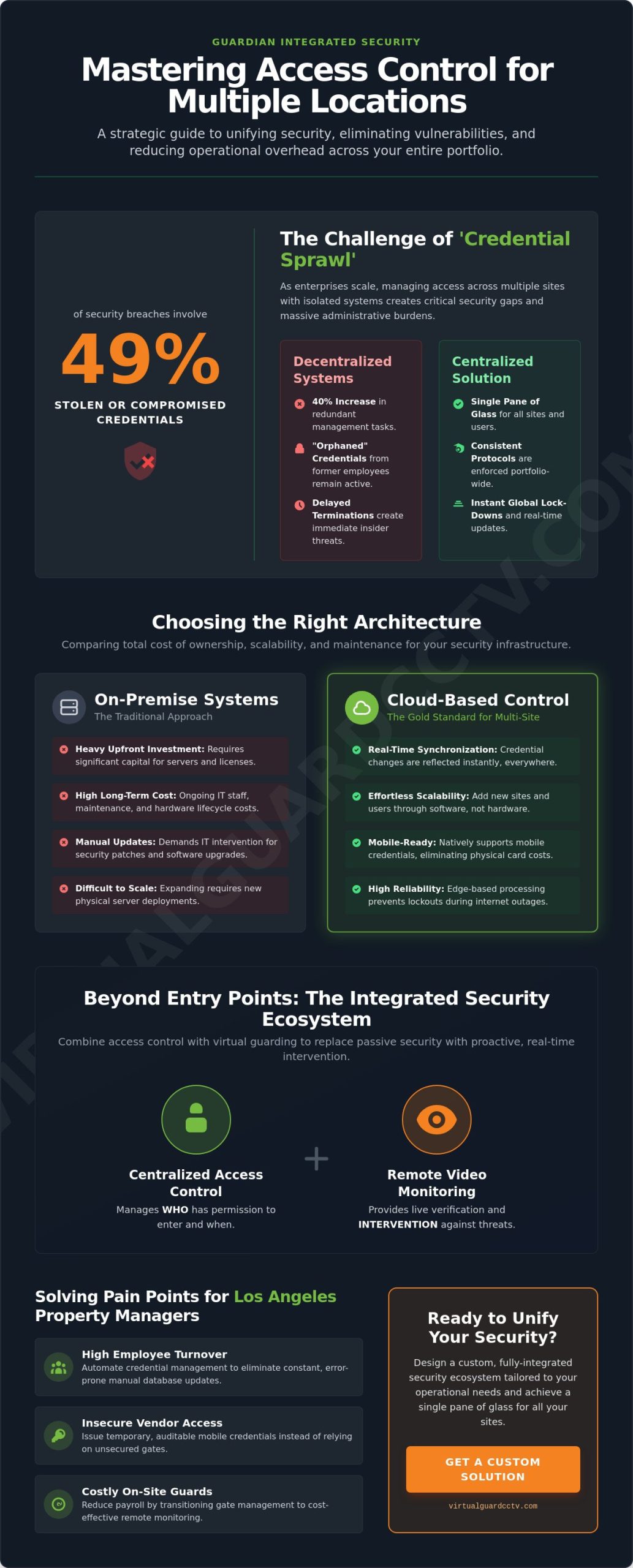
Nearly 49% of security breaches involve stolen or compromised credentials, yet many organizations still struggle with fragmented systems that require a different physical keycard for every building. You likely recognize the frustration of having zero real-time visibility into who is entering your remote sites or the high cost of manual database updates during employee turnover. Managing access control for multiple locations shouldn’t be a logistical nightmare that drains your budget and leaves your assets vulnerable.
This strategic guide will help you master the complexities of modern security architecture to create a unified, efficient system. We’ll show you how to achieve a single pane of glass for all your sites while ensuring compliance with the 2026 CFPSSU federal mandates. You’ll discover how integrating professional security system design with remote video monitoring can reduce operational overhead and provide the constant vigilance your business requires. We’ll move from the basics of hardware selection to the advanced benefits of a fully integrated, cloud-based security ecosystem.
Key Takeaways
- Understand how a centralized management system eliminates “credential sprawl” and ensures consistent security protocols across every physical entry point.
- Compare the total cost of ownership for cloud, on-premise, and hybrid architectures to determine which infrastructure best supports your long-term business goals.
- Learn how to integrate access control for multiple locations with virtual guarding services to replace passive security with proactive, real-time intervention.
- Follow a strategic five-step roadmap to audit your current sites and deploy a custom security ecosystem tailored to your operational needs.
- Identify key Los Angeles commercial security regulations that impact your hardware choices and the necessity of professional security system installation.
The Complexity of Managing Access Control for Multiple Locations
Managing security for a single building is straightforward, but scaling that protection across a portfolio requires a fundamental shift in strategy. Access control for multiple locations is defined as a centralized framework that governs disparate physical entries from a single administrative interface. It replaces the old model of “island” security, where each building operates its own isolated database. In a multi-site environment, your security is only as strong as your most neglected entry point.
The primary challenge for growing enterprises is “credential sprawl.” This occurs when local databases fail to synchronize as you scale. If an employee has access to four different buildings, they often end up with four different entries in four different systems. This lack of cohesion creates significant operational risks. Delayed terminations are a common result; an employee might be removed from the corporate headquarters’ system but still hold active credentials for a satellite warehouse. These security gaps are exactly where modern digital identities provide a superior alternative to traditional physical keys.
Centralized vs. Decentralized Management
Managing security on a site-by-site basis creates immense administrative overhead. Industry reports suggest that decentralized systems can increase management tasks by up to 40% because of redundant data entry. The most dangerous byproduct of this approach is the “orphaned” credential. These are active permissions assigned to former employees or contractors that remain live simply because the local site manager wasn’t notified of a status change. A centralized system eliminates this risk by enabling instant, global lock-downs and real-time updates across every facility.
Common Pain Points for Los Angeles Property Managers
Property managers in the Los Angeles industrial and logistics sectors face unique pressures. High employee turnover in these industries makes manual database updates a constant burden. Additionally, managing vendor access across multiple gated yards often leads to security lapses. Many businesses still rely on expensive on-site security guards for basic gate management. By implementing robust access control for multiple locations, you can transition to more cost-effective solutions like remote video monitoring and automated entry. This ensures your sites remain secure without the heavy payroll of a physical guard at every gate.
Choosing the Right Architecture: Cloud, On-Prem, or Hybrid?
Selecting the foundational architecture for your security network is a pivotal decision that impacts your long-term operational efficiency. Managing access control for multiple locations requires a balance between local autonomy and central oversight. When evaluating your options, you must choose between cloud-native, on-premise, or hybrid configurations. Each model offers distinct advantages regarding data sovereignty, maintenance requirements, and initial capital expenditure. Modern property managers prioritize systems that offer high-tier reliability without becoming a drain on internal IT resources.
On-premise systems traditionally require a heavy upfront investment in server hardware and localized software licenses. These systems demand ongoing attention from IT personnel to manage security patches and hardware lifecycle replacements. This often leads to higher long-term costs that aren’t immediately visible during the initial purchase phase. Conversely, cloud-based models prioritize agility. Scalability becomes a matter of software configuration rather than physical server deployment. This allows your security footprint to expand as quickly as your business does. Reliability is maintained through edge-based processing, where door controllers store local copies of access permissions. This prevents lockouts during internet outages and ensures your staff remains productive regardless of network status.
The Case for Cloud-Based Access Control
Cloud-native solutions represent the gold standard for modern multi-site management. They enable real-time database synchronization, ensuring that a credential change at your Los Angeles headquarters is instantly reflected at your satellite warehouses. This architecture supports the move toward mobile credentials. This shift eliminates the logistical burden and replacement costs associated with physical RFID cards. Most importantly, these platforms receive automatic cybersecurity updates. Adhering to NIST guidance on cloud access control ensures your digital entry points are as secure as your physical ones.
When Hybrid Models Make Strategic Sense
Hybrid models serve as a pragmatic bridge for businesses with significant existing infrastructure. If your Los Angeles facilities already have extensive low-voltage wiring and functional door hardware, a hybrid approach allows you to keep that investment while upgrading the management layer to the cloud. This configuration provides local processing power for critical entries. It ensures doors remain operational even during a temporary network disruption. It’s an ideal strategy for transitioning legacy sites to modern standards without a complete overhaul. This method allows for a phased rollout, which is particularly useful for large industrial complexes where a total shutdown for installation is impossible. If you’re unsure which path fits your current portfolio, seeking professional commercial security system installation advice can clarify your technical requirements.
Beyond Entry Points: Integrating Access Control with Proactive Surveillance
Traditional locks and keycards are essentially passive tools. They provide a digital paper trail of who used a door, but they can’t stop an unauthorized person from following an employee inside. This common vulnerability, known as tailgating, accounts for a significant portion of security breaches in commercial facilities. To truly protect your assets, you must move beyond simple entry management. Integrating your access control for multiple locations with proactive surveillance transforms your security from a recording device into an active deterrent.
The real power lies in video verification. By linking access logs with your video surveillance system, you gain visual confirmation for every entry event. If a door is propped open or a credential is used by someone other than the owner, the system alerts a remote professional immediately. This level of oversight follows the best practices established by the Security Industry Association to ensure robust physical security across complex networks. Modern AI-driven analytics can even flag suspicious patterns across different sites, such as a single badge being used in two different cities within minutes.
The Power of Video-Access Integration
Integration allows for immediate correlation between a digital event and a visual reality. When an “access denied” event occurs, a high-definition camera captures the individual involved. This reduces false alarms because operators can distinguish between a staff member who forgot their badge and a legitimate intruder. By correlating motion detection with valid credentials, the system only alerts you to genuine anomalies. This precision saves time and prevents security teams from becoming desensitized to frequent, meaningless alerts. You get a clear, evidence-based view of every interaction at your perimeter.
Virtual Guarding: The Multi-Site Force Multiplier
Transitioning to virtual guarding services offers a strategic advantage for multi-site portfolios. Instead of paying for expensive, on-site personnel at every facility, you can utilize remote video monitoring professionals to oversee your entire network. These experts use live CCTV monitoring and Voice-Down Intervention to stop intruders at the gate before they even reach your building. If an unauthorized individual attempts to enter, the operator can issue a direct, live verbal command to leave the premises. This proactive energy is far more effective than a passive alarm that only rings after the damage is done. Remote centers can also manage after-hours deliveries, verifying driver identities and opening gates remotely to keep your logistics moving without compromising safety.
Strategic Implementation: A 5-Step Roadmap for Multi-Site Deployment
Deploying access control for multiple locations requires a methodical approach that balances technical precision with operational reality. A haphazard rollout often leads to security gaps and frustrated employees. By following a structured five-step roadmap, you can ensure your transition to a unified security ecosystem is both seamless and effective.
- Step 1: Conduct a comprehensive multi-site security audit. You must understand the specific vulnerabilities of each facility before selecting hardware. This involves mapping every entry point, from primary lobbies to secondary loading docks.
- Step 2: Define user roles and access levels. Adopting the Principle of Least Privilege ensures that employees only have access to the specific areas required for their jobs. This minimizes the risk if a credential is ever compromised.
- Step 3: Establish a unified network architecture. Use Virtual Local Area Networks (VLANs) and Virtual Private Networks (VPNs) to isolate security traffic from your general business data. This protects your access system from internal network threats.
- Step 4: Select hardware that supports open standards. Prioritize Open Supervised Device Protocol (OSDP) over the older Wiegand standard. OSDP supports bidirectional communication and encryption, making it far more resistant to hacking attempts.
- Step 5: Phased rollout and staff training. Introduce the system at a single pilot site first. This allows you to refine your protocols before a full-scale deployment, reducing friction for your workforce.
Site-Specific Risk Assessments
Standardizing Credentials and User Experience
The goal of a multi-site system is a “One Badge, All Sites” policy. This eliminates the need for employees to carry multiple cards and simplifies the onboarding process. For high-security industrial areas, consider biometrics to prevent credential sharing. Additionally, implementing self-service visitor management systems can significantly reduce the load on your front-desk staff. These systems allow guests to check in remotely and receive temporary digital credentials, maintaining a high level of security without manual intervention. For expert assistance with your deployment, contact our team for professional security system installation.
Designing Your Custom Multi-Site Security Ecosystem in Los Angeles
Securing a commercial portfolio in Southern California requires more than off-the-shelf hardware. The unique geographic spread and diverse property types in the region make access control for multiple locations a complex architectural challenge. From gated industrial yards in the Inland Empire to high-rise offices in Downtown Los Angeles, each site demands a tailored approach that balances security with operational flow. Navigating local building codes and the 2026 federal physical security standards requires a partner who understands the local landscape. Generic, “box-shifter” solutions often fail in these environments because they lack the ruggedization and custom engineering needed for heavy industrial use.
Professional commercial security system installation is the only way to ensure your hardware is optimized for the specific risks of each site. At Guardian Integrated Security, we act as your strategic partner, designing ecosystems that integrate seamlessly with your existing infrastructure. We focus on creating a unified network that provides constant vigilance without creating administrative bottlenecks. Our approach ensures that your security investment is a savvy business decision that provides both protection and financial intelligence.
Local Expertise and Response
Working with a firm that actively monitors Los Angeles crime trends allows you to stay proactive. Our team understands how to secure unique LA architectures, whether it’s an expansive logistics warehouse or a multi-tenant corporate tower. We ensure fast on-site support for hardware maintenance across Southern California, minimizing downtime when a controller or reader needs attention. This local presence is vital for maintaining the integrity of your security perimeter. We don’t just sell equipment; we provide a localized shield for your business interests.
The Future of Multi-Site Security
The next generation of security relies on predictive data and deep integration. By using access logs to identify anomalies, you can anticipate potential breaches before they occur. We’re also seeing a trend toward integrating entry systems with building automation to improve energy efficiency. For example, lights and HVAC systems can adjust based on real-time occupancy data from your access readers. Guardian stays ahead of the curve by deploying technology-driven surveillance that evolves with your business. This forward-thinking strategy ensures your access control for multiple locations remains effective as technology and threats continue to change.
Securing Your Multi-Site Future with Integrated Technology
Modern security demands a transition from fragmented, site-by-site management to a unified digital ecosystem. You’ve seen how the right architecture eliminates credential sprawl and how integrating video verification stops unauthorized entry in its tracks. Implementing access control for multiple locations is no longer just a facility requirement; it’s a strategic business decision that enhances both safety and operational efficiency. By prioritizing open standards and proactive surveillance, you protect your assets while significantly reducing administrative burdens.
Guardian Integrated Security specializes in the commercial and industrial sectors, providing solutions that are over 60% more cost-effective than traditional physical guards. Our systems feature live Voice-Down Intervention capabilities to stop intruders before they enter your property. Don’t leave your portfolio vulnerable to outdated, passive security measures. Get a Custom Multi-Site Security Assessment from Guardian Integrated Security today to build a more resilient and efficient enterprise. Your path to comprehensive, centralized protection starts with a single strategic step.
Frequently Asked Questions
Is cloud-based access control secure enough for high-security industrial sites?
Yes, cloud-based architecture is highly secure when implemented with advanced encryption standards. These systems utilize end-to-end encryption and the Open Supervised Device Protocol to protect communication between the reader and the controller. By utilizing multi-factor authentication, high-security industrial sites ensure that only authorized personnel gain entry. This modern approach is more resilient than legacy systems that lack real-time security patches.
Can I use my existing RFID cards with a new multi-site system?
You can often retain your existing cards if the new system supports the same frequency and communication protocol. Many universal readers are designed to handle both legacy 125kHz prox cards and modern encrypted smart cards. However, upgrading to encrypted credentials or mobile-based access is a better long-term strategy for access control for multiple locations to prevent card cloning and unauthorized duplication.
What happens to the access control system if the internet goes down?
Your doors will continue to function normally during an internet outage because modern controllers utilize edge-based processing. These devices store a local copy of the access database, allowing them to make entry decisions without a live connection to the cloud. Once your connection is restored, the hardware automatically synchronizes with the central server to upload logs and download any pending credential updates.
How much does it cost to implement access control for multiple locations?
Implementation costs vary based on the number of entry points and the specific hardware chosen for each facility. Factors such as whether you select biometric readers, mobile-based credentials, or traditional card systems will influence the initial investment. Additionally, choosing a cloud-based model involves monthly licensing fees, while on-premise systems require larger upfront capital for server hardware and local maintenance.
Do I still need physical security guards if I have a multi-site access system?
How do I manage visitor access across different locations remotely?
Managing guests remotely is simplified through cloud-based visitor management portals. You can issue temporary digital credentials or QR codes directly to a visitor’s smartphone before they arrive at your site. This allows you to grant specific, time-bound access to vendors or clients without requiring on-site staff to issue physical badges. It’s an efficient way to maintain security while streamlining the check-in process.
Can multi-site access control integrate with my current CCTV system?
Integration with your current CCTV system is a fundamental advantage of a modern security ecosystem. This synergy allows for video verification of every “access granted” or “denied” event. When a reader detects a credential, the system can automatically flag the corresponding video footage for review. This creates a comprehensive audit trail that combines digital logs with visual evidence of the individual entering your facility.
What is the best way to handle employee terminations across multiple sites instantly?
The most effective way to handle terminations is through a centralized management dashboard. When an employee leaves the company, you can revoke their credentials across the entire network with a single action. This eliminates the risk of “orphaned” credentials at satellite sites where local managers might not be immediately informed. Using access control for multiple locations ensures that security gaps are closed instantly, regardless of where the employee was based.


