

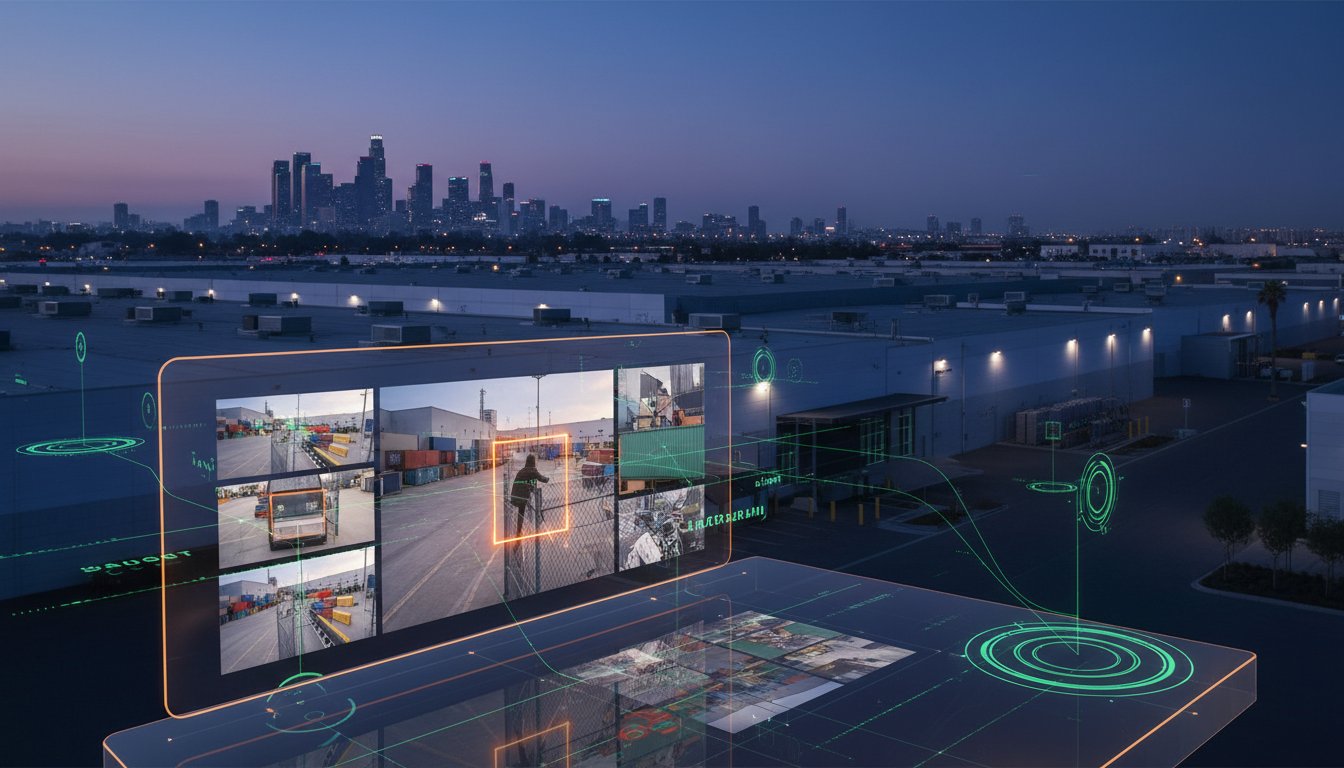

Commercial Video Surveillance System Installation in Los Angeles: The 2026 Strategic Guide
If you rely on passive cameras to protect your business, you aren't actually preventing crime; you're just documenting your losses. With 69% of U.S....
If you rely on passive cameras to protect your business, you aren’t actually preventing crime; you’re just documenting your losses. With 69% of U.S. employers now utilizing surveillance, simply having eyes on your property is no longer a competitive advantage. To truly secure your assets, you need a commercial video surveillance system in Los Angeles that moves beyond recording and into active intervention. You likely feel the pressure of rising property infractions across the city, and the high cost of traditional security guards often makes them a difficult line item to justify.
This guide will teach you how to design a proactive security framework that stops crime before it happens. We’ll show you how to integrate technologies like live CCTV monitoring and voice-down intervention to create a system that acts as a vigilant expert for your site. You’ll learn how a strategic approach to security system installation provides reliable visibility, reduces insurance premiums, and transforms your security from a passive expense into a savvy business decision.
Key Takeaways
- Modern property crime trends in Los Angeles require a strategic shift from passive recording to active intervention to protect high-risk industrial sites effectively.
- A successful commercial video surveillance system Los Angeles installation starts with a comprehensive site vulnerability assessment to identify critical entry points and blind spots.
- Advanced AI-driven analytics can significantly reduce false alarms while ensuring high-resolution cameras detect and track potential intruders with precision.
- Professional installation is essential for maintaining insurance compliance and meeting specific Los Angeles building codes and electrical permitting requirements.
- Integrating live remote monitoring transforms your security hardware into a proactive asset capable of stopping crime in real-time through virtual guarding.
The Business Case for Commercial Video Surveillance in Los Angeles
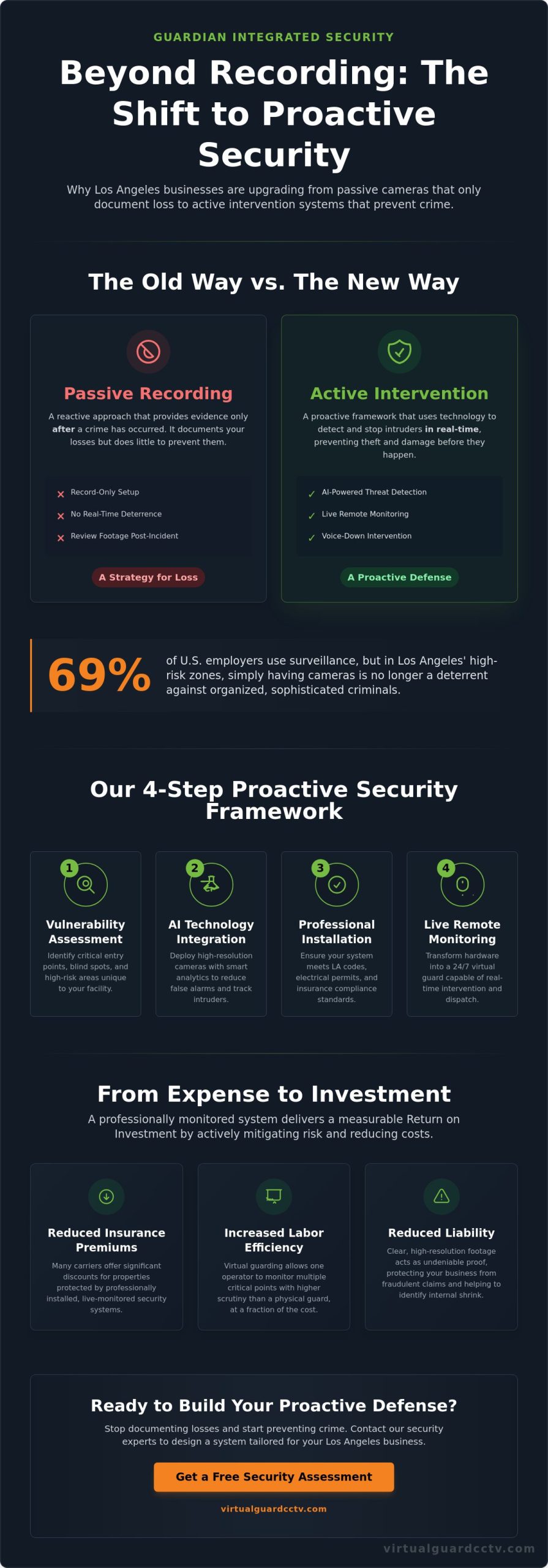
Investing in a commercial video surveillance system Los Angeles businesses can rely on is no longer just a security precaution; it’s a financial necessity. As we move through 2026, property infractions in Southern California have evolved. Criminals are more organized, faster, and often undeterred by the sight of a standard camera. Traditional “record-only” setups fail because they only provide evidence after the damage is done. For high-risk industrial sites, waiting until Monday morning to review footage of a cleared-out warehouse is a strategy for loss, not security.
Modern protection requires a shift toward active intervention. By understanding CCTV technology and its transition from analog tapes to AI-driven digital ecosystems, owners can deploy systems that detect threats in real-time. This proactive stance is particularly effective against rampant local issues like catalytic converter theft and fleet tampering, where every second counts. A sophisticated system doesn’t just watch; it acts as a deterrent that forces intruders to rethink their targets.
Understanding the LA Security Landscape
Los Angeles commercial zones, from the South Bay trucking corridors to the industrial hubs of the San Fernando Valley, face unique vulnerabilities. Large perimeters and high-value outdoor assets make warehouses and retail centers prime targets for sophisticated theft rings. While 69% of U.S. employers now use office surveillance, the standard has shifted in LA. Business owners are moving away from expensive, stationary physical guards in favor of technology-driven solutions. These modern systems offer constant site visibility without the logistical headaches or high hourly rates associated with traditional personnel, and for those seeking to secure specialized fleet assets, Lock and Track provides expert insights into advanced vehicle protection.
ROI of Professional System Installation
The financial argument for a professional commercial video surveillance system Los Angeles installation is grounded in long-term savings and risk mitigation. When you calculate the true cost of a single major theft, including lost inventory, property damage, and operational downtime, the investment in a monitored system pays for itself quickly. Professional installation also ensures your system meets the rigorous standards required for insurance compliance.
- Insurance Benefits: Many carriers offer reduced premiums for properties with professionally installed, monitored systems that include integrated access control.
- Labor Efficiency: Virtual guarding allows one operator to monitor multiple points simultaneously. This provides a higher level of scrutiny than a person walking a physical beat.
- Liability Reduction: Clear, high-resolution footage protects your business from fraudulent “slip and fall” claims and internal shrink.
By integrating live CCTV monitoring and voice-down intervention, you create a defensive layer that actually stops crime. This approach ensures your security budget is spent on prevention rather than just documentation. A well-designed system is a savvy business decision that offers both peace of mind and a measurable return on investment.
How to Design a Surveillance Strategy for Your Facility
Effective security starts long before the first wire is pulled or the first camera is mounted. A generic approach to security often leaves expensive gaps that savvy intruders are quick to exploit. Designing a commercial video surveillance system Los Angeles business owners can trust requires a methodical assessment of the physical and operational realities of your specific site. You aren’t just buying hardware; you’re building a proactive defense tailored to your facility’s unique footprint.
This process begins with a comprehensive vulnerability assessment. During this phase, you must consider the legal framework for video surveillance to ensure your design respects privacy laws while maximizing site protection. Balancing interior coverage with perimeter defense is critical. While it’s important to monitor internal activity, stopping a breach at the fence line is always the superior outcome.
Step 1: Identifying High-Risk Areas
Mapping your perimeter is the immediate priority. In high-traffic LA industrial zones, your loading docks and perimeter fences are the most likely points of entry for unauthorized individuals. You should identify ‘dead zones’ where traditional, static cameras often fail due to poor lighting or structural obstructions. By using local crime heat maps, you can prioritize coverage in areas historically prone to infractions, such as secluded storage yards or poorly lit employee parking lots.
Step 2: Defining Operational Requirements
Your business’s daily rhythm determines your monitoring needs. While some facilities require 24/7 visibility, others may only need intensive after-hours protection. You must also plan for evidentiary video retention. High-value asset zones often require longer storage durations to meet insurance or internal audit requirements. A savvy business leader also plans for future scalability. Your initial design should allow for easy expansion as your operations grow or as new high-risk zones are identified.
A standalone camera system is often a missed opportunity for total site control. Integrating your surveillance with existing access control and alarm systems creates a unified security ecosystem. For example, when an unauthorized badge is swiped at a secure entrance, your system should automatically trigger a nearby camera to record the event. If you’re ready to move beyond basic hardware and want a professional security system design from a trusted provider like Guardian Integrated Security, taking a strategic approach now prevents costly retrofits later.
Choosing the Right Technology: From HD Cameras to AI Analytics
Hardware selection is where your security strategy becomes tangible. For a commercial video surveillance system Los Angeles owners can rely on, the hardware must be as resilient as the strategy is smart. While basic cameras merely document events, high-tier hardware combined with intelligent software allows for immediate detection and intervention. Selecting the right components requires balancing the specific needs of your site with the technological capabilities of modern equipment.
High-Definition Hardware Essentials
In 2026, 4K resolution has become the non-negotiable standard for commercial evidence. Lower resolutions often fail to capture the facial details or license plate numbers necessary for successful prosecution. For large industrial lots, PTZ (Pan-Tilt-Zoom) cameras provide active tracking capabilities that static cameras cannot match. These units can zoom in on suspicious activity from hundreds of yards away, ensuring no detail is lost. When planning a commercial video surveillance system Los Angeles deployment, integrating these high-resolution sensors ensures your perimeter stays secure regardless of the distance.
Dome cameras are ideal for indoor environments or retail spaces due to their discreet profile and vandal-resistant design. Conversely, bullet cameras serve as a prominent visual deterrent for perimeters and loading docks. Given Southern California’s climate, hardware must feature weather-resistant housing to withstand high temperatures and persistent dust. To further protect your facility’s interior and reduce glare for better camera performance, you might consider professional window film solutions; for instance, Sun Guard Tint provides a comprehensive guide on selecting the right installers and film types to meet high performance standards. Selecting durable, specialized hardware ensures your investment remains operational and reliable year-round without frequent maintenance interruptions.
Software and Intelligent Monitoring
The true intelligence of your system lives within the Video Management Software (VMS). Modern VMS platforms centralize your security operations, allowing for seamless integration of various camera types and access control sensors. The most significant advancement in recent years is the integration of AI-driven analytics. This technology allows the system to distinguish between harmless movement, such as blowing debris or animals, and actual human intruders.
This precision is vital because it significantly reduces false alarms, allowing security personnel to focus on genuine threats. Thermal imaging further enhances this by providing 24/7 perimeter protection, even in total darkness or heavy fog. When the system detects a breach, Voice-Down Intervention technology allows a remote operator to speak directly to the intruder. This immediate verbal challenge often stops a crime in its tracks before physical damage occurs.
As you deploy these advanced tools, it’s essential to remain mindful of Fourth Amendment considerations regarding privacy and data collection. Balancing high-tech observation with legal compliance protects your business from unnecessary liability. Whether you choose cloud-based storage for its scalability or on-premise servers for maximum bandwidth control, the goal is a unified system that offers both clarity and actionable intelligence.
Navigating the Installation Process: Professional vs. DIY Pitfalls
Attempting a DIY setup for your business security isn’t just a technical challenge; it’s a significant liability risk. A professional commercial video surveillance system Los Angeles installation ensures that your property meets the specific legal and technical standards required for commercial insurance and law enforcement cooperation. While off-the-shelf kits might seem cost-effective, they often lack the encryption, durability, and compliance features necessary for a high-stakes business environment. Professional installers bring the expertise needed to navigate complex building codes and ensure your hardware is positioned for maximum effectiveness.
Local Compliance and Regulations
In Los Angeles, any company installing low-voltage systems must possess a C-7 Low Voltage Systems Contractor License from the California Contractors State License Board. If your system integrates intercoms or electronic access control, a C-28 license may also be required. Beyond licensing, you must navigate California’s strict “two-party consent” laws. This means recording confidential audio without the consent of all parties is illegal. Professional installers ensure your system is configured to stay within these legal boundaries while still providing elite protection.
- Privacy Restrictions: It’s illegal in California to place cameras where individuals have a reasonable expectation of privacy, such as restrooms or locker rooms.
- Gun Shop Requirements: Licensed firearms dealers in California must record all points of sale and entrances, with footage stored for at least one year.
- Signage and Notice: Proper signage must be posted to inform the public and employees of active surveillance to maintain legal compliance.
- LAPD Standards: Professionally monitored systems are often required for “verified response” protocols, ensuring police prioritize your site during a breach.
The Installation Workflow
A strategic installation involves more than just mounting cameras. It requires a robust network backbone. High-resolution 4K cameras demand significant bandwidth; therefore, we conduct pre-installation stress testing to ensure your network can handle the load without lagging. Structured cabling is essential for long-term reliability. We prioritize tamper-proofing by using conduit and secure mounting hardware to prevent criminals from disabling your defense. This methodical approach ensures your system remains operational when you need it most.
Final calibration is the most critical step. We test every angle to eliminate blind spots and ensure that lighting conditions, including the harsh glare of the Southern California sun, don’t wash out your footage. Once the hardware is set, we synchronize the system with your monitoring center to verify that every alert is received instantly. If you want to ensure your site is fully protected and compliant, it’s time to invest in a professional Security System Installation that meets the highest industry standards.
Beyond Passive Recording: The Power of Live Remote Monitoring
A camera that only records is a witness, but a camera that is monitored in real-time is a defender. The true power of a commercial video surveillance system Los Angeles business owners deploy lies in its ability to trigger an immediate response. Passive systems leave you with footage of a crime that has already occurred. Proactive systems, however, utilize live remote monitoring to identify threats as they develop. This shift from reactive documentation to active intervention is what separates a standard security setup from an elite defense strategy.
Virtual guarding serves as the backbone of this proactive approach. Instead of relying on a physical guard who may have limited visibility or be subject to fatigue, remote professionals use your high-definition camera network to maintain constant vigilance. When a perimeter is breached, these experts don’t just watch. They use voice-down intervention technology to speak directly to the intruder. A clear, authoritative verbal command is often enough to stop a crime before any physical entry or damage takes place. This method provides a level of site control that traditional, stationary guards simply cannot match.
The Virtual Guarding Advantage
Choosing virtual guarding over on-site physical security is a savvy business decision rooted in financial intelligence. Physical guards are a significant recurring expense and can only be in one place at a time. Off-site professionals provide 100% site coverage without the need for breaks or shift changes. When a genuine threat is detected, these operators follow strict protocols for immediate police dispatch. Because the threat is “verified” by a live operator, law enforcement often prioritizes the call. You can learn more about Virtual Guarding Services in Southern California to see how this technology scales for your specific industry.
Selecting a Monitoring Partner
The effectiveness of your commercial video surveillance system Los Angeles depends entirely on the quality of your monitoring partner. You should prioritize a provider that utilizes a UL-listed monitoring center, which ensures the highest standards for redundancy and response times. Local expertise in the Los Angeles security landscape is also critical. A partner that understands local law enforcement protocols can navigate the dispatch process more efficiently than a generic, national call center.
Guardian Integrated Security combines advanced hardware with rigorous monitoring standards to provide a comprehensive security ecosystem. By integrating live CCTV monitoring with proactive intervention, we ensure that your property is never left vulnerable. This strategic partnership offers the peace of mind that comes from knowing a vigilant expert is always standing guard over your assets, ready to act the moment a threat appears.
Securing Your Future with Proactive Intelligence
Transitioning your security from a passive expense to a proactive asset is the most critical step you can take for your facility in 2026. This guide has detailed how a sophisticated commercial video surveillance system Los Angeles deployment combines high-definition hardware with intelligent remote monitoring to stop crime before it occurs. By prioritizing professional installation over DIY alternatives, you ensure your site remains compliant with California’s strict privacy laws while maximizing your insurance benefits and liability protection.
Traditional security methods often fail to meet the demands of modern industrial sectors. Our virtual guarding solutions provide comprehensive site coverage and real-time voice-down intervention technology at a rate that’s 60% more cost-effective than hiring traditional security guards. This approach offers an expert design tailored specifically for the unique commercial and industrial landscape of Southern California. Don’t wait for an infraction to occur before you upgrade your defenses. Secure Your Business with a Professional Los Angeles Surveillance Audit today and gain the peace of mind that comes with constant, expert vigilance.
Frequently Asked Questions
Do I need a permit for commercial security camera installation in Los Angeles?
Yes, most commercial installations in Los Angeles require electrical permits for low-voltage wiring to ensure compliance with local building codes. Additionally, the company performing the work must hold a valid C-7 Low Voltage Systems Contractor License from the California Contractors State License Board. Working with a licensed professional ensures that your system meets all safety and regulatory standards required by the city.
How much does a commercial video surveillance system cost for a small business?
Industry data for 2026 indicates that a typical small business system with four to eight cameras generally ranges between $2,400 and $5,700 for hardware and professional labor. These costs fluctuate based on camera resolution, storage capacity, and the complexity of the wiring. You should verify specific pricing with a licensed provider to get an accurate estimate for your facility’s unique footprint.
What is the difference between passive CCTV and remote video monitoring?
Passive CCTV systems only record footage for later review, whereas remote video monitoring involves live professionals watching your feeds in real-time. This active approach allows for immediate intervention during a security breach. It transforms your commercial video surveillance system Los Angeles from a simple recording tool into a proactive defense mechanism that can stop crime as it happens.
Can security cameras help reduce my business insurance premiums in California?
Many insurance carriers in California offer premium discounts to businesses that implement professionally monitored surveillance and access control systems. Proactive technology reduces the likelihood of successful theft and provides verified evidence for liability claims. By demonstrating a lower risk profile through live monitoring, you position your business as a savvy candidate for reduced rates and improved coverage terms.
How long should a commercial security system retain video footage?
Most commercial businesses should retain their video footage for a minimum of 30 days to cover the typical window for reporting incidents or filing insurance claims. However, specific industries have legal mandates; for example, licensed firearms dealers in California must store surveillance records for at least one year. Your specific retention policy should be based on your industry regulations and your site’s vulnerability level.
Is wireless or wired installation better for a large industrial site?
Wired installations are the superior choice for large industrial sites because they provide stable bandwidth and are not susceptible to signal interference. Large perimeters often have structural obstructions that can weaken wireless signals, leading to intermittent or low-quality video feeds. A wired network ensures that every camera maintains a reliable, tamper-proof connection to your central recording hardware.
What happens if the internet goes out? Do the cameras still record?
Your cameras will continue to record if your system includes an on-site network video recorder (NVR) or digital video recorder (DVR) with a local hard drive. While you may lose the ability to view feeds remotely during an outage, the footage is stored locally on the hardware. Once your internet connection is restored, the system can sync the data with your cloud storage or monitoring center.
How does voice-down intervention actually stop a crime in progress?
Voice-down intervention stops crime by removing an intruder’s sense of anonymity through a direct, live verbal challenge. When a remote operator detects a trespasser, they use integrated speakers to inform the individual that they are under surveillance and that authorities have been notified. This immediate psychological deterrent is highly effective, as most criminals will flee once they realize they are being actively watched and identified.


