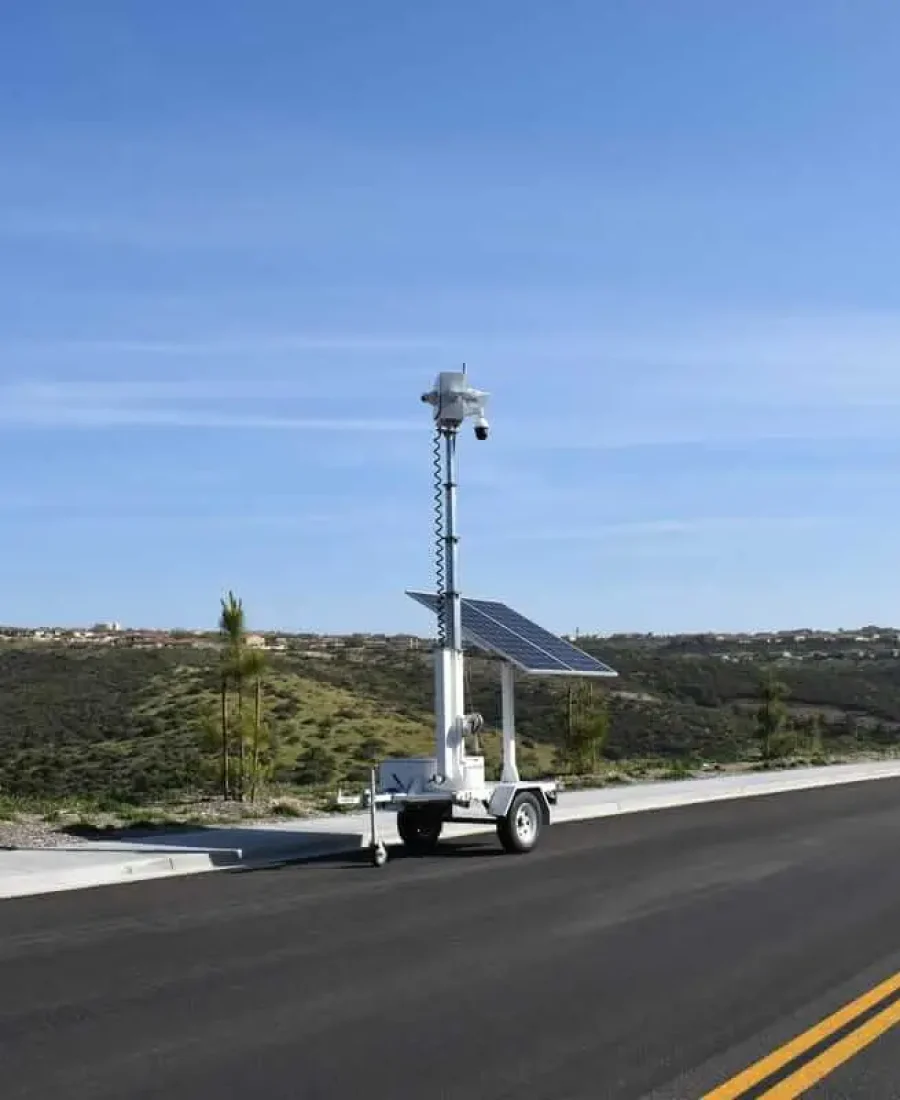
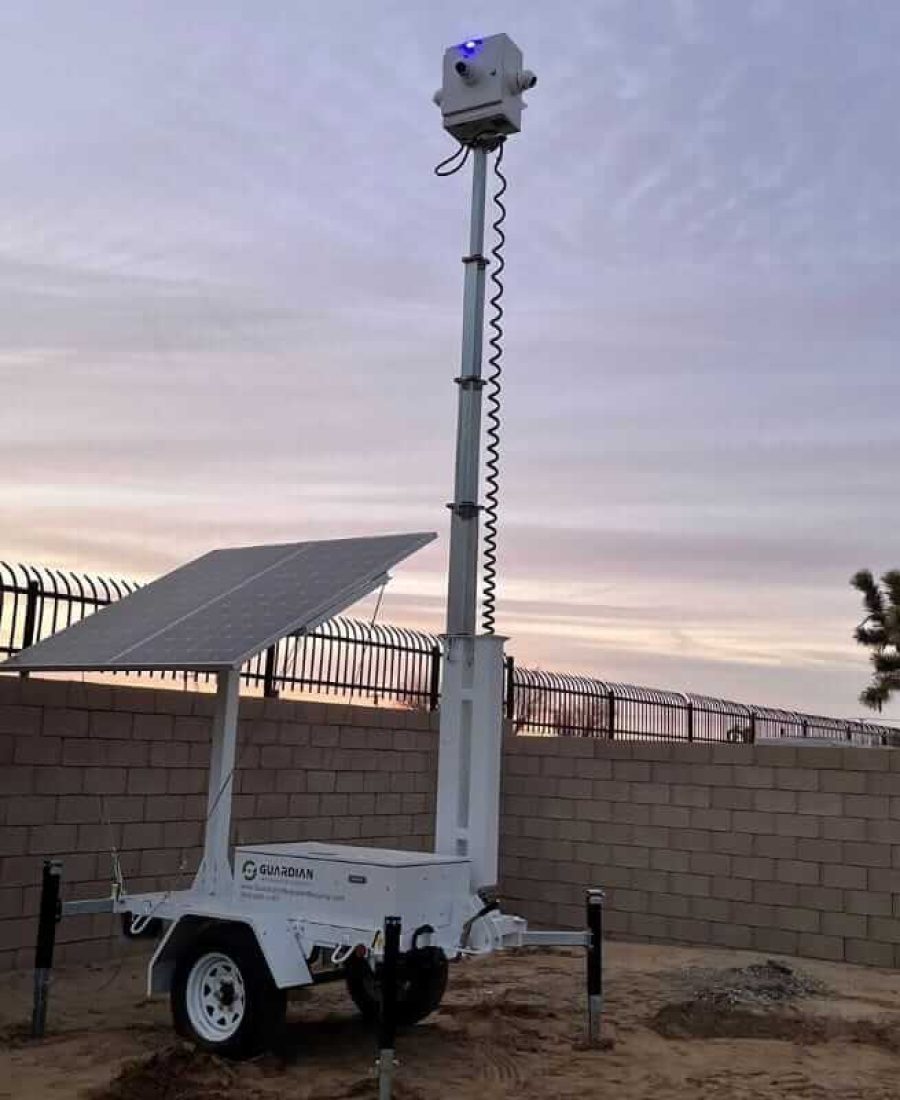
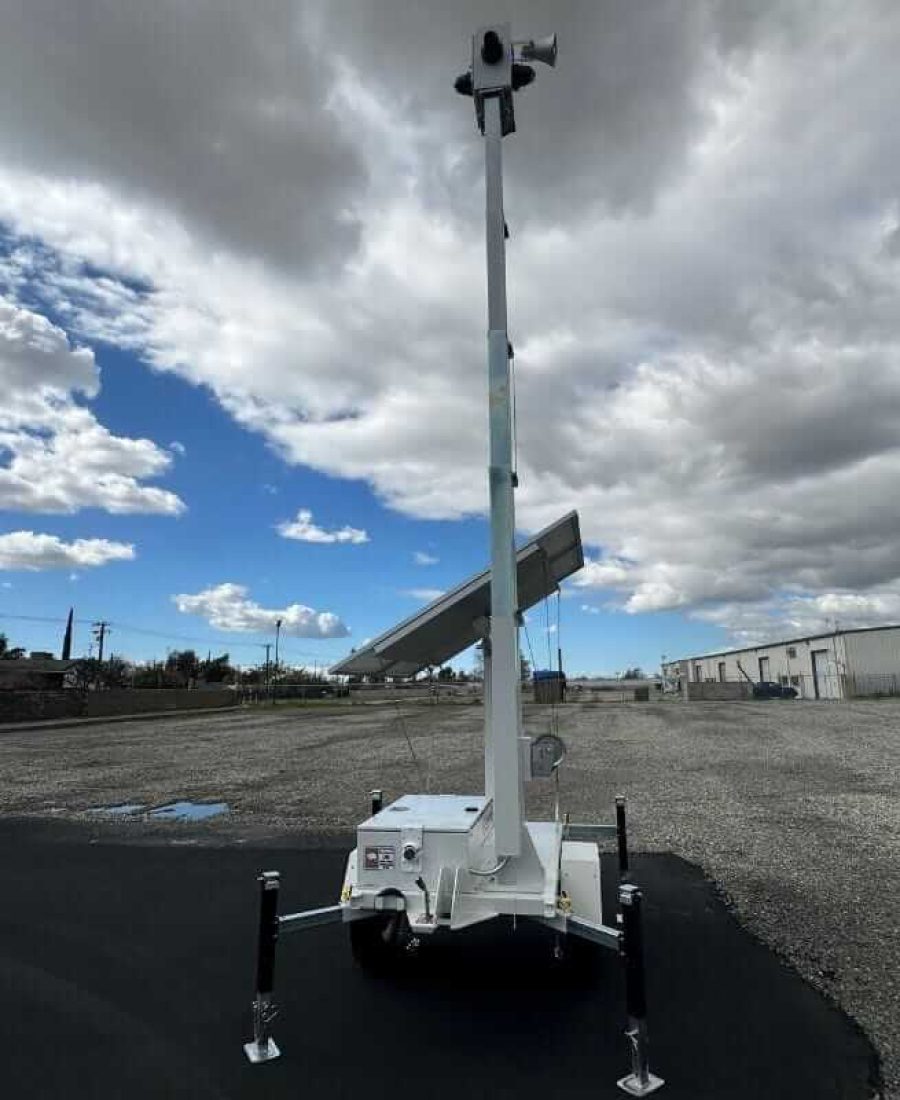
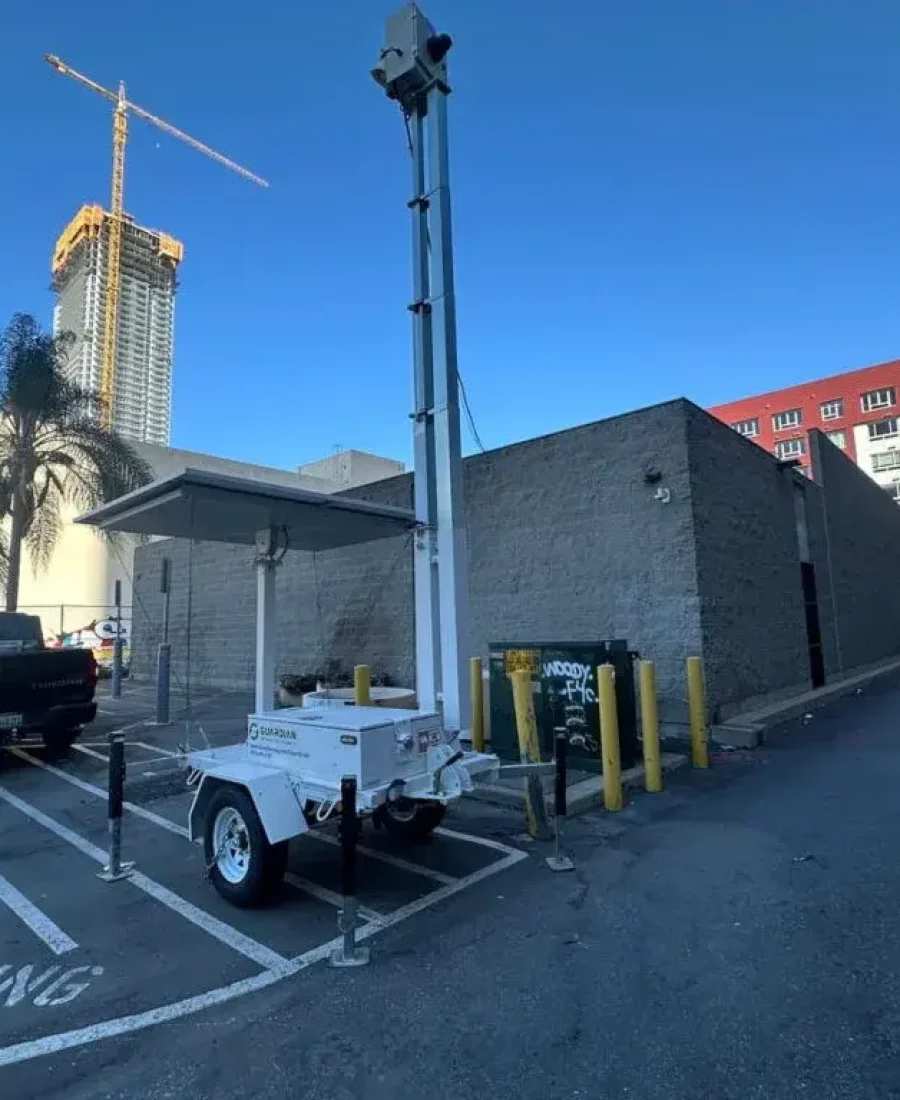
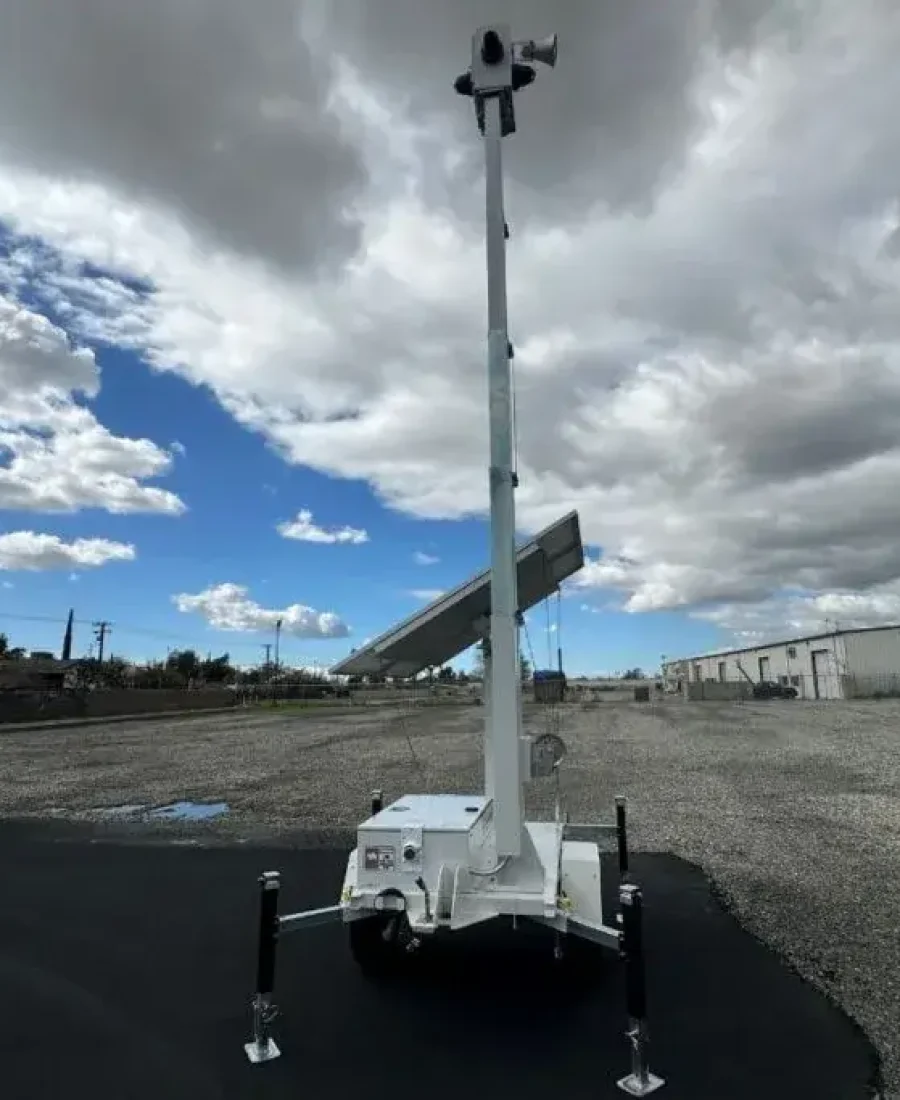
A mobile surveillance unit is a self-contained, solar-and-cellular-powered camera platform that delivers security
coverage on sites without permanent power, wiring, or built infrastructure. Mounted on a compact, towable base, it
can be positioned within hours and relocated as a site’s risk changes, providing camera coverage anywhere a fixed
installation isn’t practical yet.
Property managers deploy these units on active construction phases, seasonal or overflow parking lots, undeveloped
land at the edge of infrastructure, and any site that just had an incident and needs coverage before a permanent
system gets designed and scheduled.
A fixed camera system assumes a building to mount to, a trench for cable, and grid power already in place —
assumptions that don’t hold on a site still being graded, a lot leased for one season, or a parcel with no utilities at all.
Deployment starts with a short site assessment covering power access, cellular signal, and sightlines, followed by
delivery and setup, typically recording within hours of arrival. From there the unit feeds into live monitoring or runs as
a standalone recorder, and relocates again once the site’s risk shifts elsewhere.
A stable property with existing infrastructure usually gets more coverage per dollar from a permanent CCTV
installation. A mobile unit earns its place specifically where that infrastructure doesn’t exist yet, or won’t exist long enough to justify building it.
Virtual Guard CCTV designs, deploys, and monitors mobile surveillance units in-house, so one company
plans the coverage and stands behind it.
Virtual Guard CCTV is licensed under California PPO #121089 and BBB A+ accredited since 2021, operating in California since 2014. Licensing and accreditation are verifiable credentials, not marketing language attached to a rented fleet of cameras.
Every unit we deploy is configured, monitored, and relocated by our own team, not handed off to a third-party rental vendor once it’s dropped on your site.
Solar panels and an onboard battery bank handle power, a cellular connection handles the network, and
siting depends on sightlines, not proximity to a building.
A solar array keeps the battery bank charged through several consecutive overcast days, so power isn’t a single point of failure the way a generator or extension cord would be.
Placement is chosen for what the camera can actually see — an open yard, a gated entrance, a perimeter fence line — not for what happens to be convenient to wire.
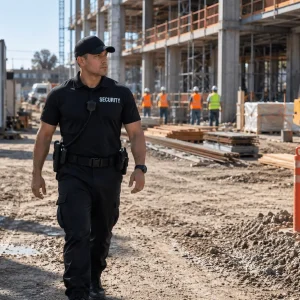
Active job sites lose equipment and materials to unsupervised overnight hours — the exact gap live monitoring is built to close.
Temporary or relocatable camera coverage may be available for suitable retail properties, depending on site requirements, equipment availability, and the selected monitoring plan.
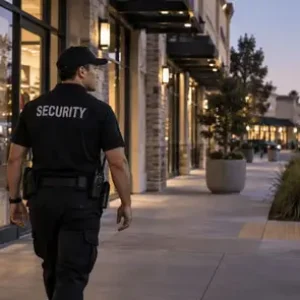
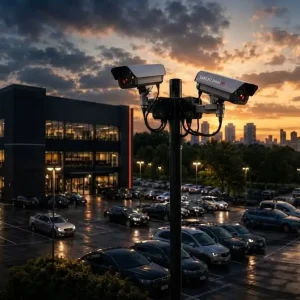
Office buildings, financial institutions, and other commercial properties need monitored coverage of entry points and parking areas outside business hours, when the building sits empty.
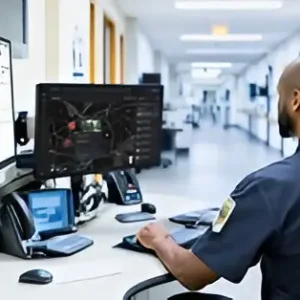
Virtual Guard CCTV provides mobile surveillance units to help businesses monitor properties using flexible camera security solutions suited to their specific needs, live monitoring, and real human intervention.
We believe security should be proactive, not reactive. Instead of only recording incidents after they happen, our mobile surveillance units provide flexible camera coverage for commercial properties, with options for standalone operation or integration with live video monitoring services.
Our team supports construction sites, commercial properties, apartment communities, warehouses, retail locations, parking facilities, and high-risk environments that need dependable protection.
Onboard motion analytics flag genuine activity instead of every passing vehicle, giving sites that would
otherwise sit unwatched overnight a real deterrent presence.
Analytics distinguish a person or vehicle actually approaching equipment from routine background movement — a passing car, blowing debris, a shifting shadow — so an alert reaching an operator means something genuinely happened.
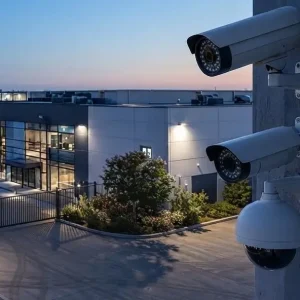
A visible camera mast and a record of activity on file are often enough on their own to change behavior at a site with
no other presence after dark.
A unit typically arrives, gets positioned, and starts recording within hours — then moves again the moment a site’s actual risk shifts elsewhere.
There’s no trenching to schedule, no permit wait for permanent construction, and no cable run to plan around — the unit is towed or wheeled into position, leveled, and connected to power within the same visit.
When a construction phase wraps or a seasonal lot closes, the same unit relocates to wherever coverage is actually needed next, rather than sitting idle where the need has already passed.
Get a free security assessment and discover the best monitoring solution for your site.
Solar-powered units are delivered, positioned and relocated anywhere in California that a site needs coverage without power or a network connection.
What site supervisors ask before a unit gets dropped.
A mobile surveillance unit is a self-contained, portable camera platform — powered by solar and connected over cellular, with no permanent installation required — that can be positioned wherever a site needs coverage and relocated once that need changes. It’s built for sites that don’t have existing infrastructure, not as a substitute for a permanent system on a stable property.
Solar panels and a battery bank supply power, a cellular connection handles the network, and the onboard camera records or streams from wherever the unit is positioned. Setup typically takes hours rather than the days a trenched, hardwired system requires, and the unit can run as a standalone recorder or feed into live monitoring.
Cost depends on deployment duration, monitoring tier, and site conditions, so we quote per deployment instead of publishing a flat rental rate. A two-week seasonal lot and a multi-month construction phase are genuinely different jobs. Contact us and we’ll price your actual deployment rather than a generic package.
It comes down to whether the need is temporary or ongoing. A property with stable, existing infrastructure generally gets more coverage per dollar from a permanent CCTV installation. A mobile unit makes sense when the site itself is temporary, seasonal, or lacks the power and structure a fixed system needs — the mobility is the point, not a compromise.
No trenching or permanent construction, setup measured in hours rather than weeks, no dependency on grid power or existing wiring, and the ability to relocate coverage as risk moves — a construction phase wrapping up, a seasonal lot closing. The tradeoff is that a permanent system, where one is practical, typically costs less per camera over the long run.
Solar panels charge an onboard battery bank sized to keep the unit running through several consecutive overcast days without a grid connection. The network runs over cellular, so the unit doesn’t need a wired internet line either — the entire platform is built to operate on a site with no existing utilities at all.