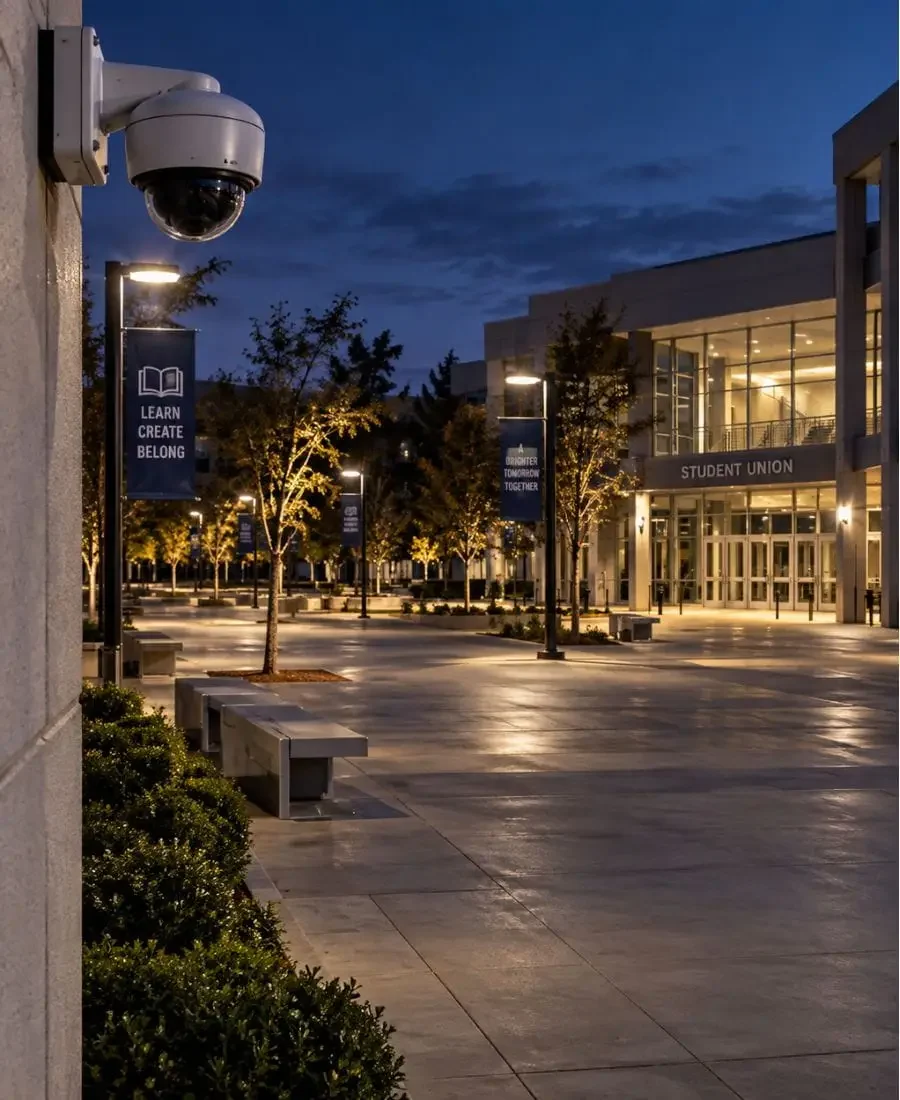
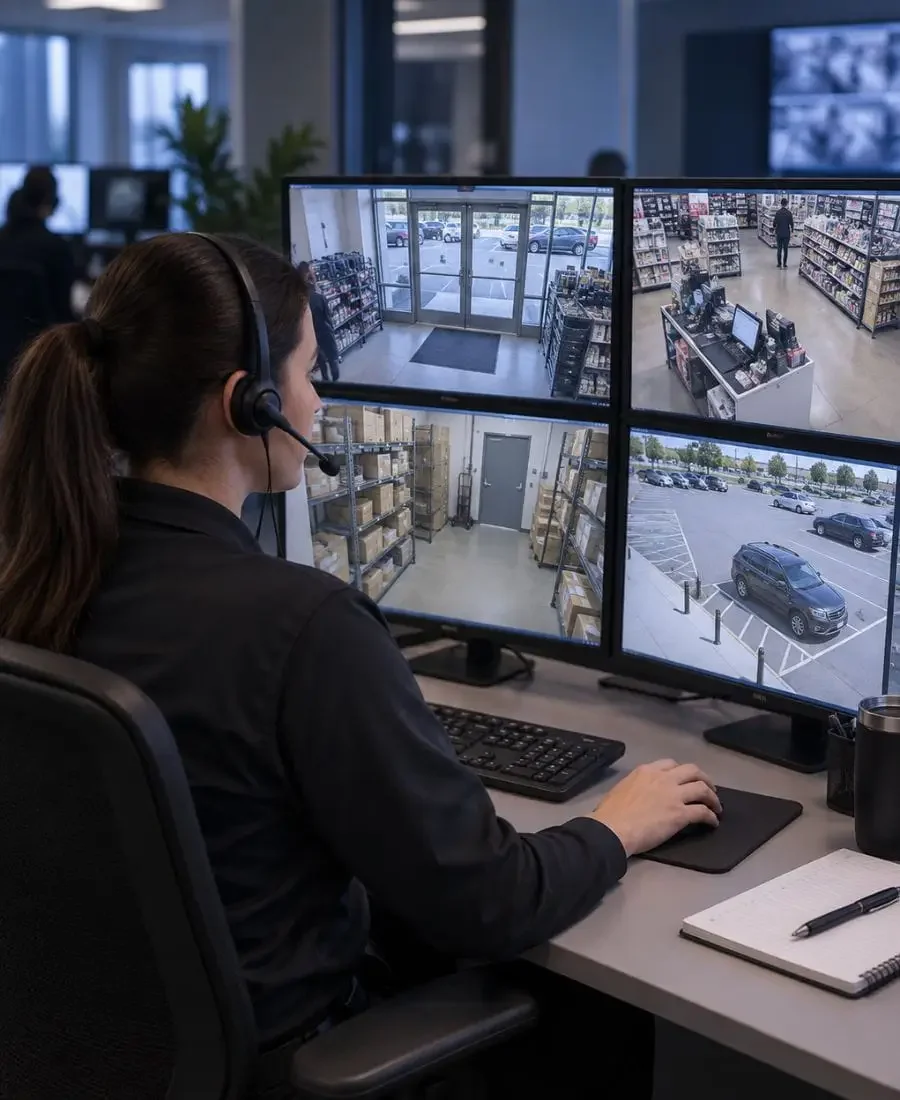
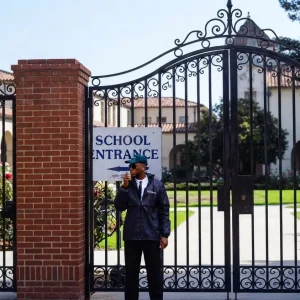
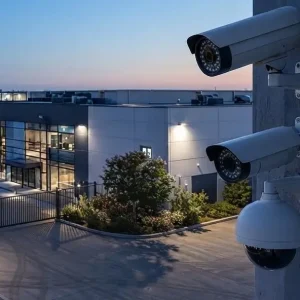
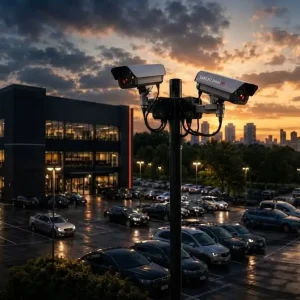
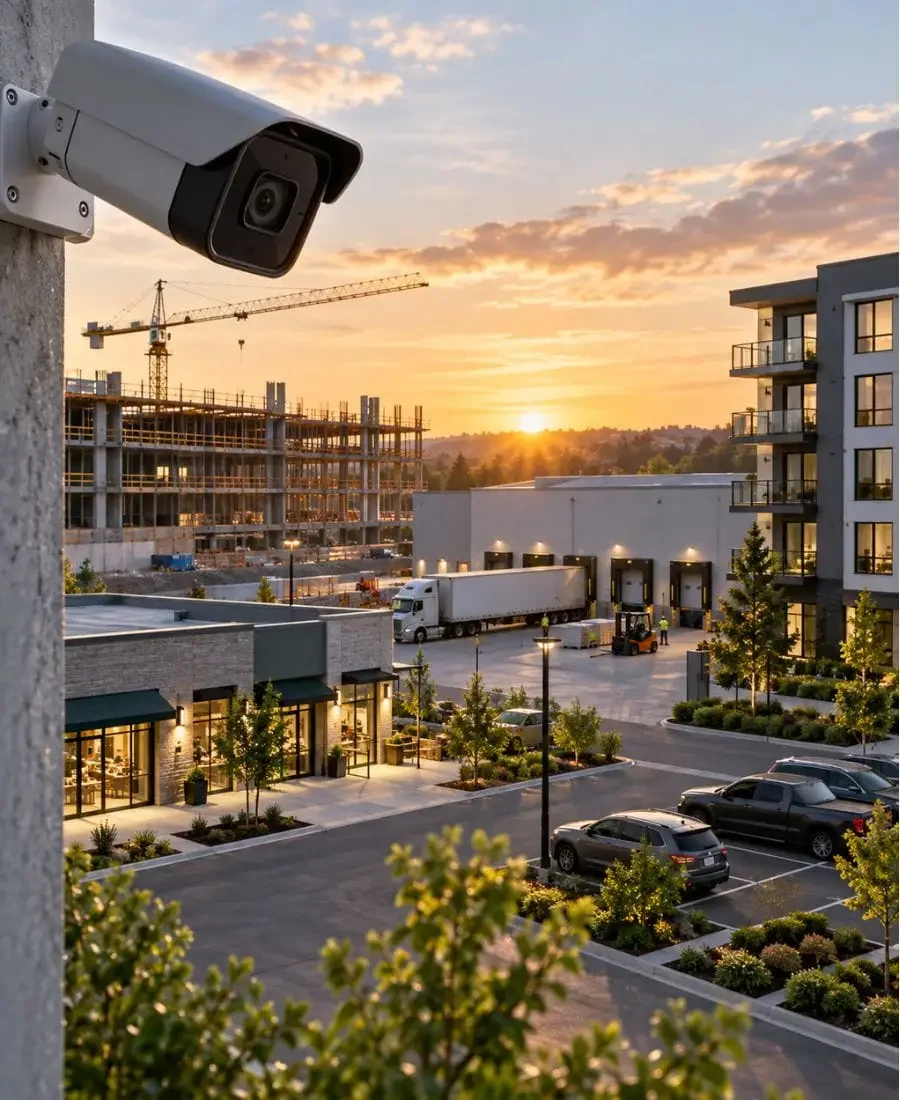
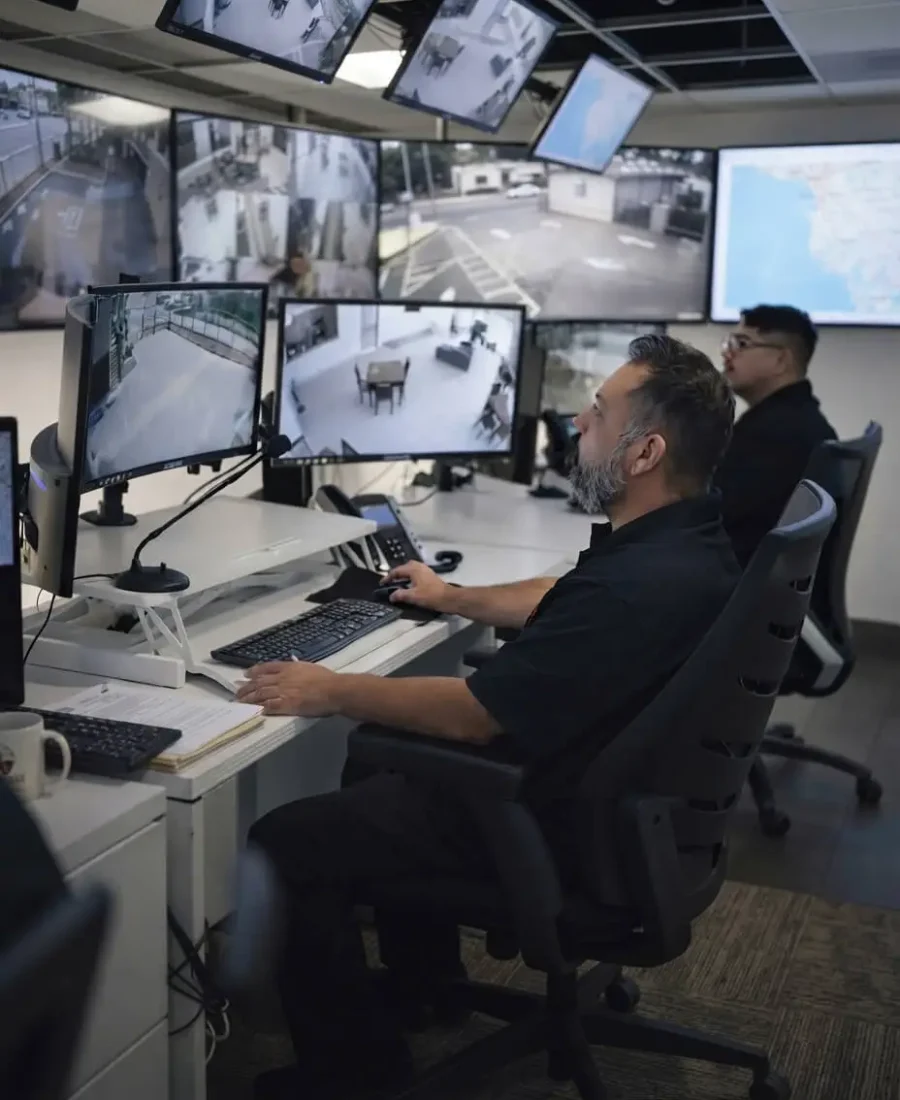
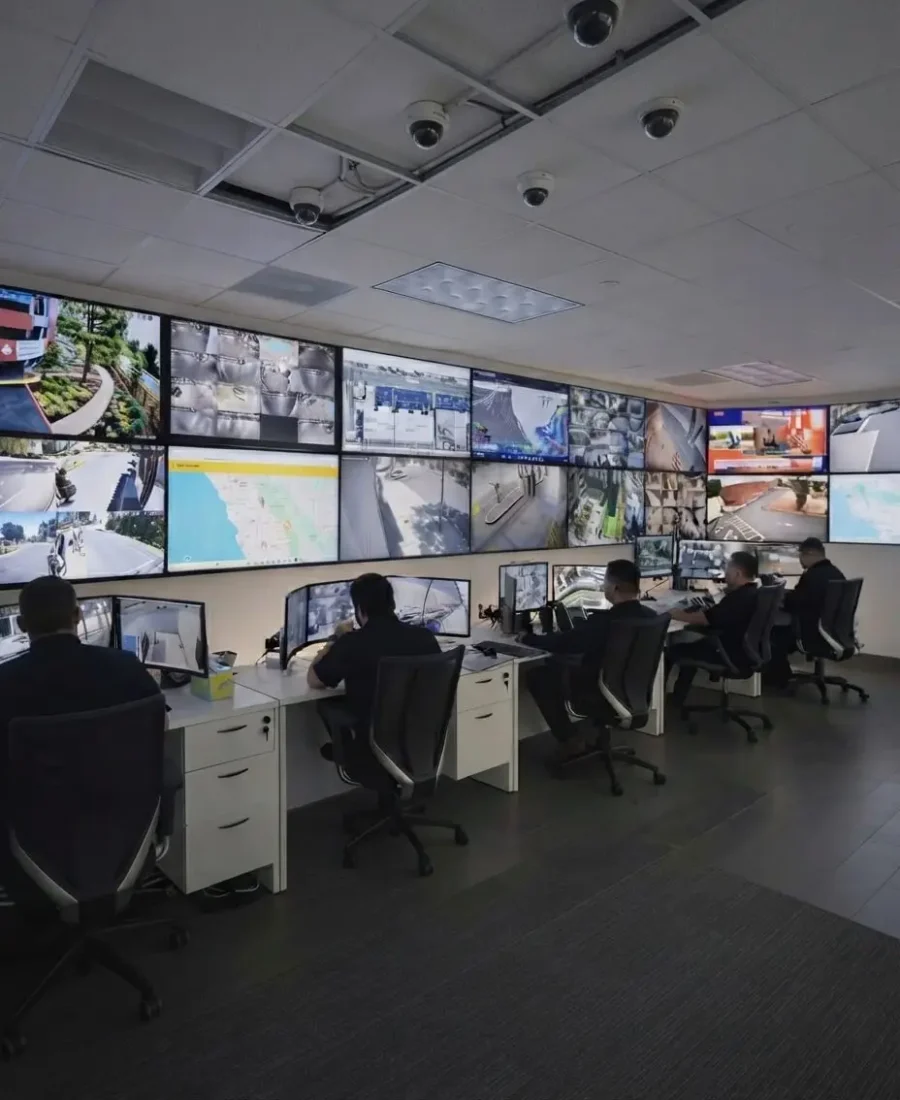
School and campus security monitoring is a remote surveillance service that pairs live cameras with a monitoring center operator who watches K-12 and college campuses after hours, on weekends, and during school breaks — verifying activity at entrances, athletic facilities, and parking lots, and alerting law enforcement before vandalism, theft, or trespass is complete.
School and college campuses are built for daylight foot traffic, not perimeter security. Sprawling grounds spread across several acres carry dozens of gates, breezeways, and parking lot entrances, and most properties have no single fence line — just multiple vehicle and pedestrian access points that stay open long after the buildings are locked.
The real exposure window falls outside the school day — weeknights, weekends, and the extended stretches of winter and summer break, when a campus sits empty far longer than it’s occupied and nobody is scheduled to notice a cut fence until Monday.
Athletic facilities, portables, and maintenance yards sit at the edges of campus, away from main buildings, making them frequent targets for graffiti, vandalism, and copper theft from HVAC and electrical equipment. Parking lots and bus yards see similar overnight break-in attempts.
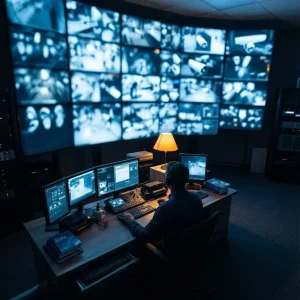
A camera system that only records hands a facilities director a clip after the damage is done. Live monitoring puts an operator on the feed in real time, able to flag activity and respond while someone is still on the property.
Virtual Guard CCTV pairs live cameras with a monitoring center operator who watches your campus after hours, not footage reviewed the next morning.
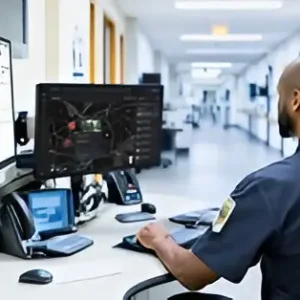
Every camera placed on a school or college campus feeds into a monitoring center where a trained operator can see and respond to activity in real time, rather than store footage for a report reviewed the next business day.
That distinction matters most during the hours nobody is scheduled to be on campus, when an intruder has more time to operate on district property before anyone notices something is wrong.
Large, open campuses spread across multiple acres with dozens of gates, breezeways, and parking entrances need more coverage than a single fence line can provide.
A campus rarely has one main entrance to watch. Vehicle gates, pedestrian walkways, athletic field access points, and loading areas for maintenance and delivery vehicles all sit open once classes let out, and each one is a way onto district property after hours.
Cameras placed at every major access point feed live to a monitoring center, where an operator can see someone approaching a gate or fence line and respond before they’re past it.
Active job sites lose equipment and materials to unsupervised overnight hours — the exact gap live monitoring is built to close.
Temporary or relocatable camera coverage may be available for suitable retail properties, depending on site requirements, equipment availability, and the selected monitoring plan.
Office buildings, financial institutions, and other commercial properties need monitored coverage of entry points and parking areas outside business hours, when the building sits empty.
School and college campuses include gates, entrances, athletic areas, portable buildings, and parking facilities that need a coordinated security plan.
School and college campuses may remain unoccupied for extended periods, including overnight, on weekends, and during winter and summer breaks. These quieter hours can create security concerns across buildings, parking areas, and outdoor facilities.
Unauthorized access, vandalism, and theft of equipment or materials are potential risks when fewer staff members are present. Strategically placed security cameras can help monitor designated entrances, parking lots, and other vulnerable areas during scheduled monitoring hours.
A school or college campus sits empty for far more hours than it’s occupied — nights, weekends, and the extended stretches of winter and summer break.
Most campuses are staffed and busy for roughly eight or nine hours a day, five days a week. The rest of the time — overnight, every weekend, and the weeks of winter and summer break — the property sits vacant with no one scheduled to check a gate or a portable building.
That vacancy is exactly when a trespasser has the most time to work unnoticed. Live monitoring covers those hours continuously, so an empty campus is never actually unwatched.
Live-monitored cameras, night vision, two-way audio, and incident reporting built for facilities directors and district administrators — not a list of camera counts and lens specs.
The box unit’s feed is monitored live and equipped with night vision, since most flagged activity happens after dark or outside business hours when the mounting point sees the least foot traffic.
Every alert the monitoring center acts on is logged, so you get a record of what was seen and what response followed — a live audio warning, a call placed, or activity dismissed as routine — not just a folder of unreviewed clips.
Share the campus map and the school calendar, and we’ll return coverage for entrances, fields, and lots when the site is empty.
School and college campuses across the state are monitored through nights, weekends, holidays and the summer break.
What facilities directors and district administrators ask about covering an empty campus.
Live monitoring gives a campus real-time eyes on gates, entrances, and access points instead of only recorded footage reviewed after damage is discovered. Cameras covering the perimeter, parking lots, and athletic facilities feed live video to a monitoring center, where an operator can flag someone on the property after hours, issue a live audio warning through the camera’s speaker, and contact law enforcement while they’re still on-site. Recorded-only systems can only confirm what already happened; live monitoring is built to intervene while it’s still happening.
Copper wiring and HVAC components are common targets because rooftop and ground-mounted units sit in low-traffic areas of a campus, often away from main buildings, and a theft can be completed in minutes. Live monitoring places cameras at mechanical yards and rooftop access points so an operator watching in real time can spot someone approaching equipment and respond before it’s stripped, rather than discovering the damage on the next maintenance visit.
A recorded-only camera system stores footage that’s only useful after a break-in or act of vandalism has already happened — someone has to notice the damage, then review hours of video to see what occurred. Live monitoring puts a trained operator on the feed continuously, so activity at a gate, parking lot, or athletic facility is watched as it happens, with the ability to issue a real-time warning or contact law enforcement while the person is still on the property.
Extended breaks leave a campus vacant for weeks at a time with no staff on-site to notice a cut fence or a broken window. Live monitoring doesn’t pause for the calendar — cameras stay active and an operator continues watching entrances, athletic facilities, and parking areas throughout the break, so the property gets the same real-time coverage in July as it does during a normal school week.
Yes. Athletic fields, stadiums, and portable buildings are typically set apart from a campus’s main structures, which makes them easy to overlook in a camera plan built only around the front entrance. Coverage is scoped to include these separate structures and their access points, so a monitoring center operator has visibility into the parts of a campus that see less foot traffic and, often, less existing camera coverage.
Yes. The same live-monitoring approach applies whether the property is a K-12 district with several sites or a single college quad — wide open grounds, multiple access points, and long stretches when the property sits unoccupied. Camera placement and coverage hours are scoped to each campus’s specific layout and calendar rather than a one-size-fits-all package.