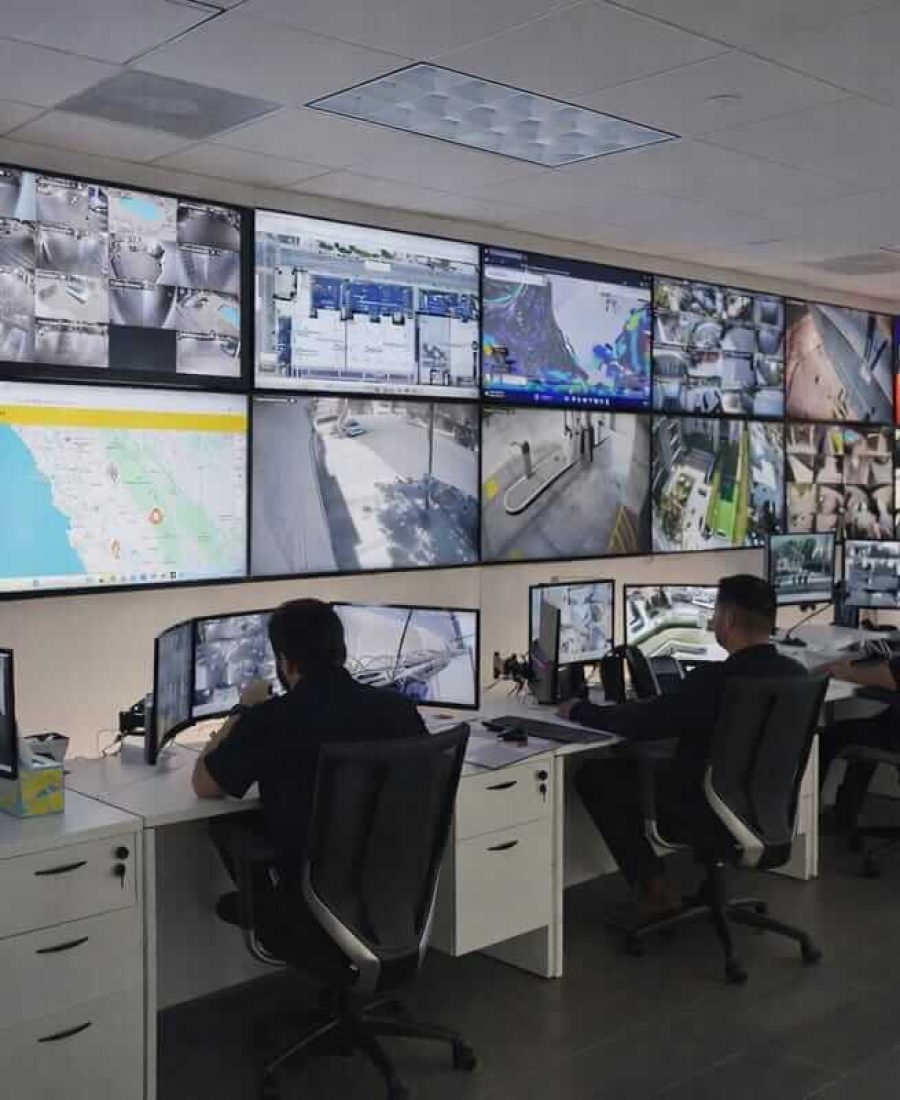
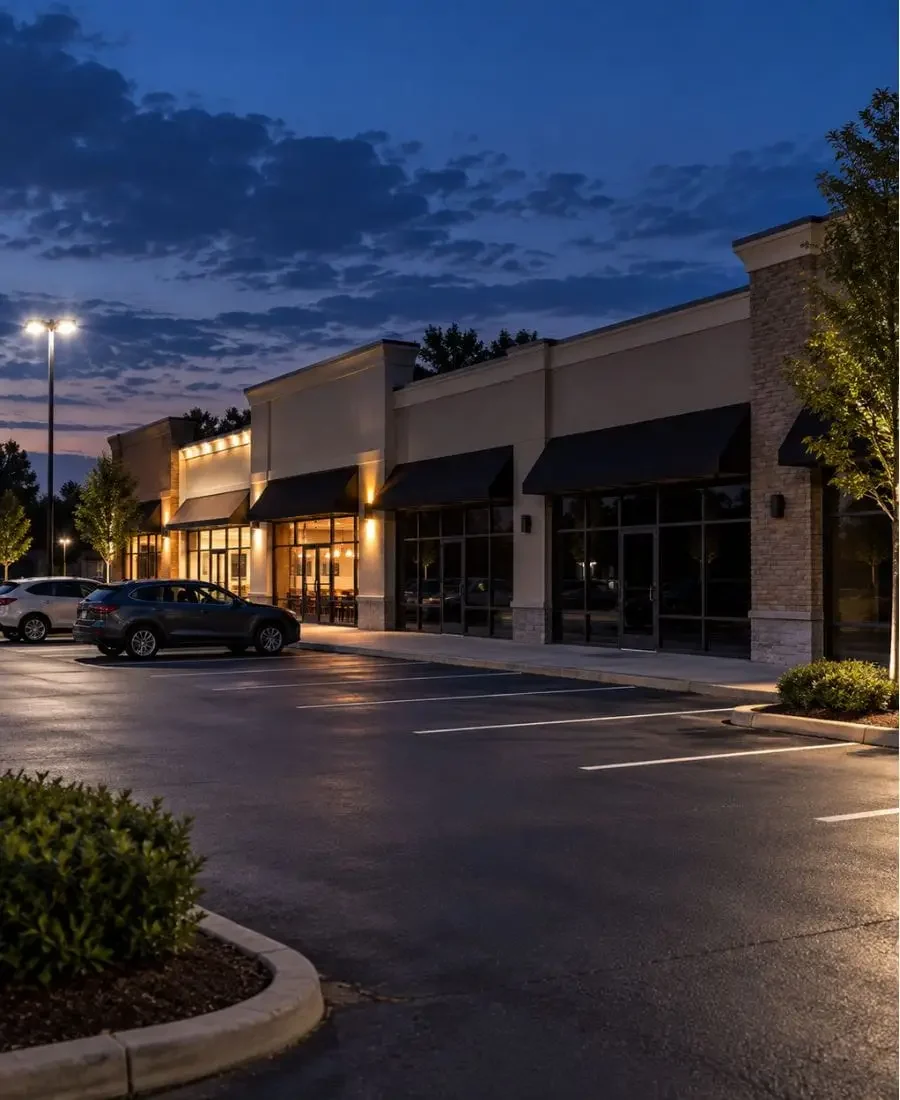
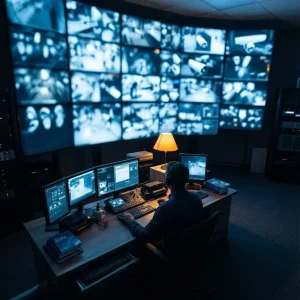
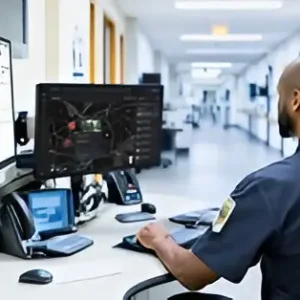
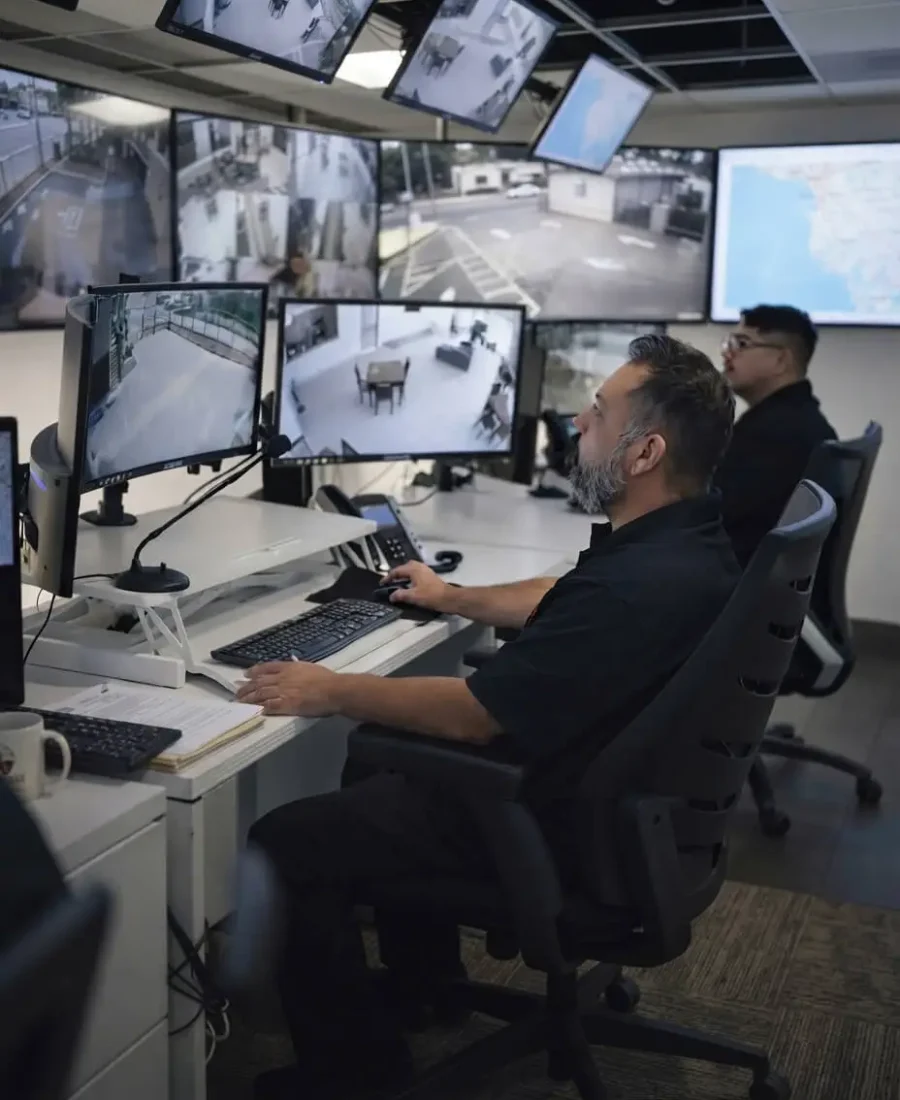
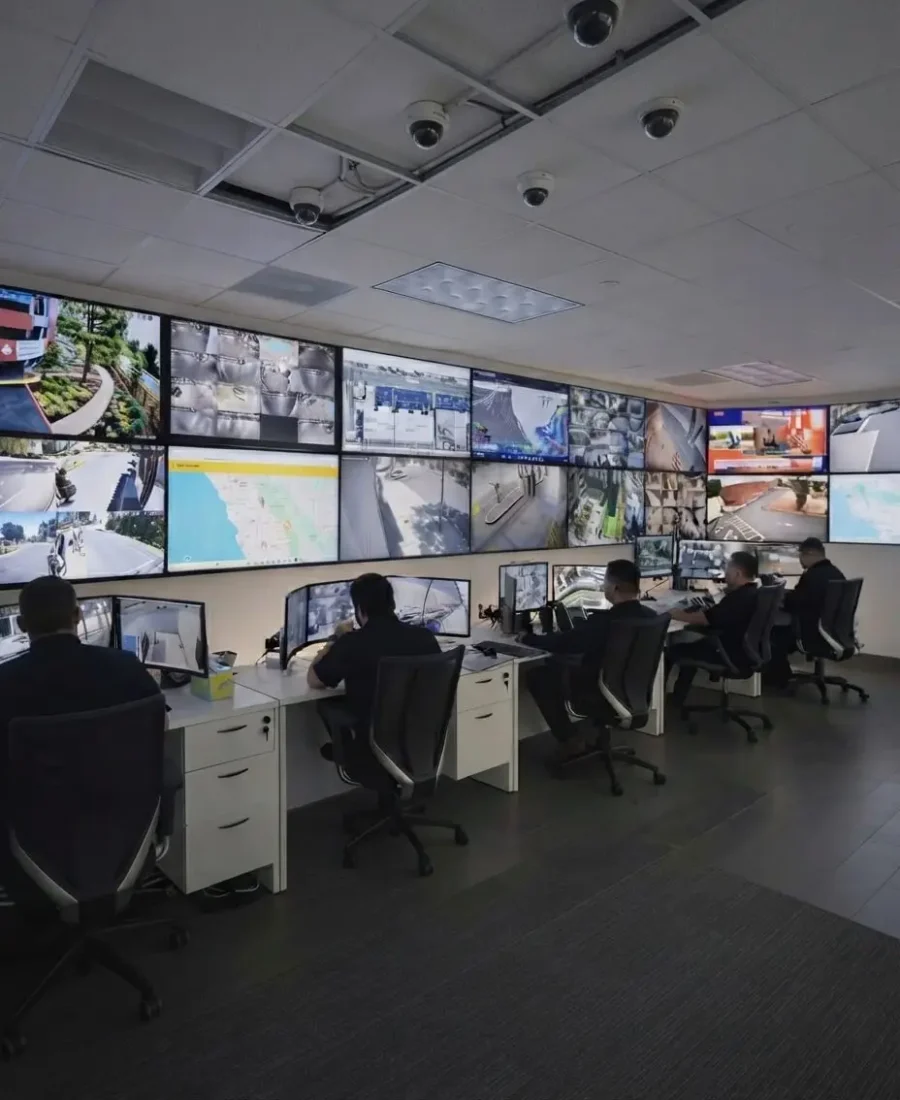
Office building security monitoring is a remote service that pairs live cameras with a monitoring center operator who watches lobbies, garages, and entry points in real time, verifying who’s on the property and intervening before an incident develops rather than reviewing footage the next morning.
Most office buildings sit empty for more of the week than they’re occupied — nights, weekends, and holidays add up to more unmonitored hours than business hours, and an empty lobby, stairwell, or elevator bank is exactly where an intrusion goes unnoticed the longest before anyone on staff would even notice.
The lobby, parking garage, and any card-access entry points are the property’s main vulnerabilities. A propped door, a tailgating visitor, or a garage level with poor sightlines can let someone move through the building without ever passing a person who would question them or ask who they’re there to see.
During business hours, the same cameras track a different kind of activity: tenant and visitor flow through the lobby, deliveries at a loading entrance, and contractors moving between floors, where the goal is confirming legitimate access rather than catching an intrusion in progress.
A camera system that only records shows a property manager what happened after a tenant already reports something missing or damaged. Live monitoring is built to catch the person on the property while there’s still time to respond, not to document the loss afterward.
A monitoring center operator covers your lobby, garage, and entry points on the nights and weekends your leasing office cannot.
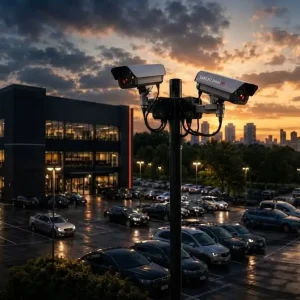
Every lobby, garage, and stairwell camera reports to a monitoring desk staffed through the hours your building is closed, so an operator makes the call about who is in the garage — not a report a property manager reads on Monday.
That distinction matters most in a multi-tenant building, where a property manager can’t be on-site around the clock but still needs eyes on every entry point when the leasing office is closed.
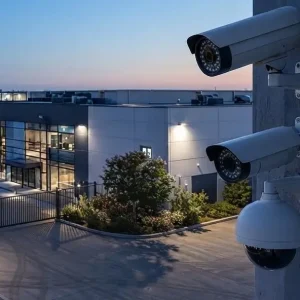
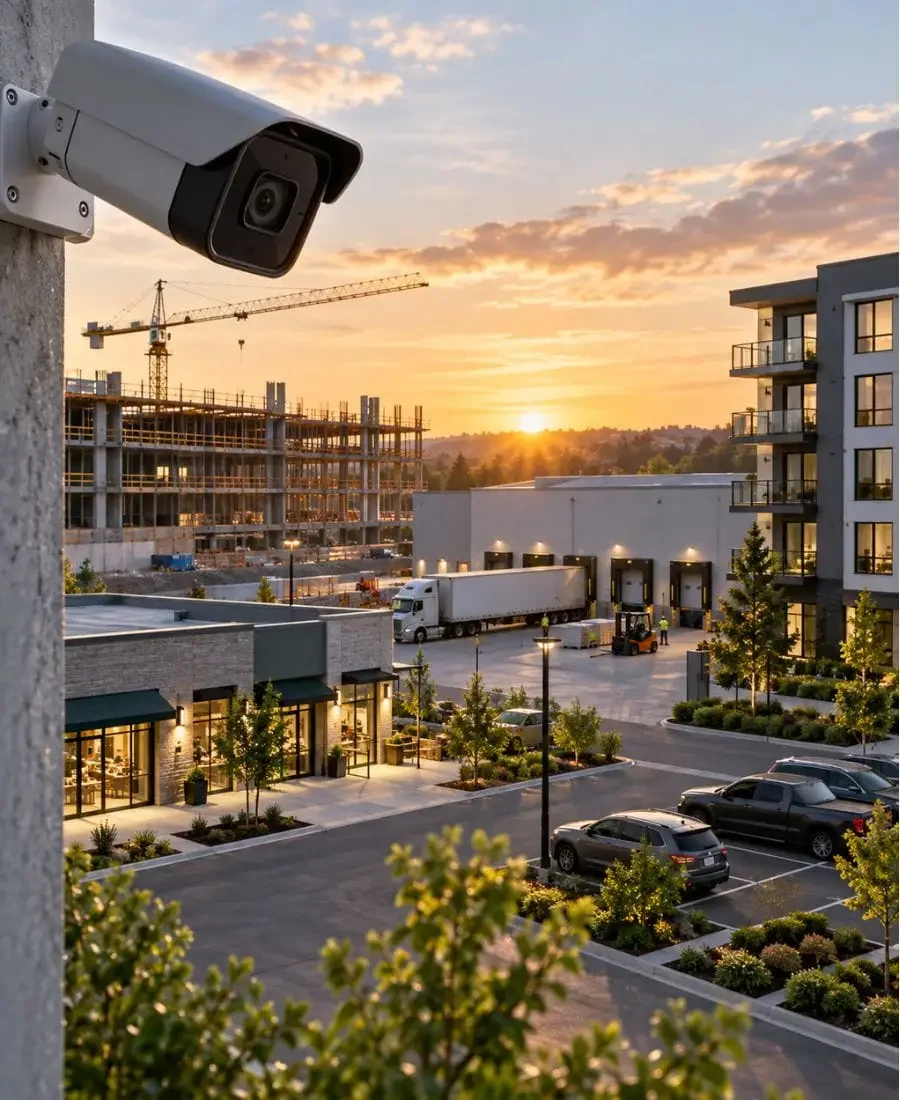
Installation attaches the unit to an existing mounting point and links it to a monitoring center over cellular or the property’s own network.
The unit mounts to whatever structure already has a clear sightline — a pole, an eave, or an exterior wall — using the property’s existing power where it’s available, so a crew is on and off site in a single visit.
Once mounted, it connects over a cellular link or the site’s own network connection, sending live video straight to a monitoring center rather than storing it locally for someone to review later after the fact.
Active job sites lose equipment and materials to unsupervised overnight hours — the exact gap live monitoring is built to close.
Temporary or relocatable camera coverage may be available for suitable retail properties, depending on site requirements, equipment availability, and the selected monitoring plan.
Office buildings, financial institutions, and other commercial properties need monitored coverage of entry points and parking areas outside business hours, when the building sits empty.
Virtual Guard CCTV is a modern security company built to help businesses protect their properties with smarter technology, live monitoring, and real human intervention.
We believe security should be proactive, not reactive. Instead of only recording incidents after they happen, our system combines AI-powered detection with trained live operators who monitor activity, verify threats, issue warnings, and respond in real time.
Our team supports construction sites, commercial properties, apartment communities, warehouses, retail locations, parking facilities, and high-risk environments that need dependable protection.
Camera placement that covers the front lobby isn’t the same setup that protects a parking garage and every card-access entry point after hours.
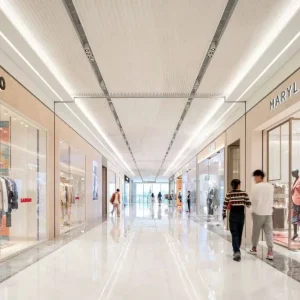
Lobby and elevator-bank cameras cover the hours tenants and visitors move through the building, confirming who’s on the floor and flagging anyone bypassing the front desk. Garage-level cameras cover vehicle access and the stairwells and service entrances tenants rarely use.
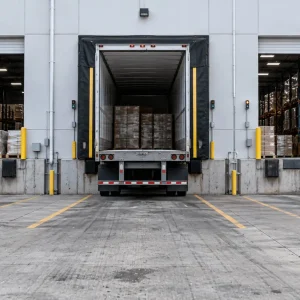
Loading dock and rear entry cameras extend coverage to deliveries and contractor access, the points most likely to sit unmonitored between a lobby’s normal foot traffic.
Watched feeds, infrared through the garage levels, speakers at the lobby and ramp, and property-manager access from a phone — with the entry point and time on every incident record.
Every camera is monitored live and equipped with night vision, since most office building incidents cluster around nights, weekends, and holiday closures when the leasing office is unstaffed. Lobby and garage cameras include two-way audio for direct, real-time warnings to anyone on the property.
Property managers open any camera from a phone, and each flagged event is logged down to the entry point and
the minute it happened, which is what a tenant complaint or an insurance file actually needs.
Share the tenant mix and your after-hours access arrangements, and we’ll return coverage for the lobby, garage, and entry points.
Office parks and commercial towers across California empty on a predictable schedule, and coverage is built around those hours.
What building owners and property managers ask about after-hours coverage.
Cameras covering the lobby, garage, and every card-access entry point feed live video to a monitoring center around the clock. An operator watching in real time can see someone enter after the leasing office closes, issue a live audio warning through the camera’s speaker, or contact law enforcement while the person is still on the property, instead of a security company reviewing recorded footage the next business day.
Garage coverage typically combines cameras at every vehicle entry and pedestrian stairwell with wider views down each parking level, since garages often have less foot traffic and worse natural lighting than the lobby tenants see daily. A live operator watching those feeds can flag someone loitering near parked vehicles or forcing a stairwell door well before a tenant reports a break-in the next morning.
Recorded-only cameras store footage a property manager reviews after a tenant reports something missing or damaged. Live video monitoring puts a trained operator on the feeds in real time, so activity at the lobby, garage, or a propped fire door gets a response — a live audio warning or a call to law enforcement — while it’s still happening rather than after the fact.
Yes. The same cameras covering the lobby and entry points let an operator confirm legitimate deliveries, contractor access, and visitor check-ins during business hours, distinguishing routine building traffic from someone attempting to bypass the front desk or tailgate through a card-access door.
Fire exits and stairwells are typically included in coverage since they’re common points for someone to enter or exit a building without passing the lobby. A propped fire door or an alarmed stairwell exit triggers the same live review as any other monitored entry point.
A flagged incident includes a record of what the monitoring center saw and did — the camera feed, the time of the activity, and any action taken, such as a live audio warning or a call placed to law enforcement — so the property manager has a clear account when they check in the next morning, not just a folder of unreviewed recordings.