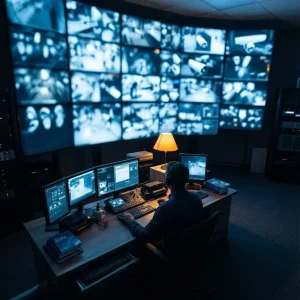
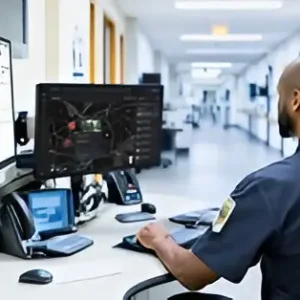
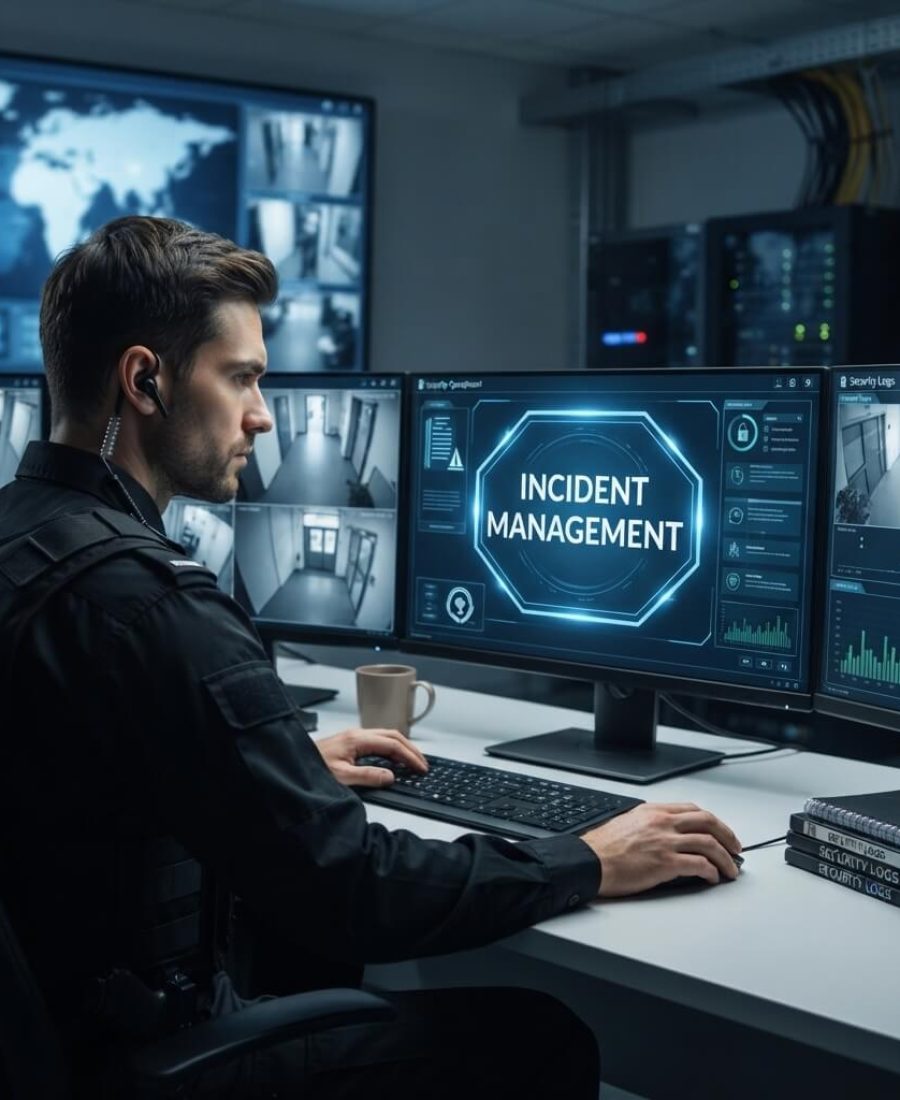
Warehouse video monitoring is a remote security service that pairs live cameras placed across a warehouse’s docks, racking, and perimeter with a monitoring center operator who watches the footage in real time, verifies activity, and intervenes — through live audio or a call to law enforcement — before theft or vandalism is complete.
Large warehouses spread risk across acreage most operators can’t watch directly — a facility with a hundred thousand square feet under one roof and a fenced yard around it has far more blind spots than staff walking a floor can realistically cover on any given shift.
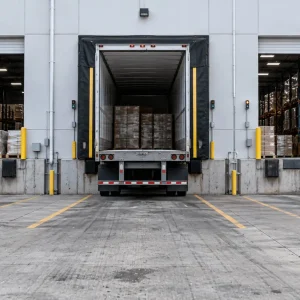
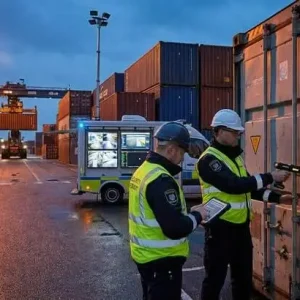
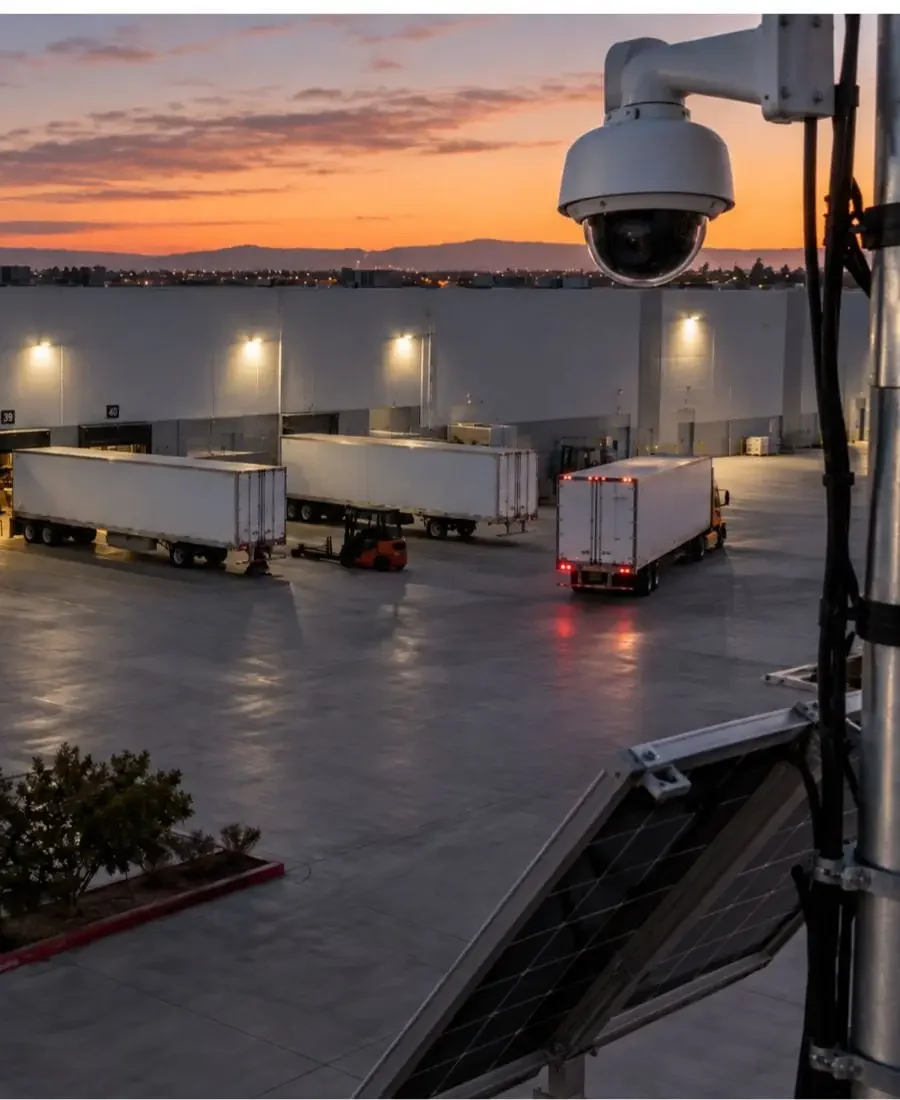
Loading docks are the single busiest and least controlled entry point on most sites — trailers back in and pull out throughout the day, doors sit open during loading, and once the last shift leaves, an unmonitored dock door is functionally an open gate until morning.
A large footprint makes patrol-based coverage expensive and inconsistent, since a person can only be in one spot at a time. Cameras covering the perimeter, yard, and dock doors feed a monitoring center that can watch every point at once and respond the moment something moves.
That combination — full-property coverage paired with a live response, not a recording reviewed after a loss — is what separates monitoring built for a warehouse’s actual size from a smaller camera package stretched across too much ground.
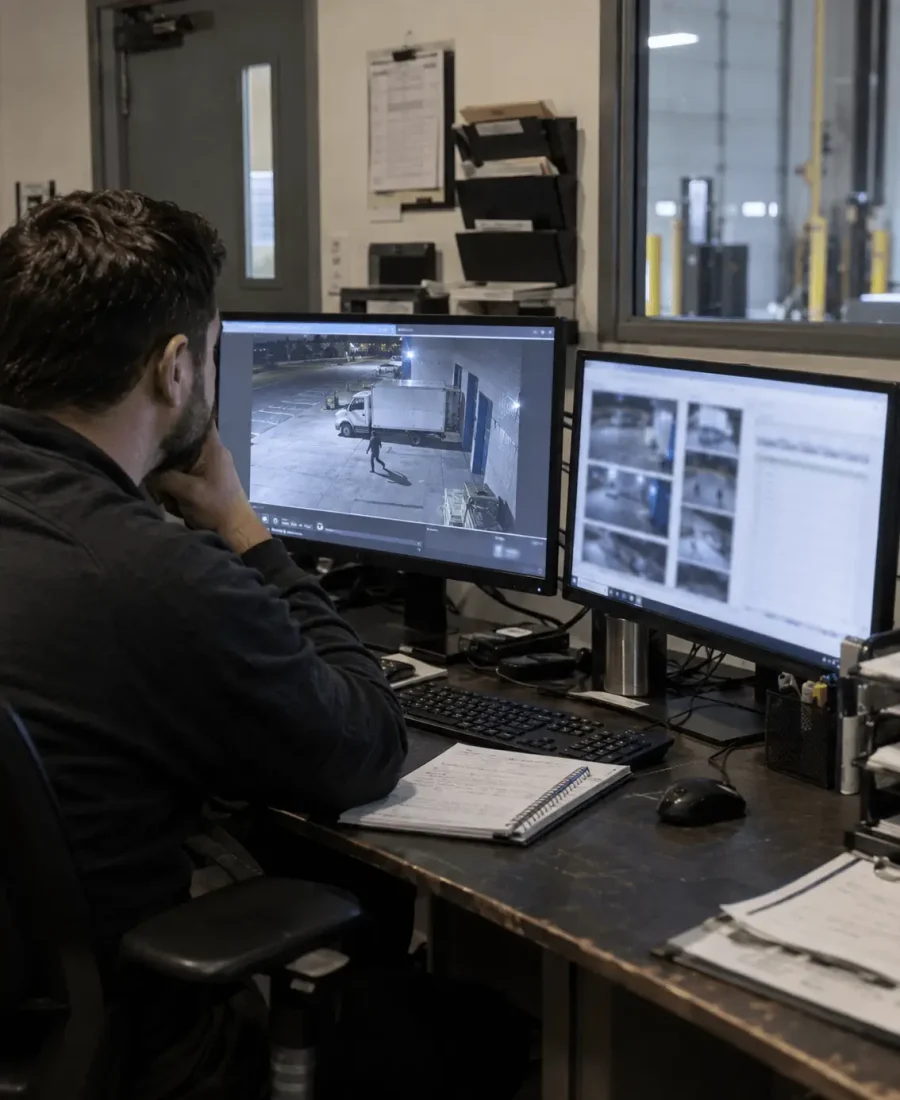
Virtual Guard CCTV pairs cameras across your warehouse’s docks, racking, and perimeter with a monitoring center operator who can review live camera feeds and assess suspicious activity during scheduled monitoring hours, not after a loss.
Cameras included in your monitoring plan can transmit video feeds to a monitoring center for review during scheduled monitoring hours. Where a trained operator can see, hear, and respond to activity as it happens, instead of storing footage that only gets reviewed once something is already missing.
Virtual Guard CCTV is licensed under California PPO #121089, BBB A+ accredited since 2021, and has monitored commercial properties across California since 2014 — credentials you can verify, not marketing claims.
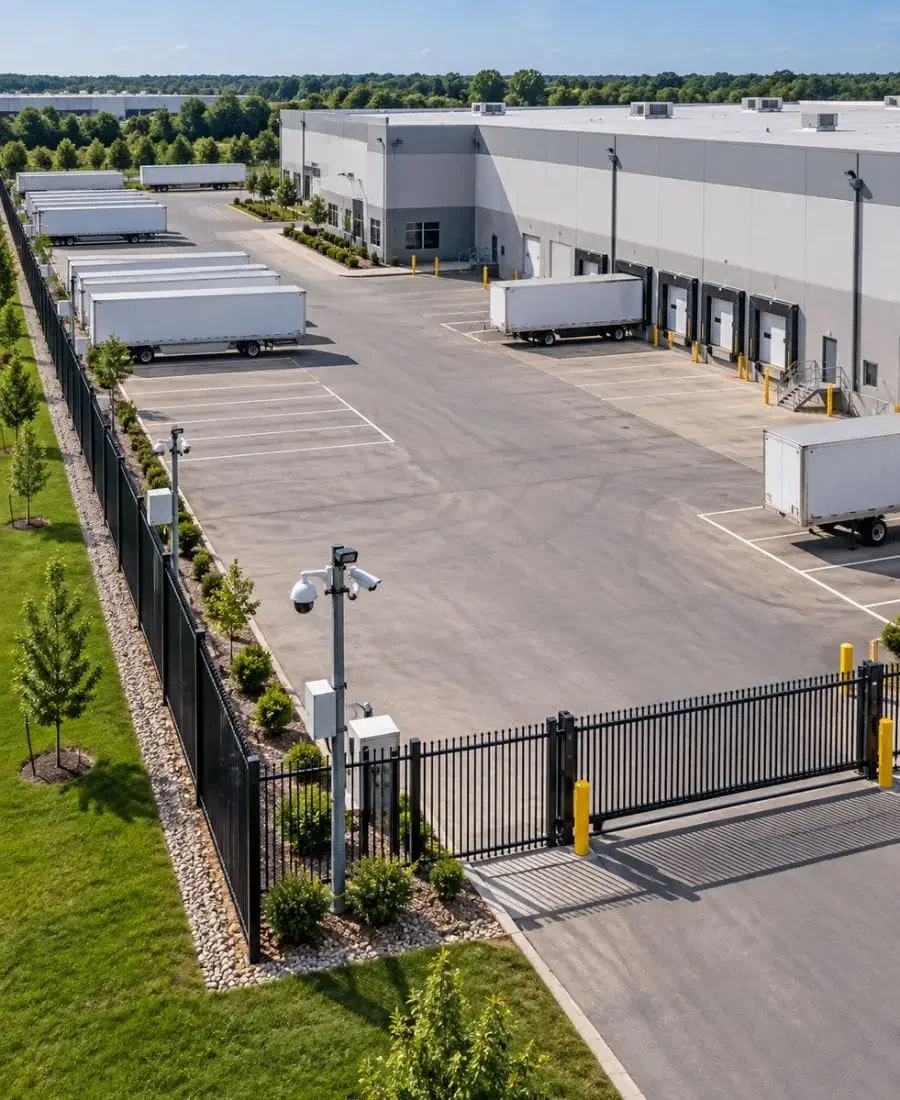
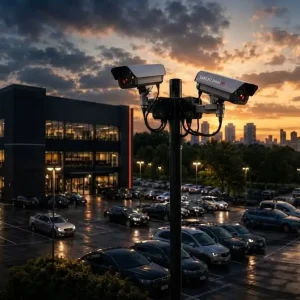
A guard walking a warehouse yard can only observe one area at a time, while strategically placed cameras can provide additional visibility across designated fence lines, gates, and trailer parking areas.
Warehouse yards can span large areas with multiple access points, fenced boundaries, and trailer parking spaces that may be difficult to inspect through foot patrols alone. Identifying vulnerable locations helps determine where camera coverage is most useful.
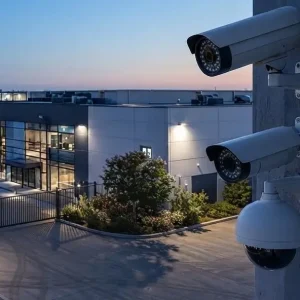
Cameras positioned around key perimeter areas and yard entrances can support remote monitoring during contracted monitoring hours. Actual coverage depends on the warehouse layout, camera placement, and installed equipment.
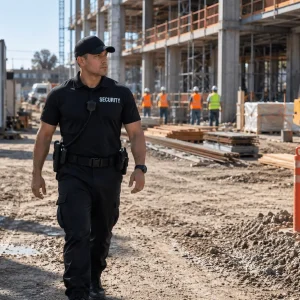
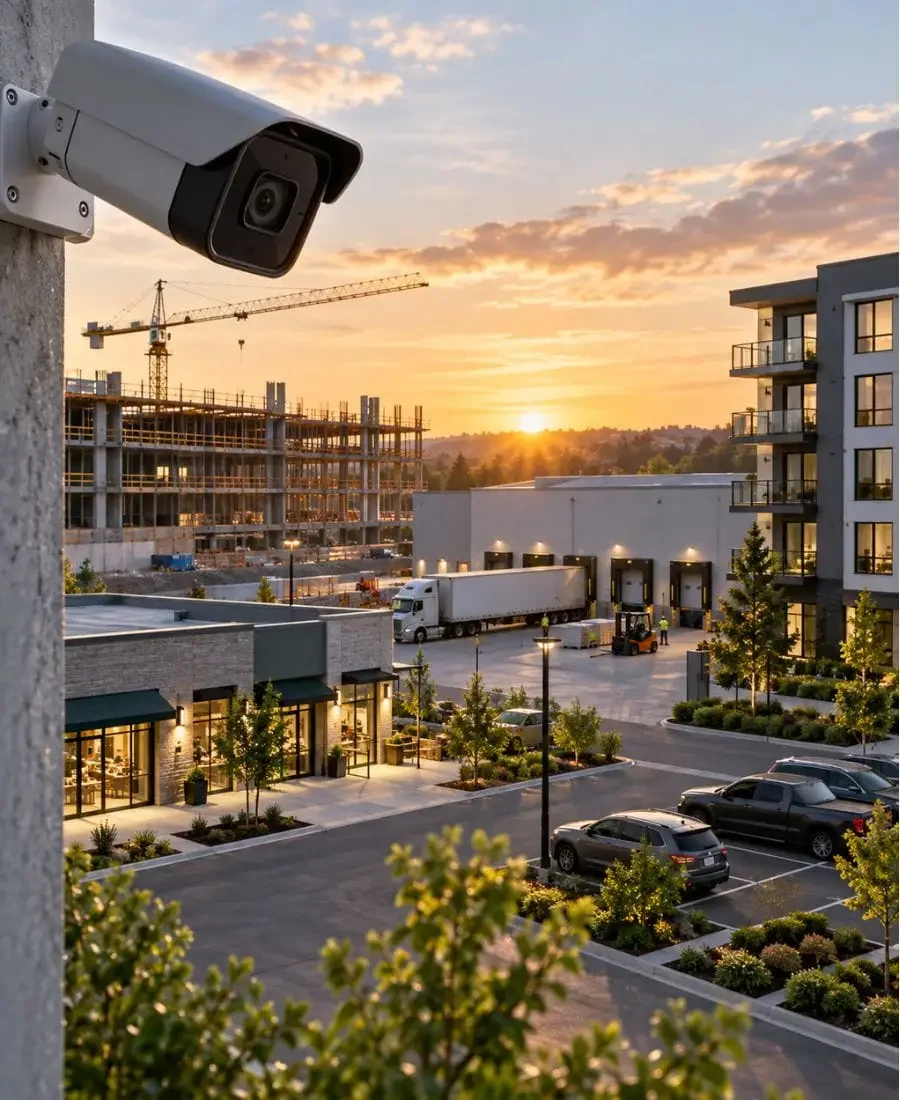
Active job sites lose equipment and materials to unsupervised overnight hours — the exact gap live monitoring is built to close.
Temporary or relocatable camera coverage may be available for suitable retail properties, depending on site requirements, equipment availability, and the selected monitoring plan.
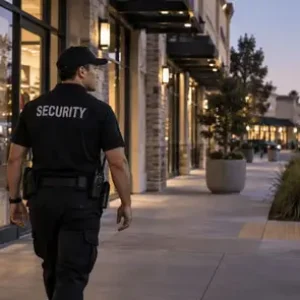
Office buildings, financial institutions, and other commercial properties need monitored coverage of entry points and parking areas outside business hours, when the building sits empty.
Virtual Guard CCTV provides security solutions for warehouses, distribution centers, loading docks, and other commercial logistics properties. With smarter technology, live monitoring, and real human intervention.
We believe security should be proactive, not reactive. Instead of only recording incidents after they happen, our system combines AI-powered detection with trained live operators who monitor activity, verify threats, issue warnings, and respond in real time.
Our team supports construction sites, commercial properties, apartment communities, warehouses, retail locations, parking facilities, and high-risk environments that need dependable protection.
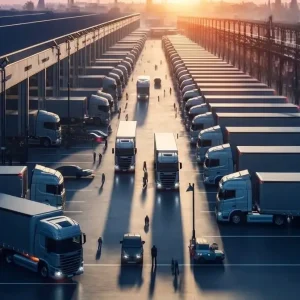
Trailers parked at loading docks and unattended warehouse yards can face increased security risks after the last shift ends. With fewer staff members on-site, suspicious activity around dock doors, parked trailers, and access points may go unnoticed.
Loading docks stay busy and loosely controlled all day — trailers back in, doors sit open between loads, and drivers move through areas that are otherwise restricted, which makes the dock the easiest point on a warehouse to walk through unnoticed.
Once the last trailer pulls out and the shift ends, an unmonitored dock door left cracked overnight is effectively an open gate until the first truck arrives in the morning.
Warehouse security camera installations can include documented camera placement and video storage configured around the property’s security requirements. The specific documentation, recording capabilities, and storage setup are determined during project planning and depend on the agreed installation scope.
Video storage and recording retention should be planned around the warehouse’s security needs and installed system capabilities. Available footage may help review security events, provided the recordings are retained and accessible under the system’s storage settings.
When incident reporting is included in the monitoring plan, available records can document detected activity and operator responses. Footage availability, reporting details, and retention periods depend on the equipment configuration and agreed service terms.
Tell us about your warehouse layout and security needs. We’ll help you explore suitable camera coverage and monitoring options for your loading docks, storage areas, and property perimeter.
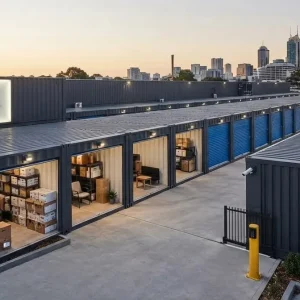
We cover warehouse and storage facilities statewide, with the heaviest concentration across Southern California's logistics corridors.
What warehouse operators want settled before a coverage plan gets signed.
The most common threats are perimeter and yard breaches after hours, cargo and trailer theft at the loading dock, and inventory loss from people who already have legitimate access, like employees or delivery drivers. Large, open footprints make it easy for any of these to go unnoticed until a count comes up short or a dock camera catches it after the fact.
AI-powered video monitoring can help detect suspicious activity around warehouse entrances, loading docks, and storage yards. During contracted monitoring hours, trained operators can review flagged events and, when appropriate, issue audio warnings or contact law enforcement according to the site’s equipment and response procedures. These measures may help deter theft, but cannot guarantee that every incident will be prevented.
Both are real risks, but they concentrate in different spots. Break-ins tend to hit the perimeter and yard after hours, while internal loss tends to move through the dock during normal operating hours, mixed in with legitimate shipments. Coverage that only watches the fence line misses the second category entirely.
Access control systems help warehouses manage entry to restricted areas using credentials such as key cards, PIN codes, or electronic locks. These systems can record entry activity and help property managers control access to doors, gates, and storage areas. Security cameras can provide additional visual context, while integration with access control systems depends on equipment compatibility and the services included in the installation.
Cost depends on camera count, dock and yard size, and whether footage is recorded only or paired with live monitoring, so we quote per property rather than publishing a flat rate — a small distribution point and an eighteen-dock facility aren’t priced the same way. We don’t publish a savings percentage, because no independently sourced comparison methodology exists for that figure. Live video monitoring is typically priced per camera per site — contact us for a quote specific to your job site. Contact us for a quote specific to your warehouse.