GET A QUOTE
Lot & Structure Security

Parking Lot Security Monitoring

Parking Lot Security

What Is Parking Lot Security Monitoring?

Parking lot security monitoring is a remote video service pairing cameras across surface lots and structures with a monitoring center operator watching live, around the clock, who can verify a break-in or act of vandalism as it happens and intervene through live audio or a call to law enforcement.

Most commercial lots and parking structures have no on-site staff at all — no attendant booth, no roving patrol, nobody watching who comes and goes once the last office or store nearby has closed for the day and the gates are left open through the night.

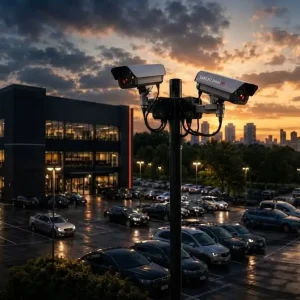
Multi-level structures compound the problem with stairwells, ramps, and support columns that break sightlines between floors, while surface lots create their own blind spots between rows of parked vehicles where an incident can unfold well out of view of any passing traffic.

The overnight and low-traffic hours are when a lot is most exposed, and when vehicle break-ins and catalytic converter thefts are most likely to happen — often finished before anyone nearby notices anything is wrong.

When an incident does happen on the property, the lot operator is often the one fielding the claim, whether it’s a broken window, a stolen converter, or a tenant asking what security was actually watching and what was done about it at the time.

What We Provide

COMPLETE SECURITY SOLUTION

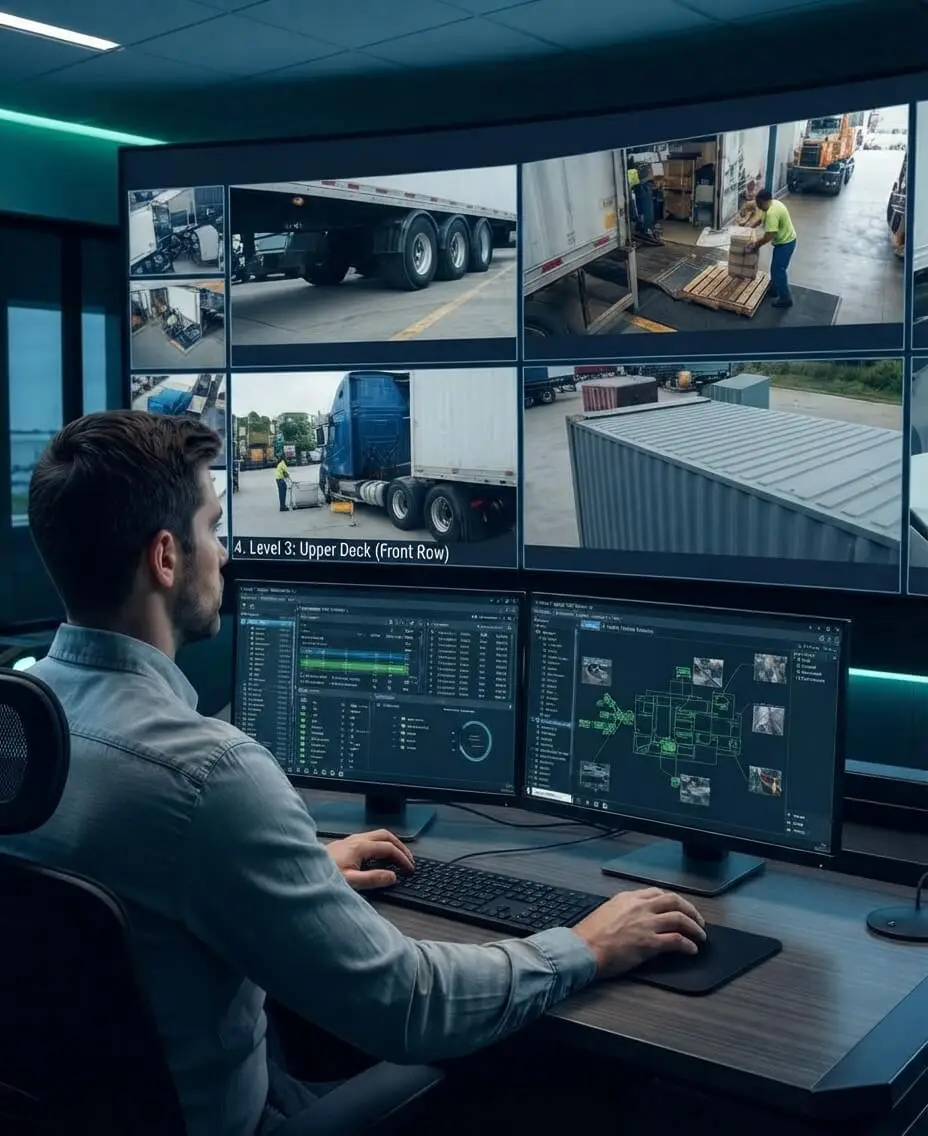
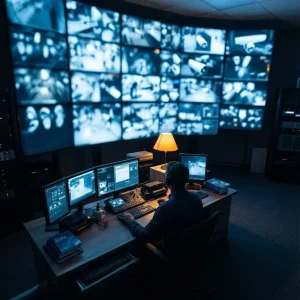
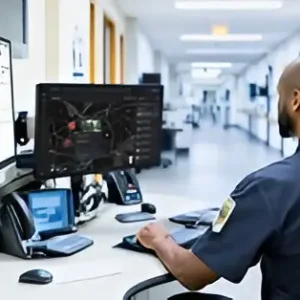
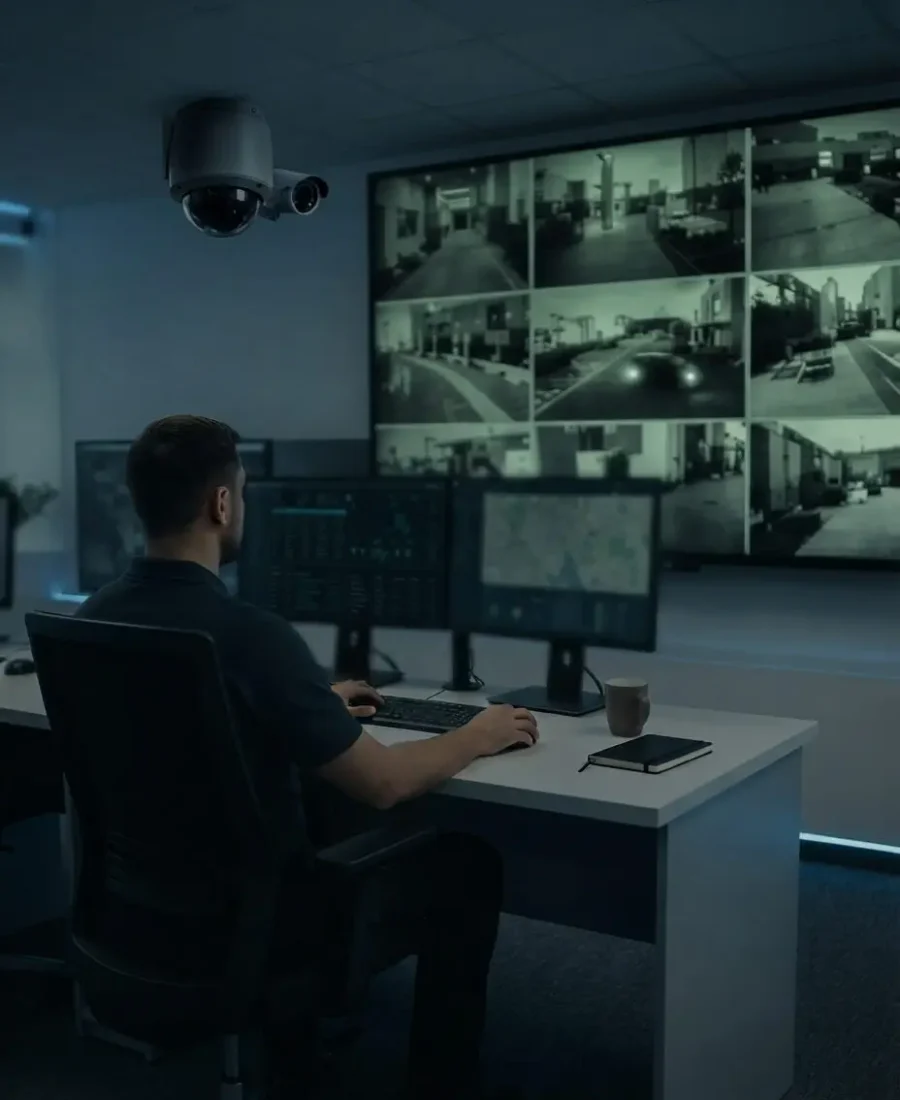
Security monitoring operator seated at a workstation in a dimly lit control room, watching multiple surveillance camera feeds of commercial buildings, parking lots, and streets on a large video wall, with a dome security camera mounted overhead.
Recording Is Not Watching

A Lot Camera That Records Is Not a Lot Camera That Responds

We monitor parking lots and structures with cameras tied to a live operator, not a hard drive that only gets reviewed after something goes wrong.

A camera pointed at a parking lot only records what happens — it doesn’t stop anything on its own. We put a trained operator behind every feed, watching in real time, so a break-in or an act of vandalism gets a response while it’s still happening rather than a report the next morning.

That’s what separates monitoring from recording: someone is actually paying attention during the hours a lot or structure is emptiest and least likely to have anyone else around to notice.

Full Coverage

Coverage Across Every Level, Row, and Blind Spot

Camera placement built for a flat surface lot rarely accounts for the stairwells, ramps, and support columns inside a multi-level parking structure.

Coverage is mapped level by level and row by row, with cameras placed to eliminate the gaps a single entrance camera or one wide shot of the lot always leaves behind.

Stairwells, elevator landings, corner columns, and the space between parked rows all get the same live attention as the entrance, so an operator can see activity anywhere on the property, not just at the gate or the rows closest to the street.

Coverage Across Every Level, Row, and Blind Spot
Industries We Protect

Other Unstaffed Properties We Monitor

Years of experience
0 +
Businesses Protected
0 +
BBB
A+
Monitoring
0 /7

CONSTRUCTION SERVICES

Active job sites lose equipment and materials to unsupervised overnight hours — the exact gap live monitoring is built to close.

Years of experience
0 +
Businesses Protected
0 +
BBB
A+
Monitoring
0 /7

RETAIL SERVICES

Temporary or relocatable camera coverage may be available for suitable retail properties, depending on site requirements, equipment availability, and the selected monitoring plan.

Years of experience
0 +
Businesses Protected
0 +
BBB
A+
Monitoring
0 /7

INDUSTRIAL SERVICES

Warehouses and distribution facilities carry high-value inventory across large, hard-to-patrol footprints, where live camera coverage replaces walking a perimeter that’s too big to physically check.
Years of experience
0 +
Businesses Protected
0 +
BBB
A+
Monitoring
0 /7

COMMERCIAL SERVICES

Office buildings, financial institutions, and other commercial properties need monitored coverage of entry points and parking areas outside business hours, when the building sits empty.

The Properties Those Lots Usually Belong To
Lots and What Surrounds Them

The Properties Those Lots Usually Belong To

Commercial parking lots and structures serve a variety of properties, including office buildings, shopping centers, apartment communities, medical facilities, and financial institutions. Each property has different parking patterns, access points, and security concerns that influence how its parking areas are monitored.

Office and retail parking areas may experience heavy daytime traffic, while residential and mixed-use properties often have vehicles parked overnight. Parking garages, shared lots, and multi-level structures also present different visibility challenges due to entrances, ramps, stairwells, and parked vehicles.

Virtual Guard CCTV provides video monitoring solutions for these environments, with camera placement and monitoring coverage tailored to the property’s layout, access points, and security priorities.

Response While It's Happening

Live Intervention Before an Incident Finishes

An operator watching live can speak directly through the camera the moment someone lingers by a parked car or works at a door that isn’t theirs.

When an operator sees someone loitering near a row of vehicles, working at a lock, or lingering in a stairwell longer than a passerby would, a live audio warning through the camera’s speaker is often enough to end it before anything is taken or broken.

If the person doesn’t leave, the same operator is already relaying a description and location to law enforcement while the incident is still unfolding, not after a car alarm or a broken window is the first sign anything happened.

Live Intervention Before an Incident Finishes
What's Included With Parking Lot Monitoring
Built for Liability Claims

What's Included With Parking Lot Monitoring

Live-monitored cameras, night vision, two-way audio, and a documented record of what happened — built for insurance and liability claims, not just deterrence.

Coverage includes live monitoring, night vision for the overnight hours when a lot sees the least foot traffic, and two-way audio so an operator can speak directly to whoever the camera is watching.

Anyone managing the property can pull up live feeds from a phone, and every flagged event comes with a timestamped account of what the camera captured and how the operator responded — the kind of record an insurer or attorney actually wants to see.

Ready to Monitor Your Parking Lot or Structure?

Tell us how the lot or structure flows and where incidents keep landing, and we’ll return camera positions and a
quote.

WHERE WE SERVE

Parking Facility Coverage Statewide

Surface lots and parking structures across California are watched level by level, including the rows nobody can see from the street.

Los Angeles County Orange County San Diego County Riverside County San Bernardino County Ventura County Santa Clara County Alameda County Sacramento County San Joaquin County
parking questions

Parking Lot Security FAQ

What owners and operators ask about watching a lot or a structure.

How do you prevent vehicle break-ins in a parking lot?

Live monitoring gives a lot real-time eyes on every row instead of only recorded footage reviewed after a loss. Cameras covering the rows, entrances, and drive aisles feed live video to a monitoring center, where an operator can watch someone testing door handles or working at a window and issue a live audio warning through the camera’s speaker before a break-in is complete. If the person doesn’t leave, the same operator can contact law enforcement while they’re still on the property. Recorded-only systems can only confirm what already happened; live monitoring is built to interrupt it while it’s still in progress.

Catalytic converter theft happens fast, often finished before anyone nearby notices, which is why recorded footage reviewed the next morning rarely helps. Live monitoring puts an operator on the feed in real time, watching for someone crouched under a vehicle or moving between cars with tools rather than keys. A live audio warning through the camera’s speaker is often enough to end the attempt immediately, and if it isn’t, the operator is already relaying a location to law enforcement while the person is still in the structure.

Stairwells, elevator landings, and the corners between support columns are the areas that get overlooked most often, since a single camera covering the drive aisle usually doesn’t reach them. Multi-level structures also break sightlines between floors, so an incident on one level can go completely unseen from another. Coverage has to be mapped level by level and corner by corner, with an operator watching all of it live, rather than relying on one wide-angle camera at the entrance to represent the whole property.

Liability after an incident in a parking lot typically depends on what security measures were reasonably in place at the time, which is why documentation matters as much as prevention. Live monitoring creates a timestamped record of what the camera saw and what the operator did in response, whether that’s a live audio warning, a call to law enforcement, or both. That record is what a property owner or manager can hand to an insurer or attorney rather than reconstructing events from memory after the fact. We don’t provide legal advice on liability specific to your property.

Yes. Standalone lots and structures — park-and-ride facilities, transit lots, and shared parking serving multiple tenants — are monitored the same way as a lot attached to a single business, with cameras covering entrances, rows, and pedestrian paths. These properties often see less consistent foot traffic than a retail or office lot, which is exactly when live monitoring, rather than a recorded system nobody reviews until after a loss, matters most.

When someone is on the property overnight without authorization — sleeping in a vehicle, gathering in a stairwell, or occupying a corner of the structure — a monitoring operator can address it directly through live audio, the same tool used for any other overnight activity, well before it escalates into a safety or liability issue. The goal is a calm, consistent response to an operational issue, not a confrontation, and every interaction is logged as part of the property’s monitoring record.