GET A QUOTE
Industries We Protect

Commercial & Institutional Security Monitoring

Predictable Empty Hours

These Buildings Empty on a Schedule Anyone Can Learn

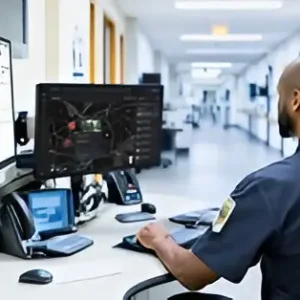
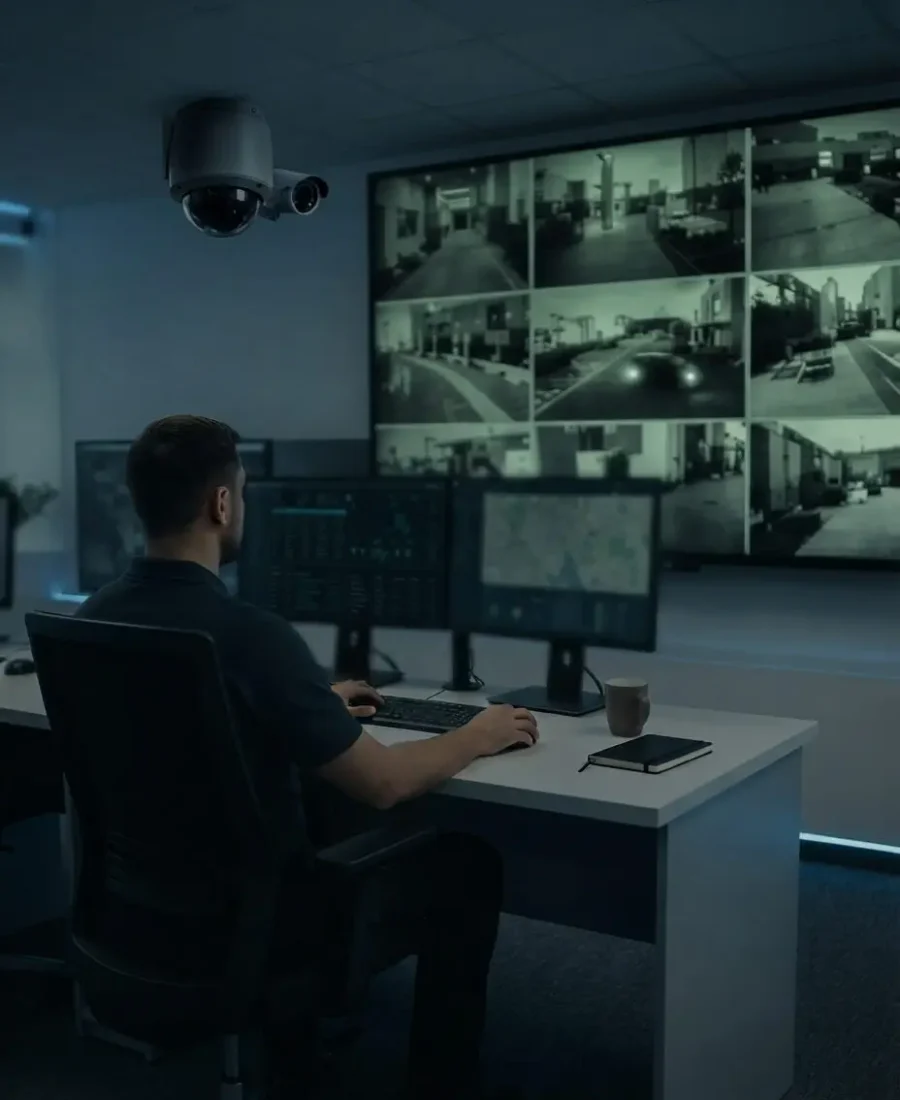
Commercial building security monitoring means trained operators watching your cameras live during the hours a property is unoccupied. When someone enters a garage, a service entrance or a parking area after hours, an operator sees it, speaks through on-site speakers, and calls police while it is happening.

Offices, clinics, branches and campuses share a specific weakness. Their empty hours are published. Anyone can work out when an office park clears, when a clinic closes, or when a campus sits vacant for a summer.

That predictability is the problem. It means exposure is not random. It recurs on the same schedule every week, and anyone paying attention knows exactly when the building is theirs.

The assets differ. An office has equipment and a garage full of staff vehicles. A clinic has supply storage and a lot people walk to after dark. A campus has copper, athletic facilities and portables spread across acres.

What they have in common is that recorded footage tells you afterwards. Pick the property type below that matches yours.

What We Provide

COMPLETE SECURITY SOLUTION

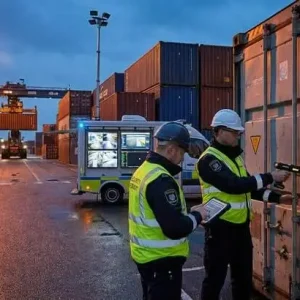
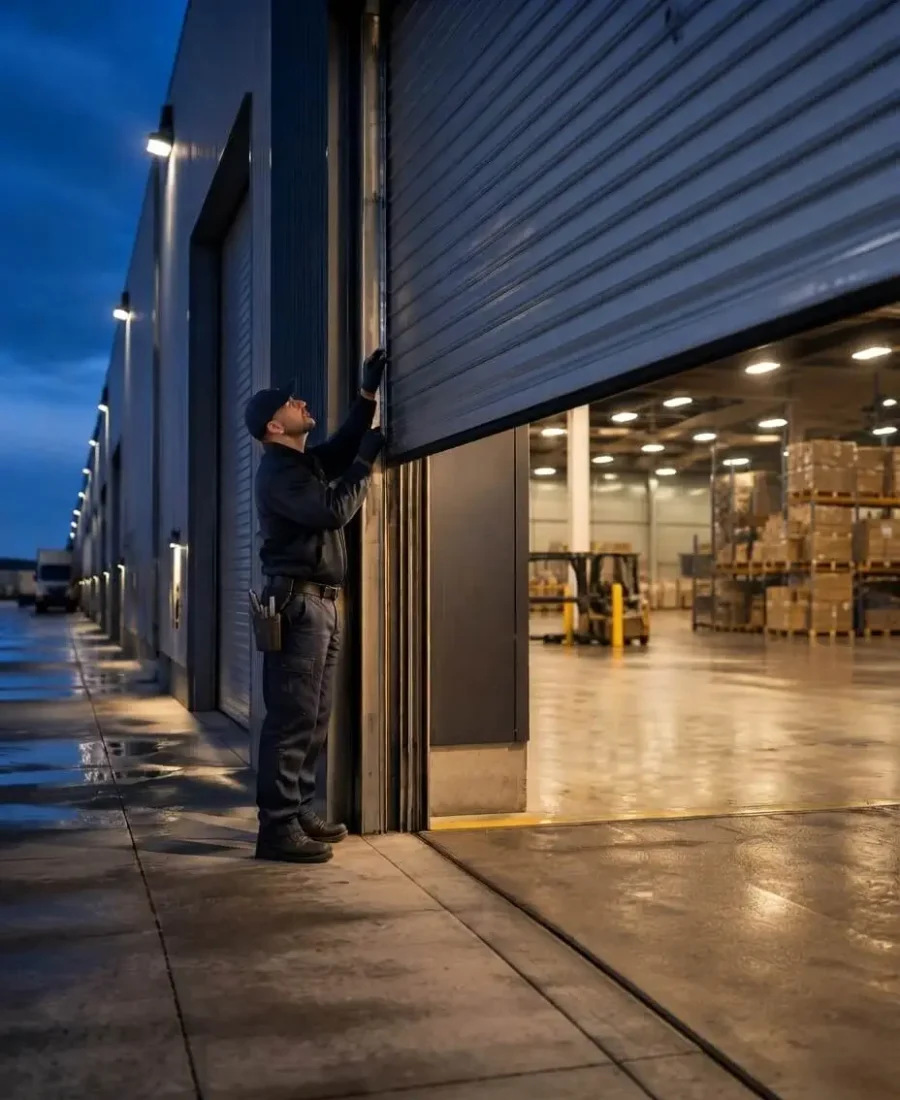
Warehouse worker inspecting a partially open roll-up loading dock door at dusk, with a brightly lit storage facility, stacked pallets, and wet concrete pavement visible.
Entry Points

Garages, Service Doors and Loading Areas

Institutional buildings are rarely entered through the front, because the front is lit, visible and usually the only part anyone watches.

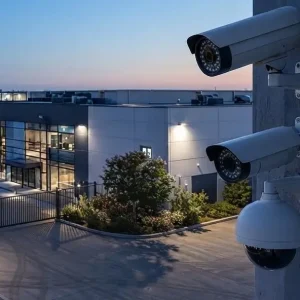
Parking structures, rear service entrances, loading docks and roof access make up most of the real exposure. They are unlit, out of sight from the street, and often propped open during the working day.

Camera placement starts at those points rather than the lobby, which is where most existing systems concentrate their coverage.

The Long Vacancies

Weekends, Holidays and Seasonal Closures

The risk on institutional property scales with how long it stays empty, and some of these buildings sit unoccupied for weeks.

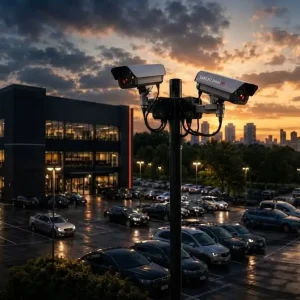
An office clears every evening and stays clear all weekend. A clinic closes on a fixed schedule. A campus empties for summer and for every holiday in the calendar.

Coverage is built around those closures rather than a fixed overnight block, so a long vacancy is monitored throughout instead of only during standard hours.

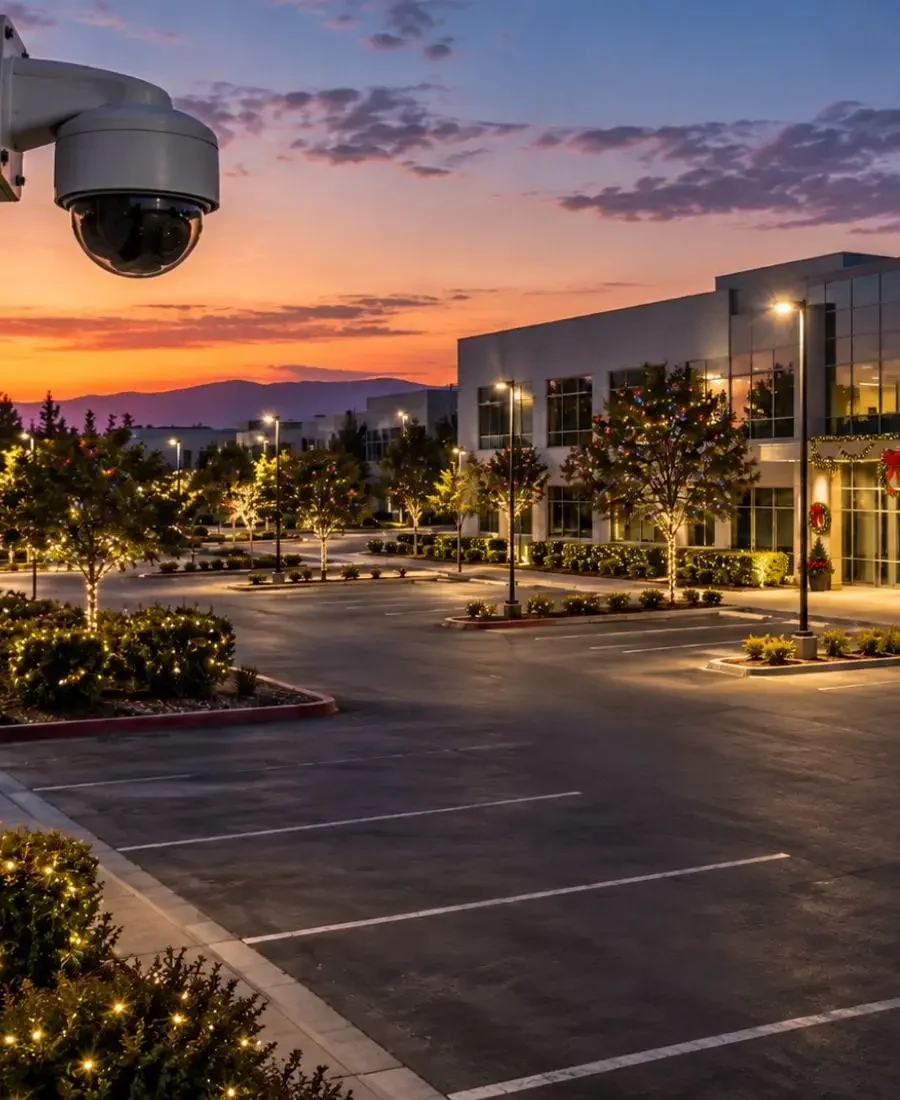
Dome security camera overlooking an empty commercial office parking lot at sunset, featuring modern office buildings, illuminated streetlights, landscaped trees with decorative lights, and a colorful evening sky.
Industries We Protect

See All Property Sectors

Years of experience
0 +
Businesses Protected
0 +
BBB
A+
Monitoring
0 /7

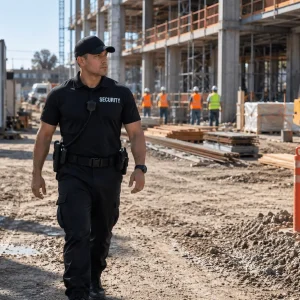
CONSTRUCTION SERVICES

Active job sites lose equipment and materials to unsupervised overnight hours — the exact gap live monitoring is built to close.

Years of experience
0 +
Businesses Protected
0 +
BBB
A+
Monitoring
0 /7

RETAIL SERVICES

Temporary or relocatable camera coverage may be available for suitable retail properties, depending on site requirements, equipment availability, and the selected monitoring plan.

Years of experience
0 +
Businesses Protected
0 +
BBB
A+
Monitoring
0 /7

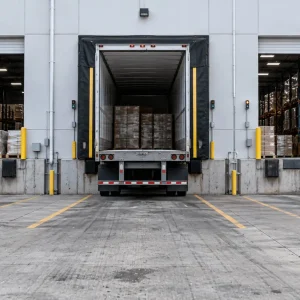
INDUSTRIAL SERVICES

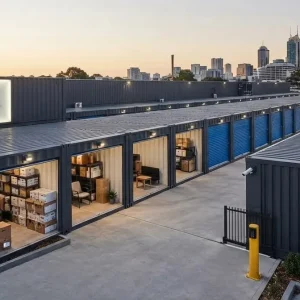
Warehouses and distribution facilities carry high-value inventory across large, hard-to-patrol footprints, where live camera coverage replaces walking a perimeter that’s too big to physically check.
Years of experience
0 +
Businesses Protected
0 +
BBB
A+
Monitoring
0 /7

COMMERCIAL SERVICES

Office buildings, financial institutions, and other commercial properties need monitored coverage of entry points and parking areas outside business hours, when the building sits empty.

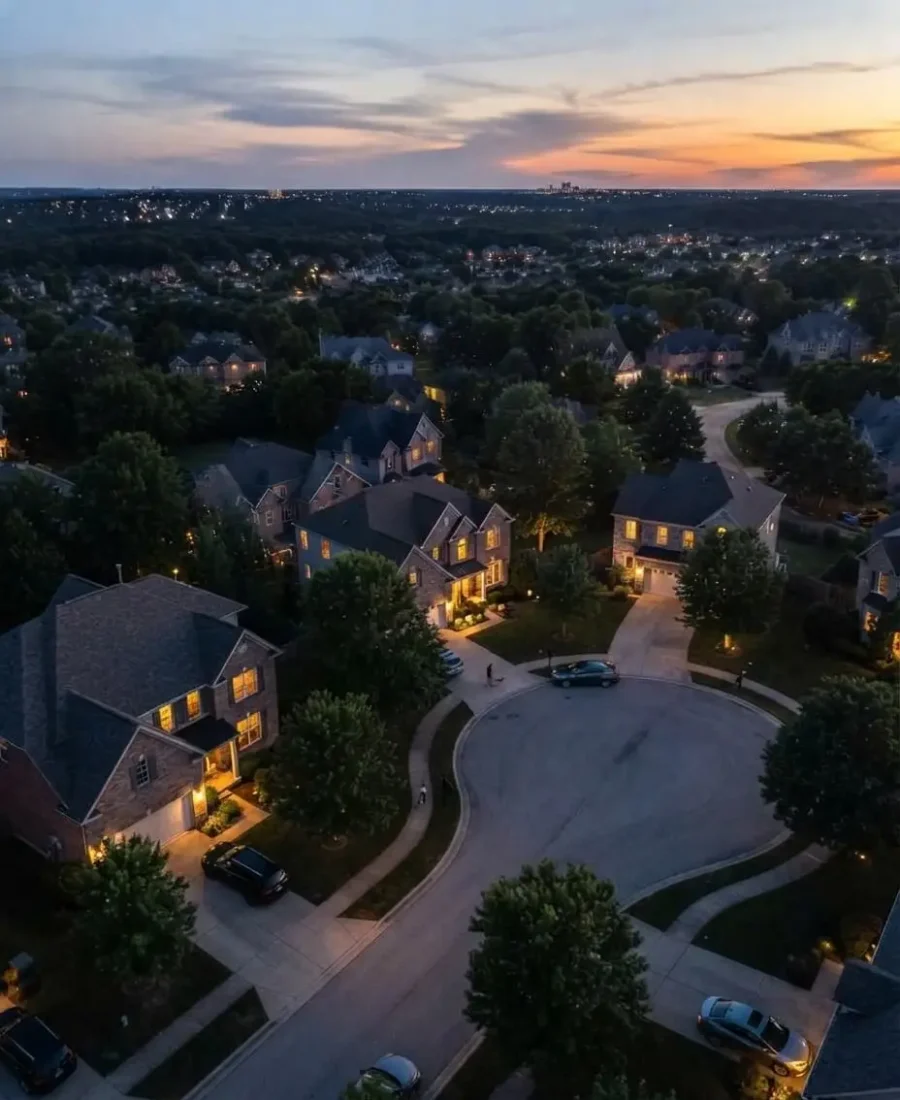
Aerial view of a quiet suburban residential neighborhood at dusk, featuring two-story homes with illuminated windows, tree-lined streets, parked cars, and a cul-de-sac beneath a colorful sunset sky.
Commercial & Institutional

Select Your Building Type

Office buildings, medical facilities, financial institutions, and school campuses each face unique security challenges based on their layouts, operating hours, and daily activities.

Office buildings may require monitoring around parking garages, service entrances, and shared spaces. Medical facilities need security coverage that respects patient privacy, while financial institutions prioritize entrances, parking areas, and exterior access points.

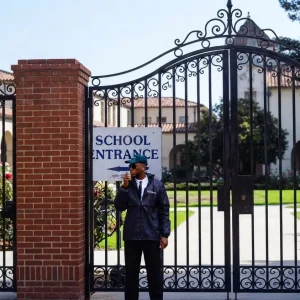
Schools and campuses often have multiple buildings, open grounds, and seasonal closures that create different security needs. Virtual Guard CCTV provides camera surveillance and monitoring options tailored to each property’s layout, access points, and operating schedule.

Who Belongs Here

Telling Staff From Strangers After Hours

Institutional sites have legitimate after-hours activity, so the judgement is about who belongs rather than whether anyone is present.

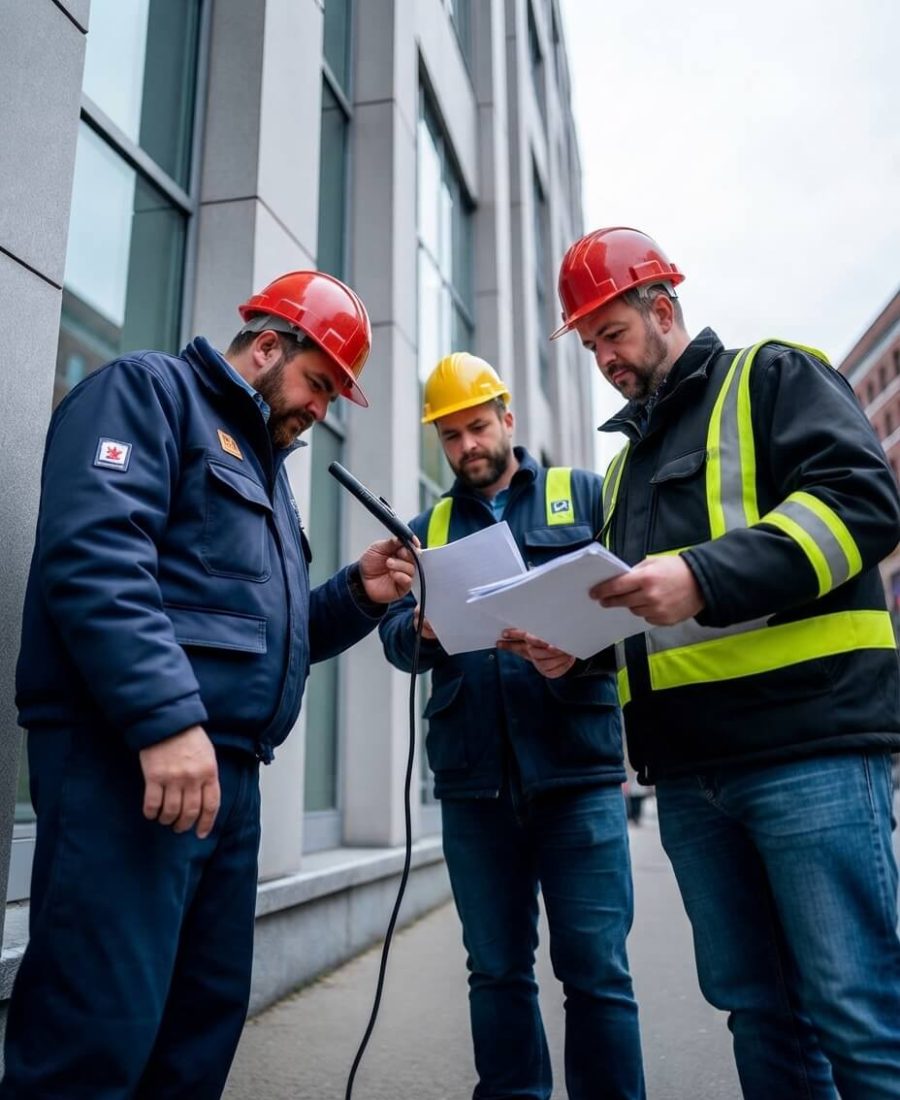
Cleaning crews, contractors, late-working staff and delivery drivers all move through these buildings outside normal hours. Automated detection treats every one of them as an event.

An operator watching live can tell a cleaner unlocking a service door from someone testing whether it opens, which is the distinction that decides whether police are called.

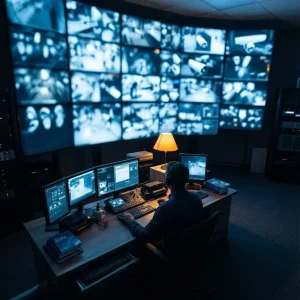
Security monitoring operator seated at a workstation in a dimly lit control room, watching multiple surveillance camera feeds of commercial buildings, parking lots, and streets on a large video wall, with a dome security camera mounted overhead.
Three commercial building maintenance workers wearing hard hats and high-visibility safety vests review inspection documents and equipment outside a modern office building.
Reports for Facilities Teams​

Reporting for Facilities and Insurers

Every event produces a timestamped log and a pulled clip, sized for a facilities report or an insurance claim without extra work.

Operators record what they saw, the time, the action taken and how it resolved. The relevant clip is attached rather than left inside a week of continuous recording.

For portfolios the same records show which buildings generate recurring activity and at what hours, which is usually more useful than any single incident.

Find the Gaps Before Someone Else Does

A short call and a look at your floor plan and lot shows where the exposure sits and what coverage would cost. No obligation.

WHERE WE SERVE

Institutional Property Coverage Across California

Offices, clinics, branches and campuses throughout California run on published schedules, and we build coverage around those empty hours.

Los Angeles County Orange County San Diego County Riverside County San Bernardino County Ventura County Santa Clara County Alameda County Sacramento County San Joaquin County
faq

Commercial and Institutional FAQ

Answers to common questions about video monitoring for office buildings, medical facilities, banks, and school campuses, including camera coverage, monitoring options, and security considerations for commercial and institutional properties.

Do you monitor inside the building or only outside?

Both are possible, but coverage is normally weighted to the exterior and shared interior spaces such as garages, lobbies, corridors and service entrances. Cameras are not placed in private areas. On medical property that means no exam or treatment rooms and nowhere a patient would be identifiable.

Yes. Coverage is scheduled around when a property is actually empty. Offices commonly run evenings and weekends, campuses add summer and holiday periods, and a building undergoing renovation can be covered for the duration and then stopped.

A system can be specified around the requirements your organisation operates under, but we do not certify compliance. Retention periods, camera placement and access controls should be confirmed with your own compliance officer or counsel before a design is finalised.

The operator issues a live voice warning through on-site speakers describing the person and stating they are being recorded. Most people leave immediately. If they do not, the operator calls police and reports it as an incident in progress with a live description.

Often yes, if the coverage reaches the areas that matter and the image quality holds up in low light. Older systems frequently cover entrances well and garages poorly. A site assessment identifies what can be reused and what needs adding.