GET A QUOTE
Downtown LA Coverage

Remote Video Monitoring in Downtown Los Angeles

Downtown Los Angeles, CA

Where the Operator Sits When a DTLA Camera Trips

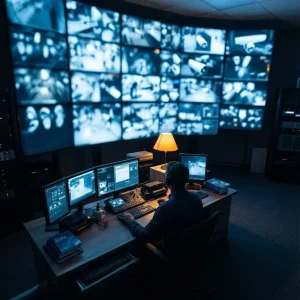
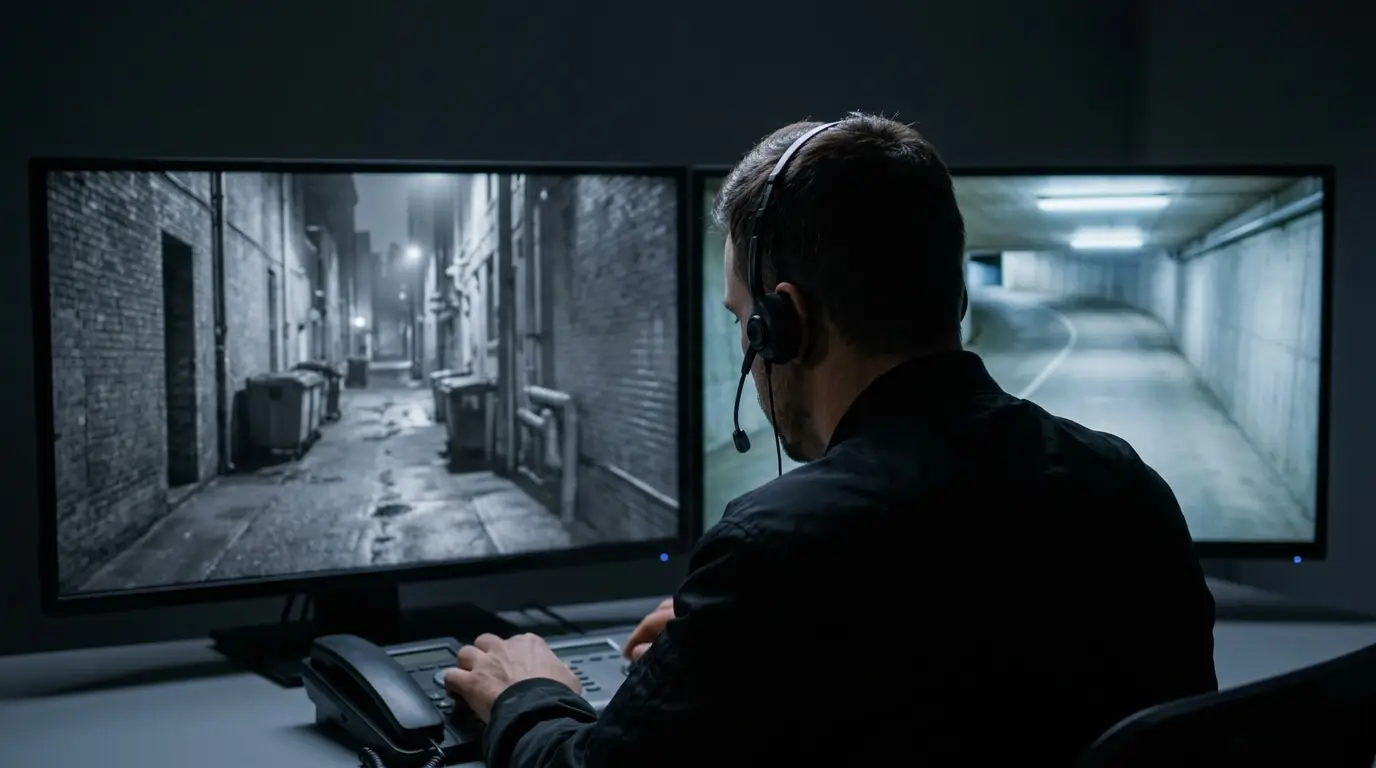
Camera feeds from a Downtown Los Angeles property connect to a remote monitoring center, where trained operators may review live footage or respond to activity alerts during scheduled monitoring hours, depending on the selected service plan. When suspicious activity is identified, operators assess the available footage and follow the property’s agreed response procedures. These may include issuing an audio warning through installed speakers, notifying designated contacts, or contacting the appropriate law enforcement agency when necessary.

Downtown is not one market. The DTLA Alliance, which publishes the area’s quarterly market report, draws Downtown as the land inside the 110, 101 and 10 freeways and the Los Angeles River, plus Chinatown, City West and Exposition Park. Inside that line sit a wholesale garment district, a former rail-and-warehouse quarter now filled with lofts and galleries, a working industrial district and a financial core of office towers.

Remote video monitoring here starts with which of those a property belongs to, because each one clears out at a different hour.

Built Around One Building

Remote Video Monitoring Downtown Los Angeles, Planned District by District

Seen Before It Is Reported

What LAPD Central Hears When an Operator Calls

When operators report suspicious activity to law enforcement, the details they provide can help dispatchers assess the situation. The responding agency determines how the call is classified and prioritized under its procedures.

The LAPD Central Community Police Station, located at 251 E. 6th Street, serves several Downtown Los Angeles neighborhoods, including the Historic Core, Financial District, Fashion District, Central City East, and South Park. Police division boundaries vary by location, so the appropriate jurisdiction should be confirmed using the property’s address. For monitored properties, law enforcement contacts and escalation procedures should be established as part of the property’s response plan.

The Los Angeles Police Department has established procedures for responding to burglar alarms, including requirements for alarm verification. Remote video monitoring can provide additional information when suspicious activity is observed at a property. During contracted monitoring hours, operators may review available footage and, when authorized under the property’s response plan, contact the appropriate law enforcement agency. They can describe what is visible on camera, including the activity observed and its location. Dispatchers determine the appropriate response based on the information provided and applicable procedures. Property owners should also confirm whether alarm permit requirements apply to their installed systems.

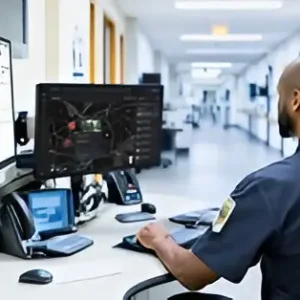
Security monitoring operator wearing a headset reviews surveillance footage of an empty alley and parking garage on two monitors.
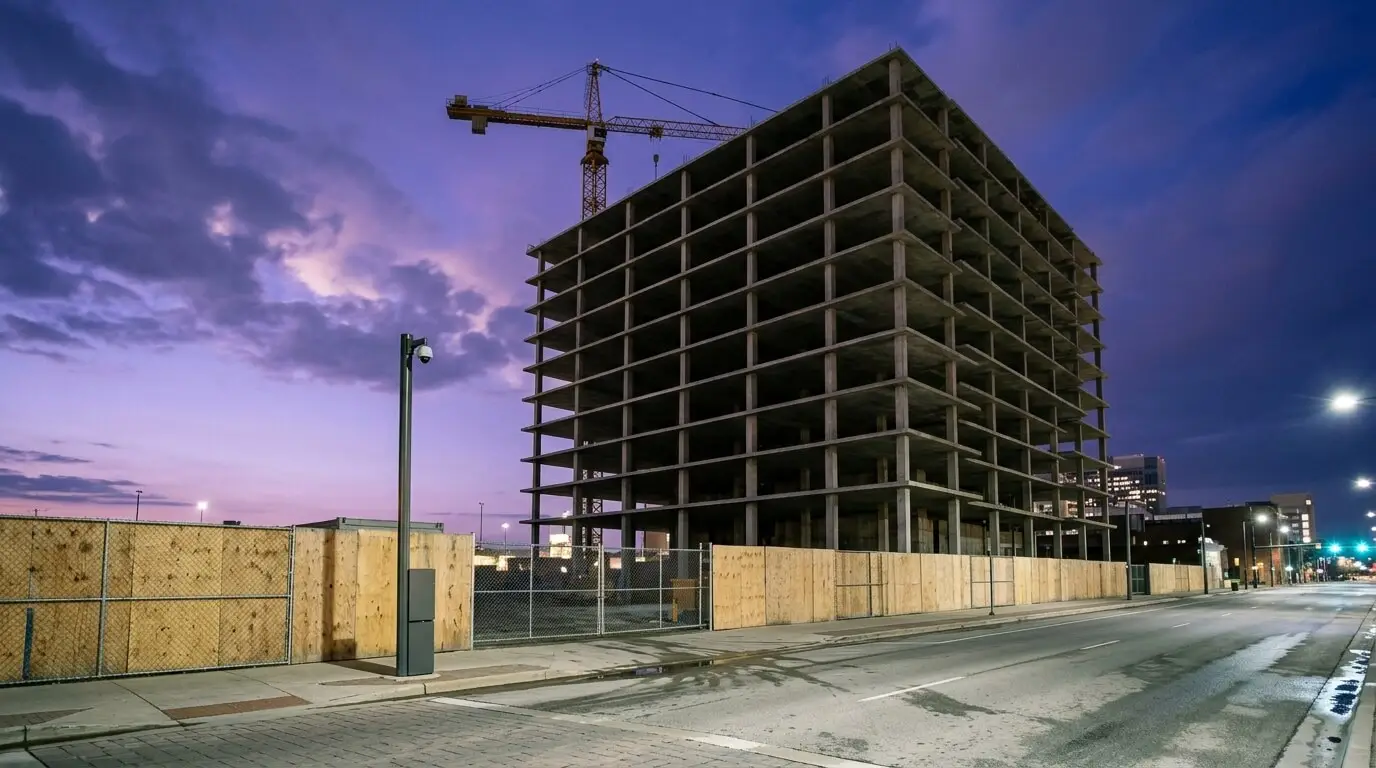
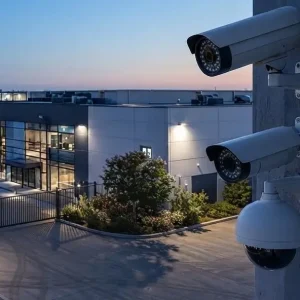
Unfinished multi-story commercial building at dusk with a tower crane, perimeter fencing, and mounted security camera overlooking a quiet street.
The Downtown Risk Picture

Empty Floors, Busy Sidewalks and Stalled Towers in Downtown LA

Downtown’s exposure comes from buildings that sit empty beside streets that rarely do, and from projects that stop halfway up.

According to the DTLA Alliance’s Q1 2026 Market Report, Downtown Los Angeles recorded a 32.4% office vacancy rate based on CBRE data, up from 31.1% a year earlier. Retail vacancy was 9.4%, based on CoStar data from the same reporting period. The DTLA Alliance also estimates approximately 8 to 10 million visits to Downtown LA per month, although that estimate does not specify a reporting period. These figures illustrate the contrast between vacant commercial spaces and visitor activity across Downtown Los Angeles.

Unfinished buildings carry their own risk. NBC Los Angeles reported in February 2026 that work on Oceanwide Plaza, three towers on Flower Street across from Crypto.com Arena, stalled after the original owner defaulted on its debts, and that LAPD officers spent thousands of hours on duty keeping vandals out of the empty high-rises. A bankruptcy court has since approved new owners. For anyone building Downtown, the point is plain: a paused site still needs eyes on it, and remote video monitoring supplies them without a crew on the ground.

Downtown Districts

Four Downtown Districts, Four Different Closing Times

Retail Services

Retail stores need coverage for after-hours break-ins, loading dock theft, and parking lot incidents, with an operator who can respond the moment a door or gate is breached overnight.

Construction Services

Active construction sites can be vulnerable to equipment theft, material loss, and unauthorized access during unoccupied hours. Remote video monitoring can help property managers maintain visibility over equipment storage areas, entrances, and other vulnerable locations.

Industrial Services

Warehouses and distribution facilities carry high-value inventory across large, hard-to-patrol footprints, where live camera coverage replaces walking a perimeter that’s too big to physically check.

Commercial Services

Office buildings, financial institutions, and other commercial properties need monitored coverage of entry points and parking areas outside business hours, when the building sits empty

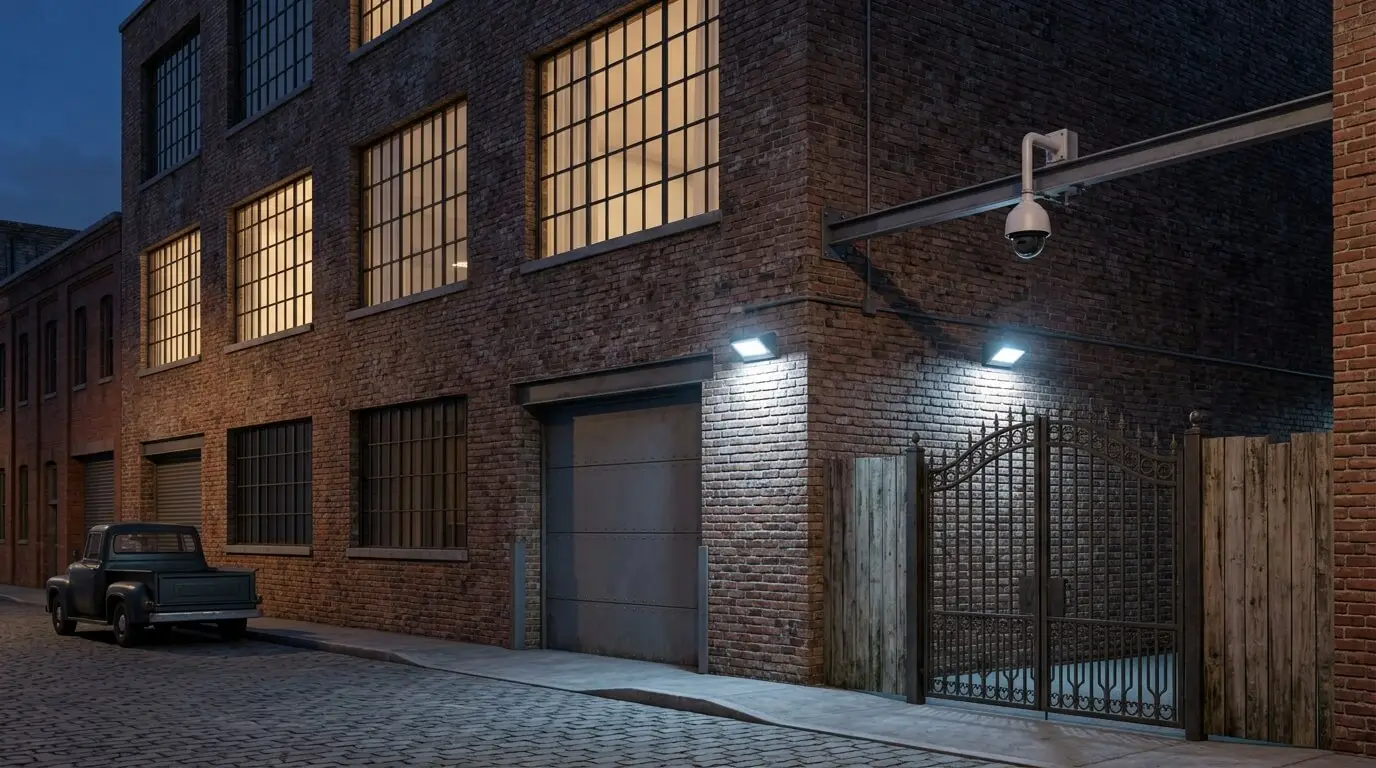
Converted brick warehouse with tall loft windows above a closed ground-floor workshop door and a camera covering the shared alley entrance
Lofts Above Workshops

Monitoring Mixed-Use and Live/Work Buildings in the Arts District

In the Arts District one building can hold a workshop at street level and someone’s home upstairs, so the plan has to know which floor is which.

The Arts District grew out of railroad depots, warehouses and rail yards, according to the history published by the Arts District Los Angeles BID. In 1981 the City’s Artist-in-Residence program legalized artists living in former industrial buildings, and the Downtown Community Plan now describes the neighborhood as a hub of galleries, educational institutions, creative production, light industry and retail.

The plan, operative since January 27, 2025, keeps that mix on purpose. Its Hybrid Industrial designation covers 423 net acres, about 13% of the plan area, and puts productive and employment uses first while allowing live/work and limited residential use.

For remote video monitoring, that changes where cameras point. Views are agreed with the owner or HOA board so they cover shared doors, alleys, loading areas, garages and common corridors, never private windows. A ground-floor tenant can keep its own monitored hours while the residential entry follows a separate schedule.

Every place named here comes from public sources and is geography, not a list of clients.

Hours You Choose

Inside a Downtown LA Monitoring Plan

Remote video monitoring in Downtown Los Angeles is scheduled per building, with speakers at the doors people actually use and a log for each incident.

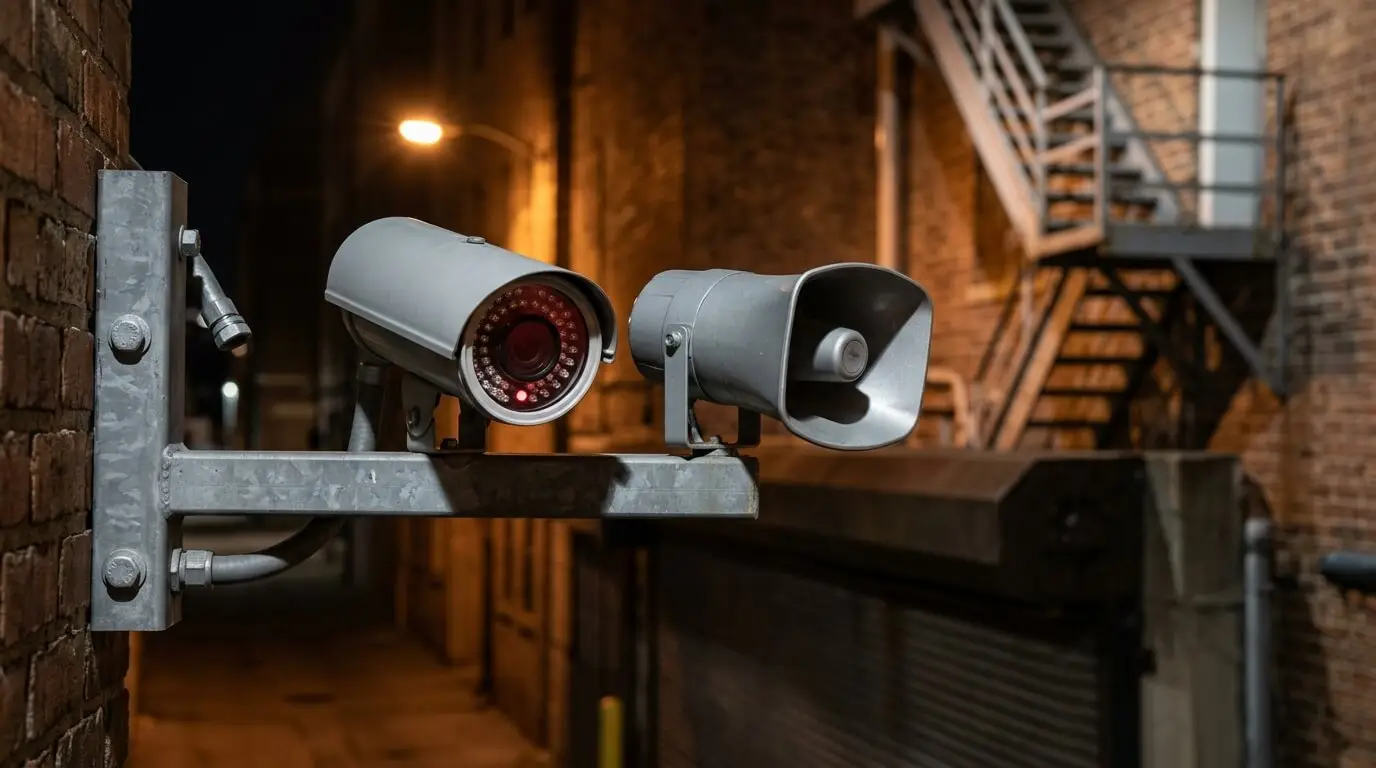
Camera placement is planned around entrances, loading areas, parking facilities, and other vulnerable locations. Audio speakers may be included where appropriate, depending on the property’s equipment and security requirements. Nighttime visibility depends on camera capabilities, available lighting, and installation conditions. Equipment options are determined during the property’s security assessment.

Monitoring hours are established according to the property’s selected service plan and security needs. When suspicious activity is identified during covered hours, operators follow the agreed response procedures. Incident details and available footage may be documented according to the plan’s reporting features. The scope of monitoring, response options, and reporting deliverables is confirmed before service begins.

Infrared camera and compact horn speaker on a steel bracket above an alley gate with a fire escape blurred behind

Send Us a Downtown Address and the Hour It Empties

Share your Downtown LA property address and security concerns. We’ll review your needs and recommend suitable camera coverage, monitoring schedules, and response options.

Downtown Neighborhoods Covered

Downtown Los Angeles Neighborhoods We Monitor

In business since 2014. License: PPO #121089, searchable in California's DCA lookup. BBB: A+, accredited 2021. Our Downtown plans differ from one another because Downtown buildings do not keep the same hours.

Office: 9701 Topanga Canyon Pl, Chatsworth, CA 91311 · (800) 400-3167

Los Angeles County Orange County San Diego County Riverside County San Bernardino County Ventura County Santa Clara County Alameda County Sacramento County San Joaquin County
downtown la questions

Downtown Los Angeles Remote Video Monitoring FAQs

Questions Downtown property owners and managers ask before coverage begins.

Who does the monitoring operator contact when suspicious activity is detected at a Downtown LA property?

When suspicious activity is identified, monitoring operators follow the property’s agreed response procedures. Depending on the situation and installed equipment, they may issue an audio warning, notify designated contacts, or contact law enforcement when appropriate. The responsible agency depends on the property’s address and jurisdiction. Many Downtown Los Angeles properties fall within LAPD Central Division, but operators should confirm the appropriate agency before escalation. The responding agency determines how the incident is handled.

Mobile surveillance units bring their own mast, cameras and power, so coverage can begin before a site has permanent mounts and can continue through a pause in work. NBC Los Angeles reported that LAPD officers spent thousands of hours keeping vandals out of the stalled Oceanwide Plaza towers on Flower Street. An operator watching a fence line can warn a trespasser over the speaker and phone police before that person has left the site.

Yes. Remote video monitoring includes speakers mounted at the points people use to get in, such as a garage ramp, an alley gate or a loading door. The operator describes the person and tells them to leave, and in mixed-use buildings the speaker placement and volume are agreed with the owner or HOA board so residents are not disturbed. Anyone who ignores the warning is reported to police, and the operator keeps watching until officers arrive.

Request a quote. Price depends on the number of cameras, the hours an operator watches, how many entry points need a speaker and whether the cameras already on the building are usable. A Fashion District showroom, a Financial District tower garage and a paused jobsite are three different scopes, so each one is quoted on its own.