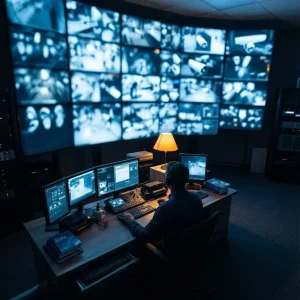
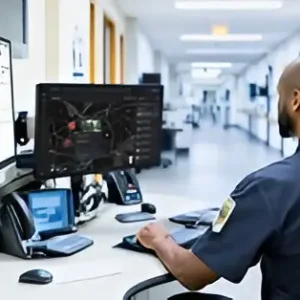
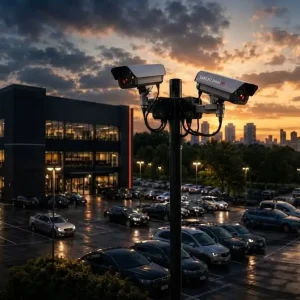
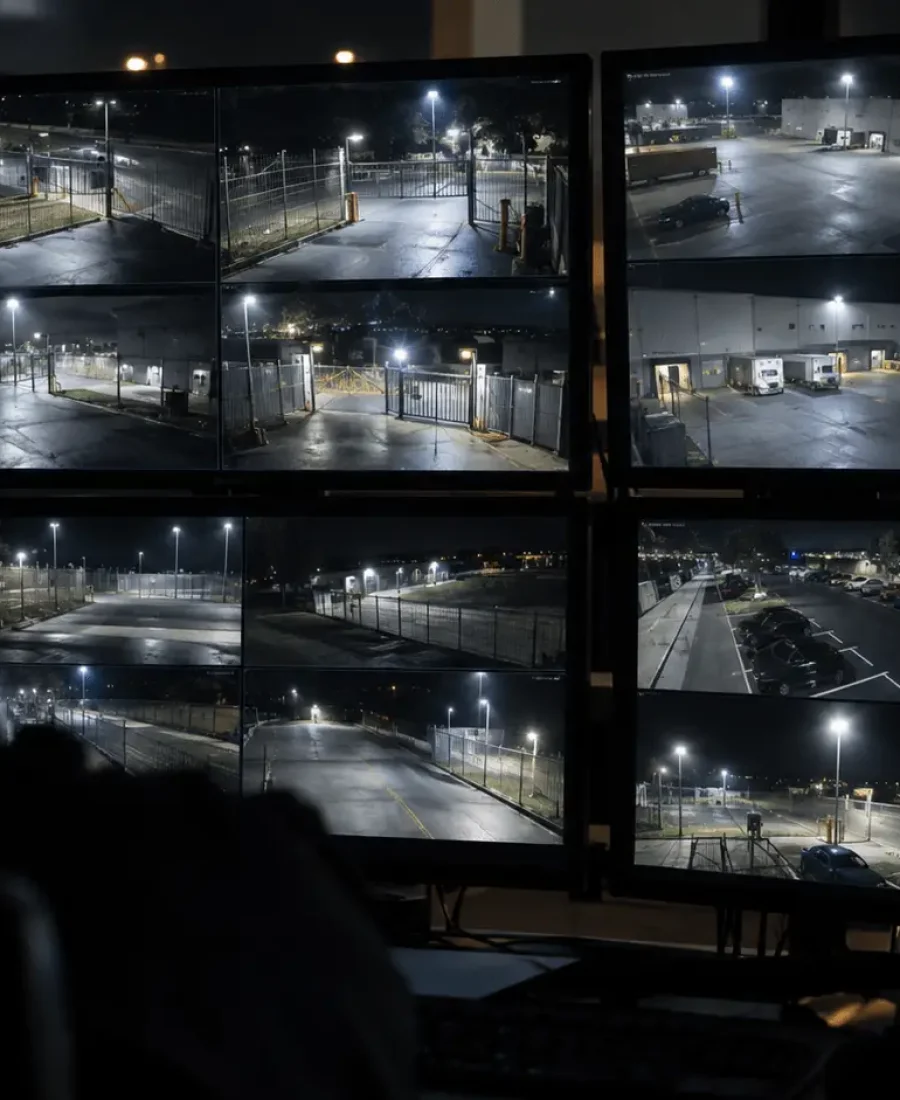
Remote video monitoring connects the cameras at a Long Beach property to a monitoring center. Depending on the selected service plan, trained operators may review live feeds or respond to camera alerts during scheduled monitoring hours. When suspicious activity is identified, operators follow the agreed response procedures, which may include an audio warning through installed speakers or contacting law enforcement when appropriate. Unlike recorded footage reviewed later, monitored camera activity can be assessed while an incident is occurring.
Long Beach is a freight city, and its commercial property shows it. The Port of Long Beach reports that it handled more than 9.6 million container units in 2024, at the time the busiest year in its history. Cargo at that scale has to be trucked, staged and unloaded somewhere, and that work happens on private commercial property: trailer yards, warehouses and small-bay industrial buildings, among others.
Each plan fits the property being monitored: a yard with a gate, a building with tenant bay doors, or a cleared lot waiting for its first structure. One template is not stretched across the city.
During contracted monitoring hours, trained operators can review camera activity and respond to suspicious events according to the property’s agreed procedures.
Your Long Beach property’s cameras connect to a remote monitoring center, with operator coverage provided according to your selected monitoring schedule and service plan. When an operator confirms a threat, they talk through the on-site speaker and then escalate to the agency that answers at that address, not to a generic dispatch queue.
That routing takes care. According to the Long Beach Police Department, East Patrol Division covers approximately 24 square miles, or 46% of the city. The appropriate law enforcement contact depends on the property’s location and applicable response procedures..
Signal Hill, an independent city with its own police department, runs along that division’s western edge at Cherry Avenue.
The Port of Long Beach has a Harbor Patrol responsible for port security and safety, while the Long Beach Police Department also provides law enforcement services within the port complex. Each address is set up with its correct responder before monitoring starts.
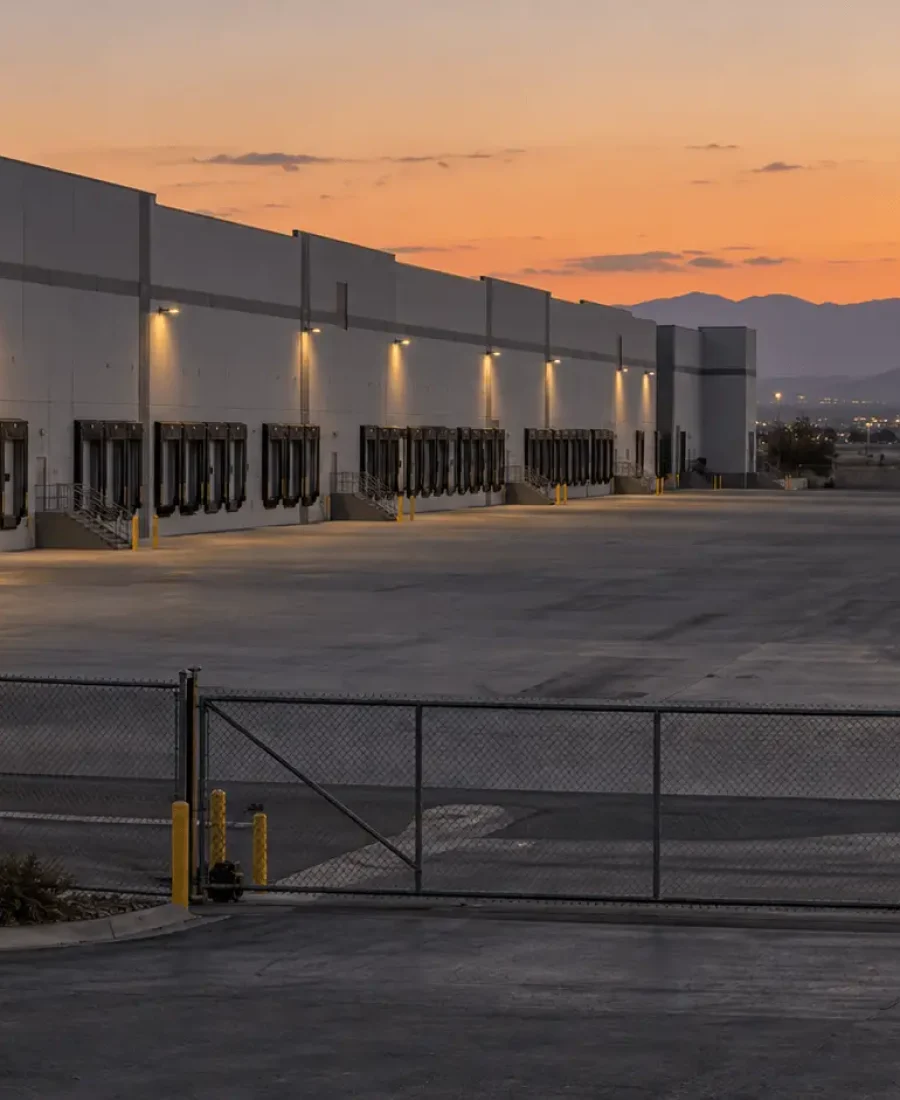
Trailer yards, multi-tenant industrial buildings and development land near the airport each sit empty at a different hour, and none of them looks like a storefront.
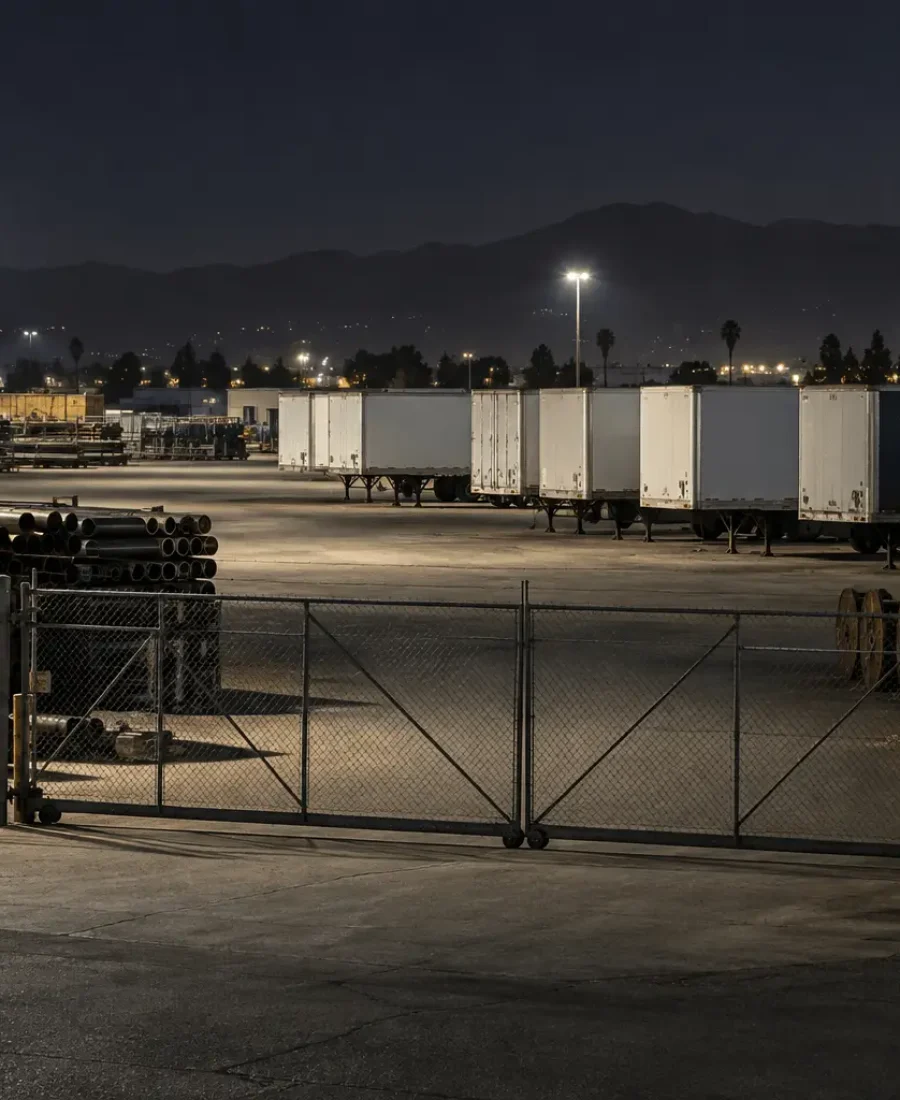
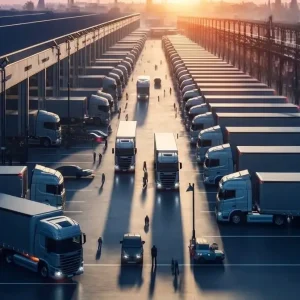
Trailer yards and freight-side lots face distinct security challenges. According to Verisk CargoNet’s 2025 annual analysis, California recorded 1,218 supply chain crime incidents, the highest total among U.S. states. This statewide figure highlights cargo security concerns but does not represent theft incidents specifically in Long Beach. Loaded trailers, staging areas, and vehicle entrances are important considerations when planning monitoring coverage.
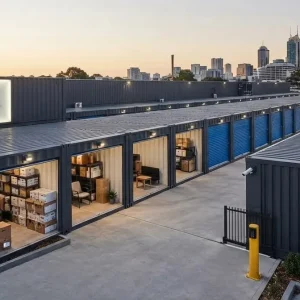
Small-bay industrial properties are another example. Rexford Industrial lists Long Beach Business Park near the 710 Freeway as a 123,532-square-foot complex with 39 tenant spaces. Shared entrances and loading areas can create different monitoring needs than a single-tenant property.
Development near Long Beach Airport provides another example. Douglas Park is a former aerospace manufacturing area that has undergone phased commercial redevelopment. In April 2020, Long Beach Post reported Boeing’s plans to sell approximately 78 acres nearby. This historical development activity illustrates how changing property uses can affect site access and security planning.
Long Beach Police Department data reported in July 2025 showed property crime decreased 23.6% and commercial burglary decreased 34.5% during the first half of 2025 compared with the same period in 2024. These historical citywide trends provide context, but individual properties still require security planning based on their location, access points, and operating schedules.
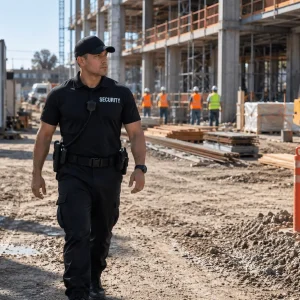
Active job sites lose equipment and materials to unsupervised overnight hours — the exact gap live monitoring is built to close.
Temporary or relocatable camera coverage may be available for suitable retail properties, depending on site requirements, equipment availability, and the selected monitoring plan.
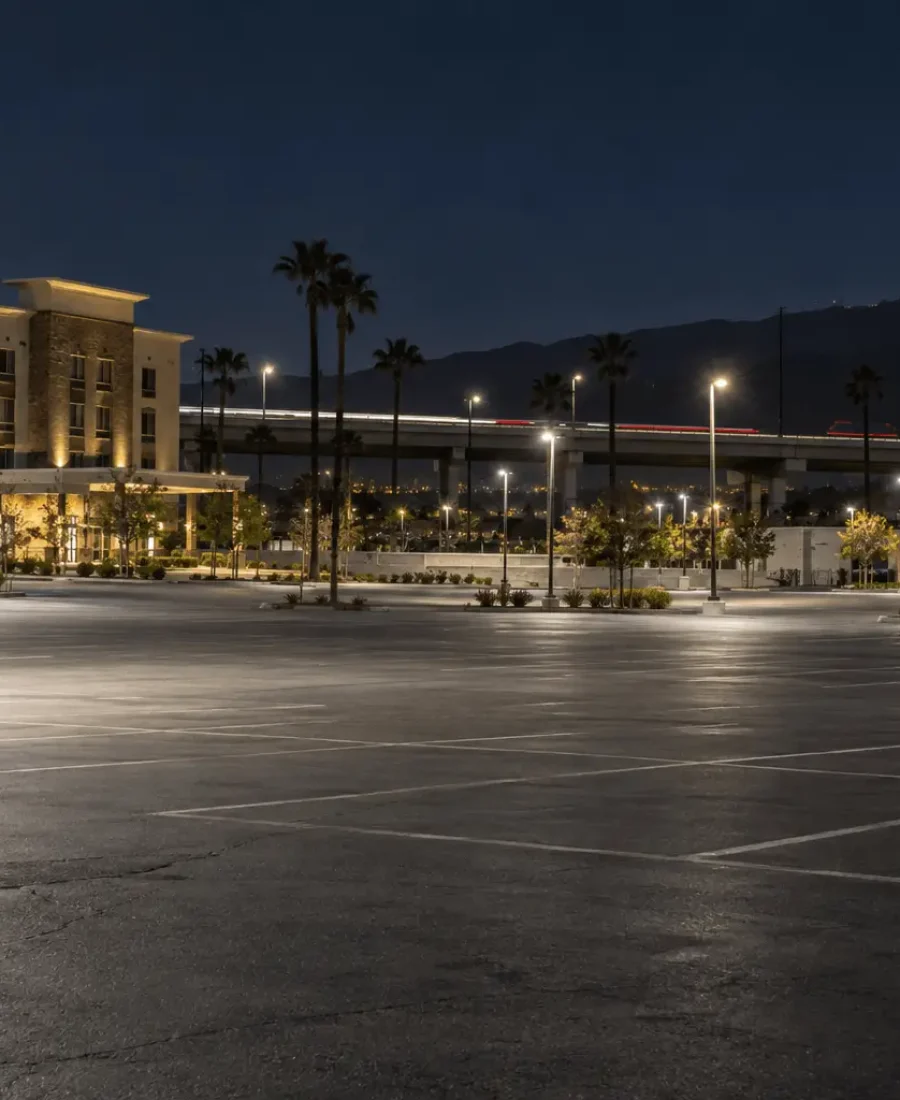
Office buildings, financial institutions, and other commercial properties need monitored coverage of entry points and parking areas outside business hours, when the building sits empty.
A freight yard, a shared industrial building and a cleared lot each need cameras in different places, so one template cannot cover all three.
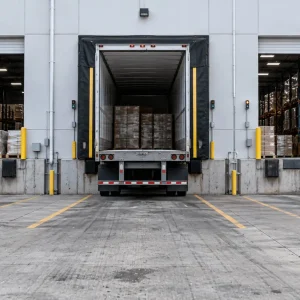
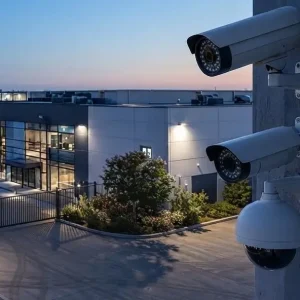
On a trailer yard, remote video monitoring starts with cameras on the entry gate, the fence line and the staging rows, where loaded and empty equipment sits outside the building with nothing between it and the street.
On a multi-tenant industrial building, the cameras cover your own roll-up doors and the shared drive aisle in front of them, the approach every vehicle on the site has to use.
On a cleared lot or a building shell, there is no door to watch yet, so cameras go on the perimeter and the entrances, then move to permanent mounts as the structure goes up.
Monitoring hours are tailored to your property’s schedule, with audio coverage and incident reporting available depending on the installed equipment and selected service plan.
Monitored hours follow your site’s schedule. A yard that moves drivers at odd hours and an office that clears at 6 p.m. have different quiet windows, so the window is set per site.
Two-way audio may be installed near gates, loading docks, fence lines, or other vulnerable areas, depending on the property’s layout and equipment. When suspicious activity is identified, operators follow the agreed response procedures, which may include an audio warning or contacting law enforcement when appropriate.
Incident details, including the time, observed activity, and actions taken, may be documented according to the selected monitoring plan. Available reports and recorded information depend on the agreed service terms. Contact us for a quote tailored to your property.
Send the address and the hours the site is empty. We return a plan scoped to those hours and to the agency that answers at that address.
Virtual Guard CCTV is licensed under California PPO #121089, BBB A+ accredited since 2021, and has operated in California since 2014. Each plan is scoped to the property's layout and hours rather than sold as a fixed package for the whole city.
Office: 9701 Topanga Canyon Pl, Chatsworth, CA 91311 · (800) 400-3167
What Long Beach property owners ask before coverage starts.
The operator pulls up the live feed, confirms what is happening, and speaks through the on-site speaker before any call. If the threat is real, they contact the agency for that address. We confirm that agency during setup rather than assume it: the Long Beach Police Department polices the city, and its East Patrol Division alone covers about 46% of it, according to the City of Long Beach. Signal Hill is a separate city with its own police department, and the Port of Long Beach runs its own Harbor Patrol for the port complex. Afterward you get a written record that includes the time of the call.
It is built to interrupt theft in progress, not to promise that none will be attempted. Operators watch the gate, fence line, staging rows and dock doors of a commercial yard or warehouse live, and speak through the on-site speaker if someone is where they should not be. Verisk CargoNet counted 1,218 cargo theft incidents in California in 2025, the most of any state, so a yard that holds freight is a reasonable thing to watch. A site inside the port complex itself falls under the Port’s Harbor Patrol, so we confirm scope and the responding agency first.
Cameras cover your own bay doors, your part of the yard and the approaches to them, not your neighbors. Shared sites are common: one industrial complex near the 710 freeway lists 39 tenant spaces between 1,000 and 16,200 square feet, according to its owner’s Rexford Industrial listing. Because the drive aisles and gates are shared, mounting on shared structure is a decision for the property manager, so raise it early. Monitored hours follow your business’s schedule, not the building’s.
Request a quote. The price follows the number of cameras we watch, the hours you need covered, and whether the cameras already on your fence line and bay doors can be reused. Each site is scoped and quoted on its own. Send the address, the hours the site is empty and the number of camera positions you expect, and we return a plan with a figure.